Minimum Bow Draw Weight for Big Game
It’s a common scenario for aspiring bowhunters in New Mexico: you’ve spent countless hours practicing, dreaming of drawing back on a big bull or buck, only to pause and wonder if your equipment actually meets the legal standards. The last thing any ethical hunter wants is to be caught off-guard by a regulation, especially one as crucial as minimum draw weight. This guide will meticulously break down New Mexico's specific requirements for bow draw weight when hunting big game, helping you understand not just the letter of the law, but also the spirit behind it for a clean, ethical harvest.
New Mexico's Big Game Draw Weight Regulations
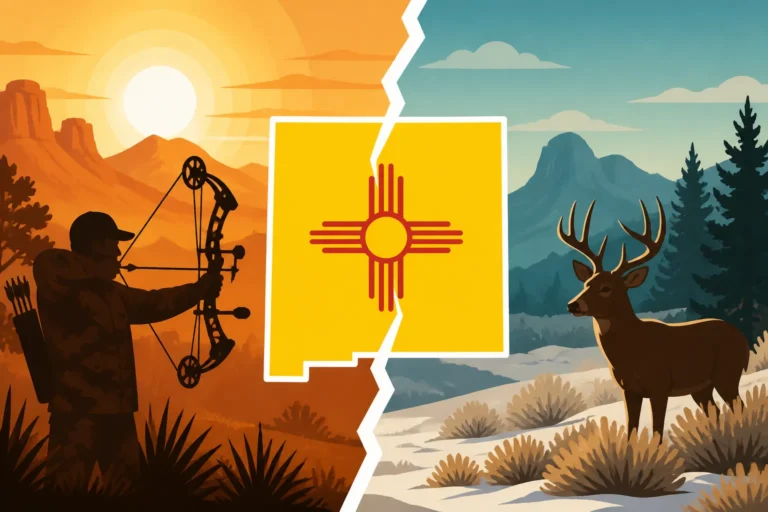
Navigating hunting regulations can feel like deciphering ancient texts sometimes, especially when you're just trying to figure out if your bow is up to snuff. New Mexico's Game and Fish Department has pretty clear guidelines when it comes to minimum bow draw weight, and for good reason. These rules are put in place to ensure that when you release an arrow, you're delivering enough energy to achieve a quick, humane kill on big game animals like elk, deer, or oryx. It’s not about making things difficult; it's about respecting the animal and the hunt.
Understanding the Specific Minimums
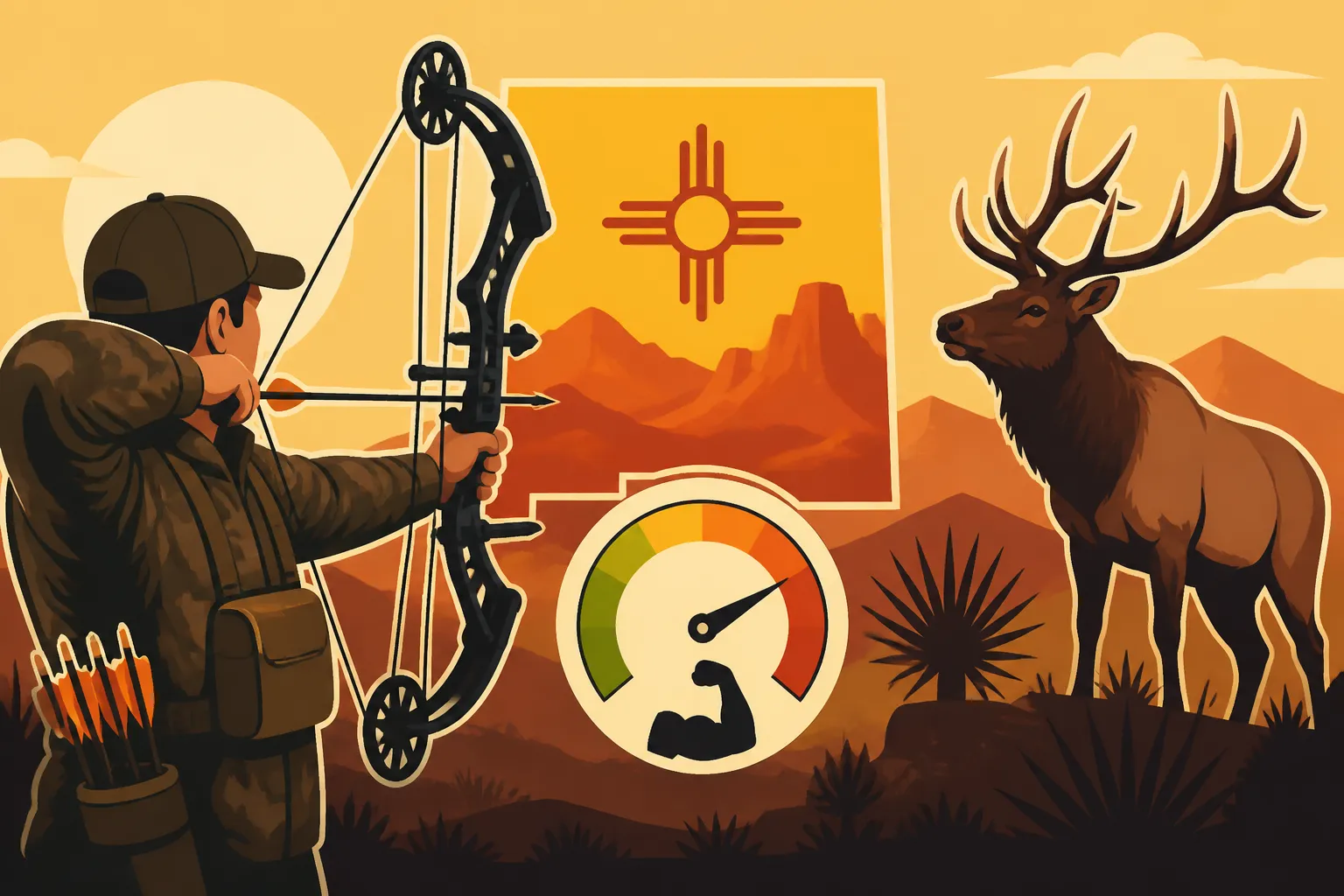
When we talk about "big game" in New Mexico, we're generally referring to species like elk, deer, pronghorn, oryx, bighorn sheep, and even bear and cougar. The regulations don't differentiate much between these species when it comes to minimum draw weight for traditional archery equipment. For most big game, you're looking at a minimum draw weight of 40 pounds. This applies to compound bows, recurve bows, and longbows alike. It's a standard that's been established based on years of experience and scientific understanding of what it takes to drive an arrow deep enough for a lethal shot.
Now, it's worth noting that simply meeting the minimum isn't always the end-all, be-all. While 40 pounds is the legal floor, many experienced bowhunters will tell you they opt for heavier draw weights, especially when targeting larger animals like elk. This extra power translates directly into more kinetic energy, which is critical for punching through thick hide, muscle, and bone. You can find more details on specific equipment requirements, including what counts as a primitive weapon, in the official New Mexico hunting rules, but this 40-pound baseline is crucial for archery hunters.
Checking Your Bow's Draw Weight
So, how do you actually check your bow's draw weight? It’s simpler than you might think, but accuracy is key. Most compound bows will have their peak draw weight listed somewhere on the limb, often near the cam or axle. However, this is usually the maximum weight the bow can be set to. You need to know what it's currently set at.
For compound bows, draw weight is adjustable within a certain range. You’ll typically use an Allen wrench to turn limb bolts in or out to increase or decrease the weight. It’s always best to use a specialized bow scale to get an exact reading. You can usually find these at archery pro shops, or you can purchase one yourself. Hook the scale to your string, draw the bow back to your full draw length, and note the reading. For recurves and longbows, the draw weight is fixed and usually printed on the lower limb, measured at a standard 28-inch draw length. If your draw length is shorter or longer than 28 inches, your actual draw weight will be slightly different. For example, a 50-pound recurve at 28 inches might be closer to 48 pounds at 27 inches or 52 pounds at 29 inches. Don't just guess; make sure you're getting an accurate measurement to avoid any legal issues or, more importantly, ethical concerns in the field.
Why Draw Weight Matters for Ethical Bowhunting
Beyond just being a legal requirement, understanding and meeting the minimum bow draw weight is fundamental to ethical bowhunting. We all strive for a clean, swift kill; that's the ultimate respect we can show the animal we're pursuing. Draw weight is a huge component of achieving that goal, directly impacting the arrow's flight and, critically, its penetration.
Kinetic Energy and Arrow Penetration
At the heart of why draw weight matters is the concept of kinetic energy (KE). Kinetic energy is the energy of motion, and in bowhunting, it's what drives your arrow through the animal. The more draw weight your bow generates, the more kinetic energy it imparts to the arrow, assuming all other factors (like arrow weight and speed) are equal. More kinetic energy translates to better arrow penetration. Think about it: an arrow that barely sticks into an animal is far less likely to hit vital organs than one that passes completely through, creating two wound channels and a better blood trail.
For big game in New Mexico, especially something robust like an elk, you need significant penetration to reach the vitals, which are often protected by dense muscle and bone. Even for smaller big game like mule deer or pronghorn, sufficient penetration ensures the arrow doesn't stop short due to a rib or shoulder blade. This isn't just about maximizing your chances of success; it’s about minimizing the animal's suffering. A well-placed shot with adequate penetration is what separates a quick, ethical harvest from a potentially long, painful tracking job or, worse, a lost animal. It's a responsibility we take on as bowhunters. This is also why understanding proper broadhead requirements for bowhunting is so critical.
Achieving a Clean, Humane Harvest
The goal of every responsible hunter is a quick, humane harvest. This isn't just a feel-good statement; it's a moral imperative. An arrow that lacks the kinetic energy to penetrate deeply and consistently can lead to superficial wounds, meaning the animal might be injured but not fatally hit, and could suffer greatly or escape to die later. No one wants that outcome.
Proper draw weight, in combination with a well-tuned bow, a sharp broadhead, and precise shot placement, forms the cornerstone of ethical bowhunting. When you've got enough power behind your arrow, it dramatically increases the probability of a pass-through shot, which creates both an entry and exit wound. These two wounds significantly improve the blood trail, making tracking much easier and increasing the chances of recovering your animal quickly. This also highlights why practicing at various distances, including those closer ranges where a bowhunter needs to get on elk, is so vital. It's about combining power with precision and understanding the animal's anatomy to ensure a swift end.
Matching Your Equipment to the Game and Conditions
It's not enough to just meet the legal minimum; truly effective and ethical bowhunting demands that you match your equipment capabilities to the specific challenges of your hunt. New Mexico offers a vast array of big game across diverse landscapes, from the high elevation timber to the open desert flats. Each scenario presents unique demands on your gear and your shooting ability.
Heavier Draw Weights for Larger Animals
While 40 pounds is the legal minimum, it's often considered the absolute floor, especially for larger game. If you're chasing elk in the Gila National Forest or even a hefty mule deer buck in the northern mountains, you'll likely want to consider a higher draw weight. Many seasoned elk hunters comfortably pull 60 to 70 pounds, or even more, on their compound bows. This isn't just for bragging rights; it's because those animals are big, tough, and often present challenging shot angles or require punching through denser muscle mass.
The added power helps ensure your arrow has the momentum to get through ribs, shoulder blades, or the heavy hide of a mature animal. Imagine the difference in kinetic energy needed to penetrate the chest cavity of a 150-pound Coues deer versus a 700-pound bull elk. The physics are undeniable. If you can comfortably and accurately shoot a higher draw weight, it's a definite advantage for larger New Mexico big game. Always remember, accuracy trumps power every single time, but combining both is the ultimate goal. For deeper dives into specific hunting scenarios, check out resources like the New Mexico Elk Season Structure by Unit or how to approach Hunting New Mexico From 4,000 Feet to 10,000.
Draw Weight, Arrow Weight, and FOC
Your bow's draw weight is one part of the penetration equation, but it's not the only one. Arrow weight and Front of Center (FOC) balance are equally critical. A heavier arrow, even with the same draw weight, will carry more momentum and thus penetrate better than a lighter arrow. This is why many serious big game bowhunters opt for heavier arrows (often 450-550 grains total weight for elk) to maximize penetration.
FOC refers to how much of an arrow’s weight is concentrated in the front half. A higher FOC (typically 12-18% for hunting) helps an arrow fly more consistently and drives the broadhead forward, improving penetration. It also makes the arrow less susceptible to wind drift, which can be a real factor in New Mexico's open country. Think about how crucial that stable flight is when you're making a precision shot during New Mexico's first archery deer season. A combination of sufficient draw weight, a heavy, high-FOC arrow, and a razor-sharp broadhead creates a lethal package that maximizes your chances of an ethical harvest. Services like GoHunt often provide detailed gear recommendations and unit breakdowns that can help you dial in your setup for specific New Mexico hunts.
Comfort and Accuracy: The Ultimate Priority
Here’s the absolute truth about draw weight: the most important factor isn't how high you can crank it up, but how high you can comfortably and accurately shoot it. A 70-pound bow that you can only manage for a few shaky seconds is far less effective than a 55-pound bow that you can draw smoothly, hold steadily, and shoot consistently. Fatigue sets in quickly, especially when you're cold, tired, or have an adrenaline dump from spotting an animal.
If you're struggling to draw your bow smoothly or hold it steady at full draw for more than a few seconds, your draw weight is too high. Period. It's better to hunt with a lower, manageable draw weight that allows for perfect form and a clean release than to ego-boost with a heavier setup that compromises your accuracy. Remember, a perfectly placed arrow from a 45-pound bow will always be more effective than a poorly placed arrow from a 70-pound bow. Consistent practice, focused on holding steady and executing a clean shot under pressure, is far more valuable than simply maxing out your draw weight. Your Building a Practice Routine Before Opener is a great resource to help you get ready for the season.
Practical Tips for Meeting Draw Weight Minimums
Meeting the minimum draw weight and ensuring you’re ready for the field isn't just about turning a bolt on your bow. It involves a holistic approach to physical conditioning, consistent practice, and smart equipment choices. You want to be confident that when the moment of truth arrives, you and your bow are completely prepared.
Gradual Strength Building and Training
If you find that your current draw weight is below the 40-pound minimum, or you simply want to increase it for better performance, don't rush it. Trying to jump too many pounds at once can lead to injury and frustration. Think of it like any other strength training: gradual, consistent effort yields the best results. Start by dry-firing a lighter bow or using a resistance band specifically designed for archery training. These tools allow you to build the specific muscle groups used in drawing a bow without the risk of injury.
Once you can comfortably draw and hold your current bow, slowly increase the draw weight, perhaps 2-3 pounds at a time. Spend a few weeks shooting at that new weight until it feels natural before bumping it up again. Incorporate exercises that strengthen your back, shoulders, and core – these are the muscle groups that truly power your draw and stabilize your shot. Rowing exercises, pull-ups, and band work can all be highly beneficial. Remember, you're not just trying to pull the weight back; you're trying to hold it steadily for an extended period, which is a different kind of strength. Getting your body ready through Preparing Physically for a High Elevation Hunt also ties into this, as physical fitness improves overall shooting stamina.
Seeking Expert Advice and Bow Tuning
Sometimes, you need a little help from the pros, and that's perfectly okay. If you're unsure about your bow's draw weight, how to adjust it, or if it's properly tuned for optimal performance, head to a reputable archery pro shop. The experienced technicians there can accurately measure your draw weight, help you adjust it, and ensure your bow is perfectly tuned to your shooting style and desired arrow setup. They can also offer personalized advice on form and technique, which are just as important as draw weight itself.
Bow tuning involves making adjustments to cams, arrow rests, and nocking points to ensure your arrow flies perfectly straight out of the bow. A poorly tuned bow, even with proper draw weight, will never shoot as accurately or penetrate as effectively as a well-tuned one. These experts can also advise you on arrow spine, broadhead choice, and other crucial elements that directly impact your ability to make a clean, ethical shot. They are an invaluable resource for any bowhunter, especially those new to the sport or those looking to fine-tune their setup for a specific hunt, like a challenging Gila elk hunt.
The Importance of Consistent Practice
You've got the legal draw weight, your bow is tuned, and you're physically stronger. Now comes the most important part: practice, practice, practice. Consistent practice builds muscle memory, refines your form, and instills the confidence you need when facing a big game animal. Don't just shoot from a single distance; practice at various ranges, from close quarters (10-20 yards) to your maximum ethical shooting distance.
Simulate hunting scenarios: practice drawing your bow from different positions (sitting, kneeling, standing), with hunting gear on, and when slightly out of breath. It's not the same as shooting in your backyard range. Get a detailed map from GoHunt and pick a unit, then visualize shots in that terrain. The more you practice under varied and challenging conditions, the more prepared you'll be for the real thing. Focus on smooth drawing, steady aiming, and a clean release. That consistent rhythm is what will allow you to execute a perfect shot when it matters most, regardless of the adrenaline coursing through your veins.
Disclaimer
The information provided in this article is for general guidance and informational purposes only. Hunting regulations can change frequently. It is the individual hunter's responsibility to consult the most current New Mexico Department of Game and Fish regulations prior to any hunting activity. Failure to do so could result in fines, penalties, or loss of hunting privileges.