Donating Meat After a Guided Hunt
After a successful guided hunt in New Mexico, especially if you're a non-resident or your freezer is already bursting, deciding what to do with all that incredible game meat can feel like another challenge entirely. Many hunters face the dilemma of wanting to honor their harvest but struggling with the logistics of transport, processing, or simply having too much to consume. This guide dives deep into the practicalities and profound benefits of donating your harvested game meat in New Mexico, ensuring none of your hard-earned bounty goes to waste and helps those in need.
Why Consider Donating Your Hard-Earned Game Meat?
The moment you punch your tag on a majestic New Mexico elk or a cunning desert mule deer, a mix of triumph and responsibility washes over you. You've pursued an animal, connected with nature, and now you have a significant amount of high-quality protein to manage. But what if you’re traveling hundreds or thousands of miles to get home? What if your freezer space is limited, or you simply want to make a meaningful contribution? This is where meat donation becomes an incredibly valuable and ethical option, transforming your successful hunt into a direct benefit for your community.
The Ethical Imperative and Practical Realities
For many of us, hunting isn't just about the chase; it's deeply rooted in the primal act of providing sustenance. There's an inherent ethical responsibility to utilize every part of the animal possible, especially the meat. Leaving an animal to waste is antithetical to the hunter's code. However, practical realities often complicate this. Imagine you've just spent a week deep in the Gila National Forest on a physically demanding elk hunt. You've packed out hundreds of pounds of meat, Packing an Elk Out of the Gila Alone, and now you're looking at a long drive home. The thought of processing, packaging, and transporting all that meat, especially if you're flying, can be daunting. Donation offers a way to uphold that ethical commitment while navigating modern logistical hurdles. It's a way to ensure the meat you worked so hard for continues its journey of sustenance, even if it's not directly into your own freezer.
Easing Logistical Burdens, Especially for Non-Residents
Non-resident hunters, in particular, often face a unique set of challenges when it comes to getting their meat home. Driving across multiple state lines with coolers full of quartered game requires careful planning, constant ice replenishment, and often a larger vehicle. Flying is even more complex, with airline regulations, cooler sizes, and weight limits adding significant cost and stress. Donating your meat locally in New Mexico, however, streamlines this process considerably. Instead of worrying about intricate travel logistics, you can coordinate with your outfitter to deliver the animal to a local processor who is set up to handle donations. This not only lightens your load (literally and figuratively) but also ensures the meat is handled promptly and professionally, maintaining its quality for those who will receive it. It transforms a potential headache into a heartwarming act of generosity. When searching for outfitters, platforms like BookYourHunt often allow you to filter or inquire about their experience with donation programs, which can be a huge relief for out-of-state hunters.
Navigating the Donation Process with Your Outfitter and Processor
Deciding to donate your game meat is a fantastic first step, but the actual process requires coordination, especially when you're on a guided hunt. Your outfitter and the local game processor will be your key allies in making this happen smoothly. The earlier you communicate your intentions, the better everyone can prepare, ensuring that your valuable harvest makes it to those who need it most.
Communicating Your Intent Before the Hunt Even Begins
One of the most critical pieces of advice for any hunter considering donation is to discuss it with your outfitter well in advance of your hunt. When you're making arrangements for your guided experience, perhaps through a service like GoHunt, make sure to explicitly ask about their procedures and recommendations for meat donation. Some outfitters have established relationships with local processors and "Hunters for the Hungry" programs and can integrate your donation plans into their post-harvest routine. Others might need a heads-up to explore options. They can advise you on average processing costs for donation, which local charities accept game meat, and how transportation from the field will work. This proactive communication prevents any last-minute scrambling and ensures that your outfitter can seamlessly incorporate your charitable wishes into their operations. It’s also important to confirm that the outfitter understands the specific field dressing and handling requirements for donated meat, as different organizations might have preferences.
Field Care and Transport: From the Backcountry to the Butcher
The journey of donated meat begins the moment the animal is down. Proper field care is absolutely paramount to ensuring the meat remains wholesome and fit for human consumption. This means prompt and thorough Field Dressing in Desert Heat, especially in New Mexico's often warm hunting conditions. Rapid cooling is essential, so your outfitter will be instrumental in getting the animal quartered and cooled as quickly as possible. This might involve packing it out in game bags, hanging it in a shaded, well-ventilated area, or using ice if available, particularly during early archery seasons when temperatures can still be quite high. You'll want to review Getting Meat Cooled on an Early Season Hunt if you're hunting in warmer weather.
Once the meat is out of the field, transporting it to a reputable processor is the next step. Your outfitter will likely handle this as part of your guided package or can help arrange it. It's crucial that the processor understands the meat is intended for donation, as this can sometimes affect how it's cut, packaged, and labeled for charity distribution. They need to ensure it meets all health and safety standards for donation programs.
Coordinating with New Mexico Processors and Donation Programs
New Mexico has a network of licensed meat processors, and many are familiar with handling donated game. It's not uncommon for these processors to work directly with state-level "Hunters for the Hungry" programs or local food banks. When selecting a processor (or having your outfitter do so), confirm their experience with donated game meat and their affiliation with any charitable organizations.
Here’s a general overview of the coordination process:
- Processor Selection: Your outfitter will often have a preferred processor. Ensure this processor is equipped and willing to handle donated game.
- Processing Costs: While the meat is donated, you, the hunter, are typically responsible for the processing fees. These fees cover the cutting, wrapping, and freezing of the meat into manageable portions for distribution. Discuss these costs upfront with the processor.
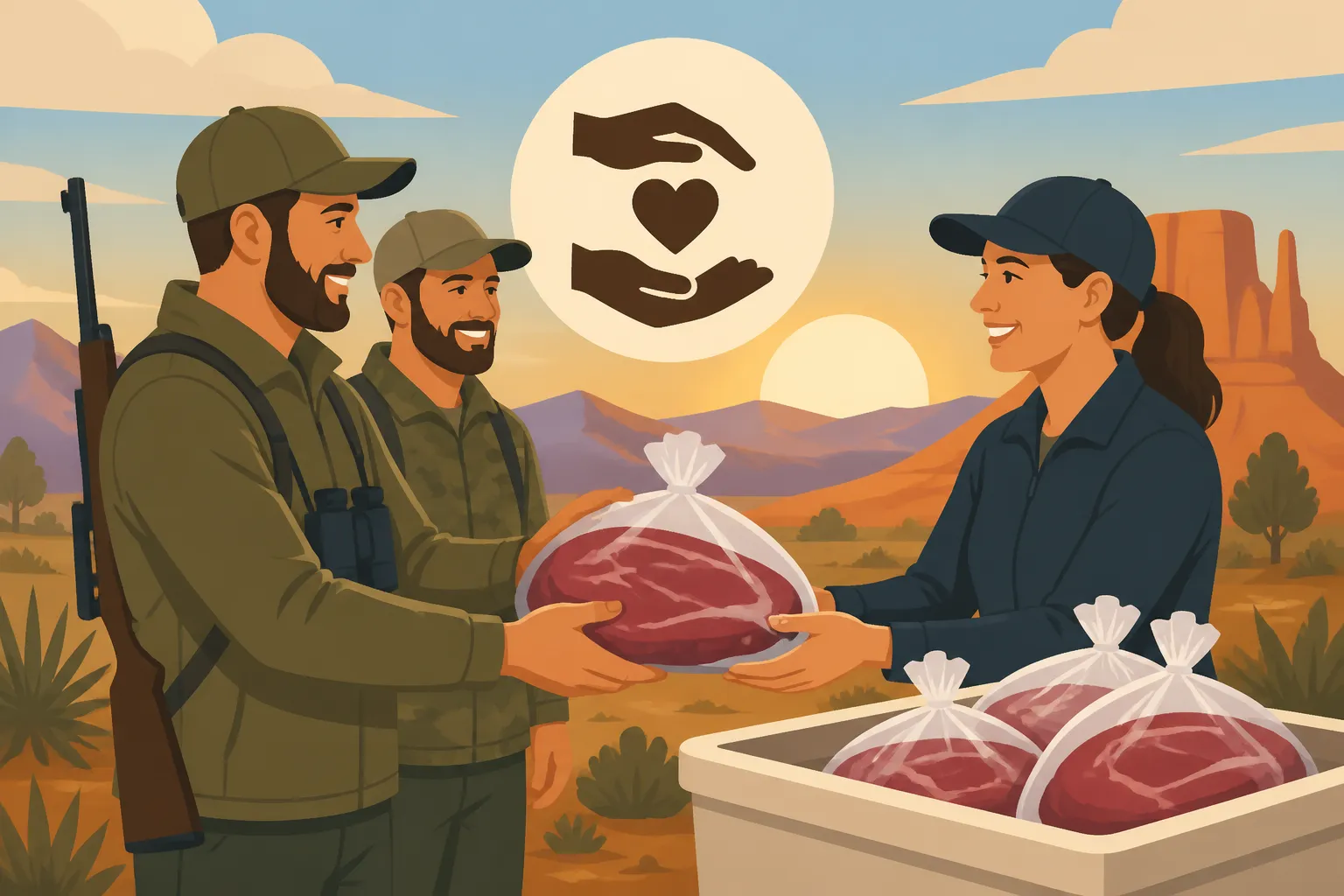
- Donation Program: The processor will then coordinate directly with the chosen donation program (e.g., a local food bank, shelter, or statewide Hunters for the Hungry affiliate). They are typically responsible for ensuring the meat is properly inspected and packaged according to regulatory standards for charitable distribution.
- Receipt for Tax Purposes: If you intend to claim a charitable deduction (consult a tax professional), ensure you get a receipt from the donation organization for the fair market value of the processed meat.
This coordinated effort ensures that the meat moves efficiently from the field to a family's table, upholding the highest standards of food safety and ethical use.
Understanding New Mexico's Rules for Meat Donation
Hunting, like any regulated activity, comes with its own set of rules and responsibilities, and donating game meat is no exception. In New Mexico, these regulations are in place to ensure ethical harvest, proper animal identification, and food safety for public consumption. Understanding these rules is crucial for a smooth donation process.
Mandatory Meat Salvage Requirements and Evidence of Sex
New Mexico, like many states, has strict laws regarding The Meat Salvage Requirements for Big Game. The essence of these rules is that all edible portions of harvested big game animals must be removed from the field and retained for human consumption. This means you can't just take the antlers or cape and leave the meat behind. This regulation directly supports the ethical principle that if you take an animal's life, you are responsible for utilizing its flesh. When donating, you're fulfilling this requirement in a powerful way.
Furthermore, hunters must retain evidence of the animal's sex with the carcass until it reaches its final processing point. This typically means leaving a specific portion of the animal attached, such as the head or reproductive organs, until processing is complete. This is vital for game wardens to verify that the hunter harvested the correct species and sex as per their tag. For example, if you drew a cow elk tag, the evidence of sex confirms you didn't accidentally harvest a bull. Make sure your outfitter and processor are aware of and adhere to these requirements, especially if the head is being sent to a taxidermist or will be separated from the carcass for other reasons. Mandatory Reporting After a New Mexico Harvest is another crucial step after a successful hunt that ensures compliance with state regulations.
Finding Approved Programs Like Hunters for the Hungry
For game meat to be legally and safely distributed to those in need, it typically must go through approved programs. In New Mexico, as in many states, programs like "Hunters for the Hungry" serve as the primary conduit for hunters to donate their harvests. These programs work with licensed processors to ensure the meat is handled, inspected, and packaged according to strict health department guidelines.
Here's how these programs generally operate:
- Partnerships with Processors: Hunters for the Hungry programs partner with a network of licensed, participating processors across the state. These processors are vetted and understand the specific requirements for processing game meat for public distribution.
- Funding: Often, these programs rely on donations or grants to cover the processing fees for hunters who wish to donate their entire harvest. While you, the hunter, might pay for the processing, some programs can assist.
- Distribution Network: Once processed and packaged, the meat is distributed to food banks, soup kitchens, and other charitable organizations within New Mexico, reaching individuals and families facing food insecurity.
It's important to use these established channels rather than attempting to donate raw, unprocessed meat directly to a charity, as most organizations are unable to accept it due to health and safety regulations. Your outfitter, or a quick call to the New Mexico Department of Game and Fish, can provide a list of participating processors and programs in the area you are hunting. When planning your hunt, especially if you're thinking about using a specific outfitter you found on a site like BookYourHunt, inquire if they regularly work with such programs.
The Impact and Benefits of Donating Wild Game
Beyond the immediate relief of solving a logistical challenge, donating your harvested game meat carries a profound positive impact. It's a testament to the hunter's conservation ethic, directly benefiting communities and reinforcing the idea that hunting contributes positively to society.
Feeding Communities and Reducing Food Waste
In a world where food insecurity remains a significant issue, the lean, organic, high-protein meat from wild game is a precious resource. Donating your harvest means that families who might not otherwise have access to such nutritious food can receive it. It directly addresses hunger in New Mexico communities, turning a successful hunt into a tangible act of charity. Imagine the relief and gratitude of a family receiving wholesome elk or deer meat, especially during tough economic times. This act not only feeds bellies but also warms spirits.
Furthermore, donation significantly reduces food waste. Every hunter knows the amount of effort that goes into harvesting an animal. To have any part of that go unused would be a disservice to the animal and the hunt itself. By donating, you ensure that the ultimate purpose of the harvest – sustenance – is fully realized. It's a circular process that underscores the value of wildlife management and ethical hunting practices.
Financial Aspects and Giving Back
While the primary motivation for donating is usually altruistic, there can be some financial considerations that benefit the hunter as well. In many regions, donations to qualified charitable organizations can be tax-deductible. While I can't offer tax advice, it's worth exploring with a tax professional whether the fair market value of the processed meat you donate qualifies for a deduction. This potential benefit can help offset the costs associated with your hunt, including your tag, travel, and the processing fees you pay for the donation.
More importantly, donating meat is a powerful way to give back to the community and showcase the positive side of hunting. It dispels negative stereotypes and highlights hunters as compassionate conservationists who contribute to both wildlife management and human welfare. This act of generosity strengthens the bond between hunters and the broader non-hunting public, fostering understanding and appreciation for the role hunting plays in society. It's a powerful statement about responsibility and stewardship.
Comparing Your Post-Harvest Options in New Mexico
When you've successfully harvested an animal in New Mexico, you have choices regarding how to manage the meat. Each option comes with its own set of considerations, and understanding them helps you make the best decision for your situation and values.
| Option | Pros | Cons | Ideal For |
|---|---|---|---|
| Keeping All the Meat | Full control over processing; personal satisfaction | Requires significant freezer space; complex travel logistics | Local hunters with ample storage; hunters who prefer DIY processing |
| Donating All the Meat | Supports community; reduces food waste; eases travel burden | Hunter pays processing fees; less personal consumption | Non-resident hunters; hunters with limited storage; those wanting to give back |
| Processing for Donation (Partial) | Balances personal needs with charitable giving; less logistical stress | Still requires some processing coordination; less total impact | Hunters with some freezer space but who want to contribute meaningfully |
Remember, regardless of your choice, The Meat Salvage Requirements for Big Game in New Mexico mean you must make a good faith effort to utilize all edible portions of the animal. Donating provides a clear, ethical pathway to fulfill this obligation while simultaneously serving a greater good. Your outfitter, whether booked through a service like GoHunt or directly, should be able to assist in coordinating any of these options.
In the end, harvesting an animal is a deeply personal experience, and how you choose to manage its meat is an extension of your hunting ethic. Donating your game meat in New Mexico is a meaningful way to honor your harvest, give back to the community, and simplify the often-complex logistics of transporting wild game. It transforms your success in the field into sustenance and hope for others.
Disclaimer
This article is for general informational purposes only and does not constitute professional advice. Laws, prices and regulations vary by location and change over time. Consult a qualified professional for guidance on your specific situation.