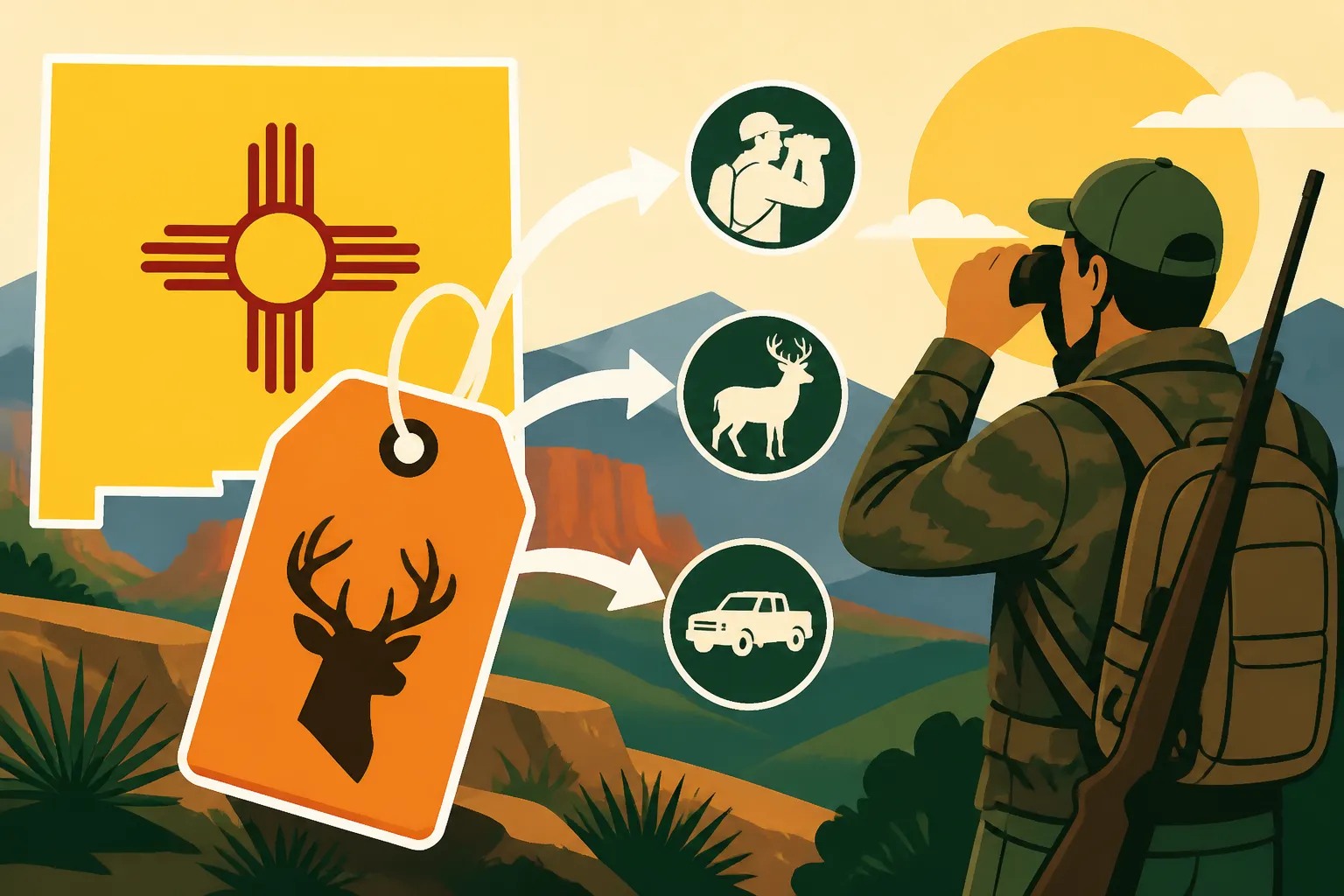
How New Mexico EPLUS Tags Reach Hunters
Hunting in New Mexico can feel like navigating a complex maze of draw odds and application periods, especially when you're dreaming of a coveted elk tag. Many hunters get discouraged after years of striking out in the lottery, feeling like their only options are to keep applying and hoping for luck, or shelling out for an expensive, fully-guided private land hunt. This guide is here to shed light on an alternative path: the New Mexico EPLUS system, explaining exactly how these unique tags become available to hunters outside the traditional draw.
Understanding the New Mexico EPLUS System
The EPLUS program in New Mexico stands for "Elk Private Land Use System." It’s designed to allow private landowners to manage elk on their property and, in turn, offer hunting opportunities. For many hunters, especially non-residents or those who have had tough luck in the public land draw, EPLUS tags represent a vital pathway to experience New Mexico's incredible elk hunting. It's a different beast entirely from the state's traditional public land draw, and understanding its nuances is key to accessing these opportunities.
Bypassing the Draw with EPLUS
One of the biggest appeals of the EPLUS system is that it allows hunters to completely bypass the general public land draw for elk. If you've spent years putting in for those limited public land tags, watching your bank account get hit with application fees only to receive that dreaded "unsuccessful" email, the idea of a guaranteed tag is incredibly attractive. EPLUS tags aren't subject to the same lottery system; instead, they are essentially purchased directly, offering a more immediate and predictable path to a New Mexico elk hunt.
This direct acquisition means you don't have to worry about the vagaries of luck or the Why New Mexico Draw Odds Do Not Improve With Time. While the cost is often higher than a drawn public land tag, the certainty of a tag in hand allows for much more definitive hunt planning. It's about trading the uncertainty of the draw for a more structured, albeit more expensive, hunting experience.
The Core Idea: Elk Management on Private Land
At its heart, the EPLUS program serves a dual purpose: it provides a mechanism for landowners to manage elk populations that spend time on their private properties, and it creates economic incentives for them to do so. Elk are migratory animals, and even units with vast tracts of public land often see elk moving onto private agricultural fields or ranch lands during certain times of the year, particularly outside the rut or during harsh winters. This can lead to crop damage, fence damage, and other conflicts for landowners.
By issuing EPLUS authorizations, the New Mexico Department of Game and Fish empowers landowners to control elk numbers on their property, reducing potential conflicts while simultaneously generating revenue that can be reinvested into habitat improvement or ranch operations. It's a unique system designed to balance wildlife conservation with private land stewardship, ensuring elk populations are managed responsibly across both public and private boundaries.
How Landowners Get EPLUS Authorizations
So, how do these special EPLUS authorizations even come into being? It's not as simple as a landowner just deciding they want to sell an elk hunt. There's a formal process involved, overseen by the New Mexico Department of Game and Fish, to ensure the program aligns with broader wildlife management goals and fair practices. This process directly influences the availability and type of EPLUS tags that eventually make their way to hunters.
The Allocation Process for Landowners
Landowners apply to the New Mexico Department of Game and Fish to participate in the EPLUS program. Their application is evaluated based on several factors, primarily the elk population dynamics within the unit, the historical use of their private land by elk, and the potential for elk-related damage. It's not just about having elk on your property; it's about demonstrating a genuine need for management and a commitment to the program's objectives.
Once approved, the Department allocates a certain number of EPLUS authorizations to the landowner. These aren't physical tags yet, but rather permissions to sell elk hunting opportunities. The number of authorizations issued to a specific landowner can vary significantly based on the size of their property, the density of elk, and the unit's overall elk management plan. This allocation forms the fundamental supply for the entire EPLUS market.
Criteria for Receiving EPLUS Tags
For a landowner to receive EPLUS authorizations, their property generally needs to meet specific criteria. This often includes a minimum acreage threshold, evidence of significant elk use (such as observed animals, game camera footage, or damage reports), and location within a designated elk management unit. The Department wants to ensure that these authorizations are being granted where they can genuinely contribute to elk management and provide a quality hunting experience.
Landowners must also agree to certain conditions, such as allowing access for Department personnel to monitor elk populations and harvest, and adhering to specific reporting requirements. This oversight ensures accountability and helps maintain the integrity of the EPLUS system. These criteria are crucial because they ensure that EPLUS opportunities are tied to genuine elk presence and management needs, rather than just being a means to commercialize any private parcel.
The Path from Landowner to Hunter: Direct Sales and Third Parties
Once a landowner has EPLUS authorizations in hand, the real journey begins for the hunter looking to acquire one. There are a few primary routes these authorizations take to find their way to a waiting hunter, each with its own benefits and considerations. Understanding these avenues is critical for anyone hoping to secure an EPLUS tag.
Direct Deals with Ranchers
The most straightforward way to acquire an EPLUS tag is often directly from the landowner themselves. Many ranchers who receive EPLUS authorizations will sell them directly to hunters. This often involves personal connections, referrals, or hunters actively reaching out to ranches in units they are interested in. A direct deal can sometimes mean a more personal experience, and potentially, a slightly lower price since there's no middleman involved.
However, finding these direct deals requires a lot of proactive research and networking. You might need to contact numerous ranches, inquire about their EPLUS availability, and discuss what kind of hunt they offer. It requires more legwork on the hunter's part, but for those who value direct communication and building relationships, it can be a rewarding path. How New Mexico EPLUS Authorizations Are Issued through this direct channel can feel more grassroots and personal.
Working with Outfitters and Brokers
For many hunters, especially those from out of state or new to New Mexico, working with an outfitter or broker is the most common way to get an EPLUS tag. Outfitters often have established relationships with multiple landowners who receive EPLUS authorizations. They essentially buy these authorizations from the landowners and then package them as part of a guided or semi-guided hunt experience. This is a significant part of What a Guided New Mexico Elk Hunt Costs.
Outfitters provide not just the tag, but also services like lodging, food, guides, and transportation within the hunting area. This convenience is a major draw for hunters who want a comprehensive experience without having to manage all the logistics themselves. Brokers, on the other hand, might simply connect hunters with landowners for a fee, or they might aggregate EPLUS tags from various sources and offer them as standalone purchases, sometimes with options for partial outfitting services. These third parties act as valuable conduits, simplifying the process for hunters who might not have the time or resources to search for direct landowner deals.
Online Marketplaces like BookYourHunt
In the age of digital information, online marketplaces have emerged as another popular way for EPLUS tags to reach hunters. Platforms like BookYourHunt specialize in connecting hunters with outfitters and landowners who have available tags, including EPLUS authorizations. These sites often list various hunt packages, complete with descriptions of the unit, the type of hunt, included services, and pricing.
Using an online platform can streamline the research process significantly. You can browse multiple options from different providers, compare offerings, and read reviews from other hunters. It provides a centralized hub for finding EPLUS opportunities, reducing the need for individual outreach to dozens of ranches or outfitters. These platforms offer a level of transparency and accessibility that can be incredibly helpful when navigating the sometimes opaque world of private land tag acquisition. You can often see Where to Find New Mexico EPLUS Tags for Sale with ease.
Understanding the Different Types of EPLUS Tags
Not all EPLUS tags are created equal, and understanding the distinctions is crucial for planning your hunt. The type of EPLUS authorization you acquire will directly impact where you can hunt and what your expectations should be for the experience. The primary differentiation lies between "unit-wide" and "ranch-only" authorizations.
Unit-Wide EPLUS Authorizations
A unit-wide EPLUS authorization is the gold standard for many hunters. When a landowner sells a unit-wide EPLUS tag, it grants the hunter the right to hunt elk anywhere within that specific New Mexico Game Management Unit (GMU) where the tag is valid, provided they have legal access. This means you can hunt on the landowner's private property and any accessible public land within that same unit. This flexibility is incredibly valuable, as it allows hunters to pursue elk across varied terrain, adapting to elk movement patterns and pressure.
The ability to hunt public land with a unit-wide EPLUS tag offers a much broader hunting experience, often akin to drawing a public land tag but without the draw odds. It opens up opportunities to chase elk in the mountains, canyons, and timber that characterize many of New Mexico's best elk units. This type of tag gives you significant freedom and allows for a more traditional, expansive elk hunt.
Ranch-Only EPLUS Tags
In contrast, a ranch-only EPLUS authorization restricts the hunter to hunting exclusively on the private property of the landowner who issued the tag. While this might sound limiting, it can still provide an excellent hunting experience, especially if the ranch is large, holds good numbers of elk, or is strategically located along elk migration routes or near key water sources.
Ranch-only hunts often come with the benefit of less pressure, as only those authorized by the landowner will be hunting that specific property. These hunts can be highly managed, sometimes even offering guaranteed opportunities, especially on ranches that heavily invest in habitat and game management. However, your success will be entirely dependent on the elk moving onto and staying on that private ground during your hunt window. While it offers less flexibility than a unit-wide tag, it can still be a fantastic option, particularly for those looking for a more controlled environment or with limited time for extensive scouting on public lands. This is an important distinction to grasp when researching Unit-Wide Against Ranch-Only New Mexico EPLUS Tags.
Impact on Hunt Strategy
The type of EPLUS tag you secure will dramatically shape your hunt strategy. With a unit-wide tag, your planning might look very similar to a public land hunt: extensive e-scouting, looking at historical elk movements, and being prepared to cover a lot of ground across both private and public parcels. You'll want to understand Reading a New Mexico Hunt Code Before You Apply to ensure you're in the right place.
For a ranch-only tag, your strategy will focus much more acutely on the specific features of the private property. This might involve understanding the ranch's topography, water sources, bedding areas, and how elk move onto and off the property. Scouting becomes about learning that specific ranch inside and out. It's crucial to clarify with the landowner or outfitter exactly what kind of EPLUS tag you're buying before you commit, as it will profoundly influence your preparations and expectations.
The Cost and Value Proposition of EPLUS Tags
Let's be real: EPLUS tags aren't cheap. They represent a significant investment, often much higher than the face value of a public land tag you might draw. However, for many hunters, the value they offer in terms of certainty, access, and experience makes them a worthwhile consideration. It's important to break down what contributes to this cost and what you're actually gaining.
Breaking Down the Price Tag
The cost of an EPLUS tag is a composite of several factors. First and foremost is the market value of the authorization itself. Landowners are effectively selling access to a valuable resource. Beyond that, if you're working with an outfitter, the price will include their services: guiding fees, food, lodging, transportation, and potentially even field preparation of your animal. The quality of the outfitter, the reputation of the unit, the timing of the hunt (e.g., peak rut hunts command a premium), and the success rates all play a role in setting the price.
It's crucial to understand that the EPLUS authorization itself is just the permission slip. You will still need to purchase a New Mexico Game Hunting License and often a Habitat Management & Access Validation (HMAV) or Habitat Stamp, depending on where you plan to hunt. These are separate costs that need to be factored into your overall hunt budget. It’s also wise to consider additional expenses like travel, meat processing, and taxidermy. Many hunters ask What a Guided New Mexico Elk Hunt Costs without realizing the many components involved.
Here's a simplified look at potential cost components for an EPLUS hunt:
| Cost Component | Description | Variability |
|---|---|---|
| EPLUS Authorization | The actual 'tag' or permit to hunt elk (purchased from landowner/outfitter) | High (unit, time of year, outfitter, unit-wide/ranch-only) |
| NM Game Hunting License | Mandatory license to hunt any big game in New Mexico | Resident/Nonresident, age |
| HMAV/Habitat Stamp | Required for hunting on state trust or federal lands | Required for most EPLUS hunts with public access |
| Outfitter Services | Guiding, lodging, food, camp, field care (if applicable) | High (depends on package, duration, level of service) |
| Travel & Logistics | Flights, fuel, vehicle rental, shuttles | Variable based on distance and mode of travel |
| Meat Processing | Butchering and packaging of harvested animal | Variable by processor and amount of meat |
| Taxidermy | If you plan to mount your trophy | Variable by artist and type of mount |
What You're Paying For: Access and Opportunity
When you buy an EPLUS tag, you're not just paying for a piece of paper; you're paying for guaranteed access and opportunity. For many, this is invaluable. If you've been dreaming of a New Mexico elk hunt for years and constantly come up empty in the draw, an EPLUS tag provides a definitive solution. You get to choose your unit and your hunt dates with a high degree of certainty, allowing for meticulous planning and preparation.
Furthermore, EPLUS tags often provide access to prime hunting grounds. Landowners with significant elk presence on their property are those most likely to receive these authorizations. This means you might be hunting on ranches that actively manage for wildlife or have excellent habitat that naturally attracts and holds elk. The investment is often seen as a way to maximize your chances of success and experience a high-quality hunt, rather than leaving it up to the slim odds of a lottery.
EPLUS vs. Drawn Tags: A Comparison
The choice between pursuing a drawn public land tag and investing in an EPLUS tag boils down to personal priorities, budget, and appetite for risk. Drawn tags are significantly less expensive upfront, making them highly attractive. However, the downside is the uncertainty of the draw. You might apply for years and never draw a coveted tag, especially for prime units or specific seasons like the rut. Many hopeful hunters want to know How New Mexico Draw Odds Work Without Points.
EPLUS tags, while pricier, offer guaranteed access and eliminate the draw lottery. They allow for predictable planning and can open doors to quality private land, or a combination of private and public land, depending on the authorization type. For hunters who have limited time, a specific window they can hunt, or simply want to avoid the annual disappointment of the draw, the EPLUS system offers a compelling alternative. It's about weighing the cost against the certainty and the quality of the hunting experience you desire.
Navigating the EPLUS Market: Tips for Hunters
The EPLUS market, while offering great opportunities, can also be a bit of a wild west. With significant money on the line, it's essential for hunters to approach it with diligence and smart planning. Doing your homework can make all the difference between a fantastic hunt and a disappointing, expensive experience.
Due Diligence: Vetting Sellers and Outfitters
Before you commit to purchasing an EPLUS tag or booking a hunt package, thorough vetting is non-negotiable. If you're buying directly from a landowner, ensure they are legitimate and have valid EPLUS authorizations. Ask for references and verify their participation in the program with the New Mexico Department of Game and Fish if possible.
When working with an outfitter, research their reputation meticulously. Look for independent reviews, check their licensing with the state, and ask for a list of recent client references. Don't just settle for names; actually call and speak with these past clients about their experiences. Ask about success rates, the quality of the guides, the camp conditions, and how any unexpected situations were handled. Websites like GoHunt often have resources or forums where hunters discuss their experiences with various outfitters and EPLUS providers, offering valuable peer insights. Be sure to understand Questions to Ask a New Mexico Outfitter before you sign anything.
Timing Your EPLUS Purchase
The timing of your EPLUS purchase can be critical. Many landowners and outfitters sell their EPLUS tags well in advance, sometimes a year or more out, especially for prime units and rut hunts. Waiting too long might mean the best opportunities are already snatched up. However, sometimes last-minute opportunities can arise if someone cancels or an outfitter has an unsold slot. These might come at a discount, but the selection will be limited.
It's a delicate balance between securing a desired hunt and potentially finding a better deal. For popular units and seasons, it's usually wise to start looking and booking early. For less competitive hunts or if you're flexible with your dates and units, keeping an eye out for later availability might pay off. Always clarify the booking and cancellation policies, especially regarding deposits, if you need to back out.
Using Resources like GoHunt for Research
Leveraging online hunting resources can be a game-changer when navigating the EPLUS market. Platforms such as GoHunt provide a wealth of information that can help you make informed decisions. They often offer detailed unit breakdowns, including public land percentages, elk population trends, and harvest statistics. This data is invaluable for assessing the quality and potential of a unit, even if you're hunting private land with an EPLUS tag.
Beyond data, many of these sites feature forums, articles, and even tag consulting services that can help you understand the EPLUS system, identify reputable outfitters, and learn from the experiences of other hunters. Using these tools for research can save you a tremendous amount of time and potentially prevent costly mistakes, empowering you to make the most strategic EPLUS purchase for your New Mexico elk hunt.
Disclaimer
This article is for general informational purposes only and does not constitute professional advice. Laws, prices and regulations vary by location and change over time. Consult a qualified professional for guidance on your specific situation.