Scouting New Mexico State Trust Land Fourteen Days Out
Trying to figure out where you can even step foot to scout before your New Mexico hunt can feel like navigating a legal minefield. You pour over maps, you find what looks like great public ground, only to realize some of it is State Trust Land with its own unique set of rules. It’s enough to make your head spin! But don't despair – understanding the specific regulations, especially the crucial 14-day scouting window, is absolutely key to unlocking these often overlooked and productive areas. This guide will walk you through everything you need to know to effectively scout New Mexico State Trust Land, legally and ethically, making the most of that limited pre-hunt access.
Understanding New Mexico State Trust Land
New Mexico State Trust Land is a fascinating, yet often misunderstood, category of public land. Unlike the vast swaths of National Forest or BLM land that many Western hunters are familiar with, Trust Land operates under a different mandate and, consequently, different rules. Grasping these fundamental differences is your first step to confident and legal scouting.
What State Trust Land Is and Isn't
At its core, New Mexico State Trust Land exists to generate revenue for specific public institutions, primarily schools, universities, and hospitals, as designated by the original land grants. This isn't land set aside purely for recreation or wildlife conservation in the same way federal lands might be. Instead, it's managed for multiple uses that can produce income, including grazing, mineral extraction, and timber. Because of this revenue-generating purpose, access for recreational users, including hunters and scouts, is carefully regulated.
Many hunters mistakenly assume that if a piece of land isn't private, it must be open federal land. This isn't the case with State Trust Land. While your New Mexico hunting license does grant you an easement for legal hunting and fishing activities on these lands, as explained in "A New Mexico License Is Your State Trust Land Easement", this access isn't unlimited. It's specifically tied to active hunting or fishing during a legal season. The scouting aspect, which we’ll dive into shortly, has its own unique, stringent limitations designed to balance public access with the land's primary purpose and other commercial users, like ranchers. It's not a free-for-all like some other public lands might seem.
The Role of the Commissioner of Public Lands
The New Mexico Commissioner of Public Lands is the elected official responsible for managing the state’s 9 million surface acres and 13 million mineral acres of State Trust Land. This office oversees all activities, from grazing leases to oil and gas development, and, yes, recreational access. Their decisions and policies directly impact how you, as a hunter, can use these lands.
Because the Commissioner's office is focused on generating revenue for the trust beneficiaries, their approach to land management can feel distinct from federal agencies like the Forest Service or BLM. This isn't inherently good or bad, just different. You might find certain roads closed, or areas heavily grazed, due to existing leases. It's important to remember that existing commercial leases often take precedence, and hunters are considered secondary users. Understanding this framework helps you anticipate potential access issues and respect the other valid uses of the land.
How to Identify State Trust Land
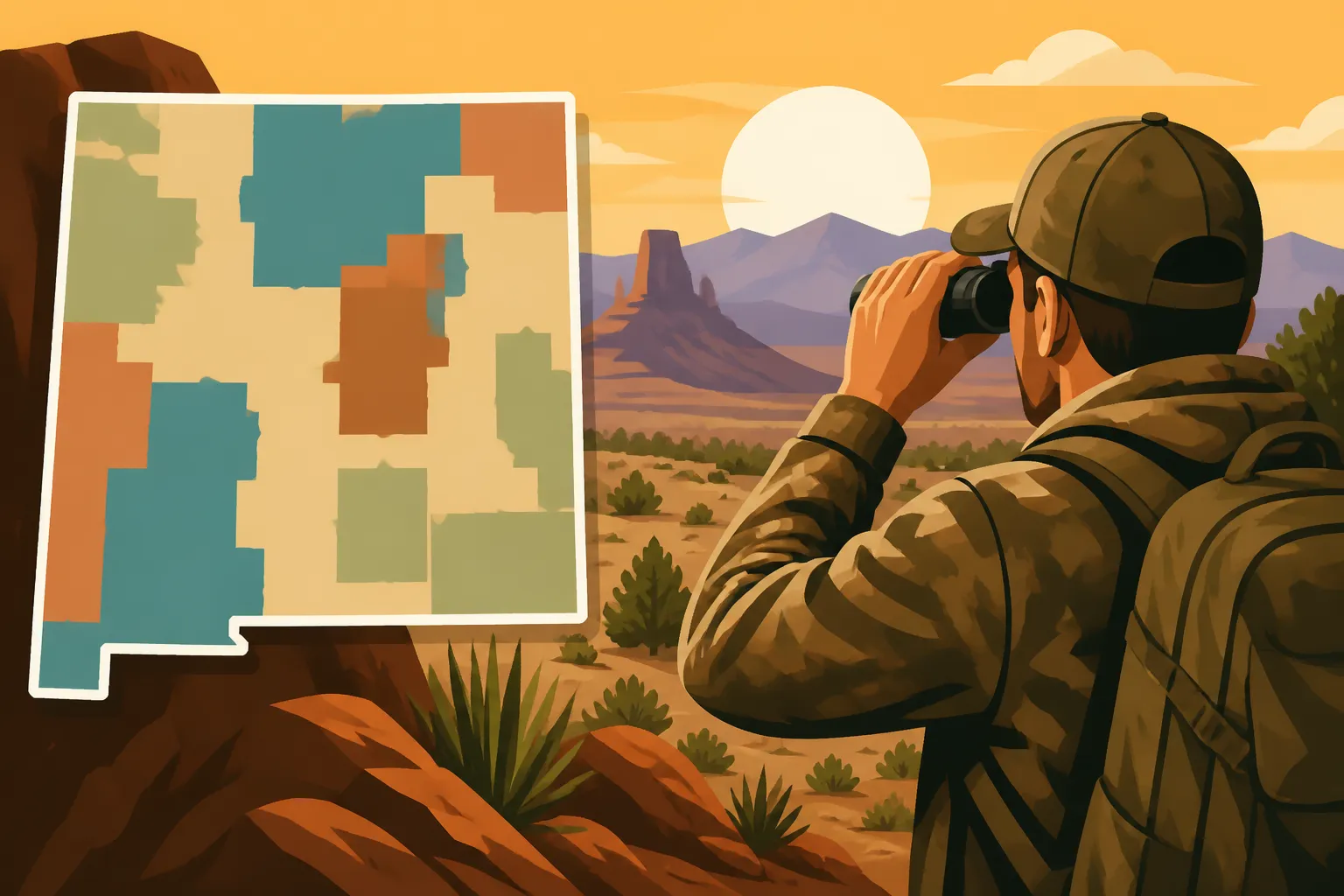
One of the biggest challenges for hunters is simply knowing what land is State Trust Land. It doesn't always have obvious signage, and its parcels are often intermingled with private, BLM, and National Forest lands, creating a confusing checkerboard pattern on a map. This is where good mapping technology becomes an absolute necessity.
Tools like the New Mexico Department of Game and Fish (NMDGF) public land maps, or more advanced GPS mapping applications like GoHunt, are indispensable. GoHunt, for instance, offers detailed land ownership layers that color-code different types of public and private land, making it easy to discern State Trust Land from other categories. When you’re staring at a satellite image, those green squares might be BLM, but the yellow ones could be State Trust Land, each with its own rulebook. Learning to effectively use these digital tools to identify these boundaries is crucial, as misinterpreting ownership can quickly lead to trespassing issues. Checking these layers thoroughly before you ever leave your couch is part of "Reading a Land Ownership Layer Correctly" and is vital for staying on the right side of the law.
The 14-Day Scouting Window Explained
This is the rule that trips up many hunters, and honestly, it’s a tricky one if you’re used to more lenient scouting allowances on federal land. The 14-day scouting window on New Mexico State Trust Land is a strict regulation designed to manage access and minimize disturbance outside of active hunting seasons. Ignoring or misinterpreting this rule can lead to significant penalties, so let's break it down thoroughly.
Why Fourteen Days?
The reasoning behind the 14-day window is multi-faceted, stemming from the unique nature of State Trust Land. As mentioned, these lands are primarily managed for revenue generation through various uses, including extensive cattle grazing. Allowing unlimited, year-round scouting could lead to:
- Excessive Disturbance: Constant human presence can push game animals off the property or disrupt their natural patterns, impacting hunting quality during the actual season. This is particularly true if individuals are setting up cameras, walking game trails repeatedly, or leaving scents.
- Conflict with Other Users: Trust lands are often leased for ranching. Frequent recreational activity outside a specific window can interfere with livestock operations, damage infrastructure, or simply create unwanted interaction with lessees who are trying to manage their property.
- Preventing "Pre-Hunting" Activities: The rule aims to prevent activities that might give hunters an unfair advantage or cross into unethical behavior, such as excessive trail camera use, creating permanent blinds, or establishing bait sites long before the season. While "Trail Camera Rules on New Mexico Public Land" cover all public land, the limited scouting window on Trust Land adds another layer of restriction.
This limited window represents a compromise: it offers hunters a defined period for pre-season reconnaissance while protecting the land from over-use and maintaining its integrity for its primary revenue-generating purposes. It’s a delicate balance, and strict adherence helps maintain this privilege for all.
What "Scouting" Entails Legally
Okay, so you're within the 14-day window. What can you actually do? The NMDGF defines "scouting" as activities like walking the land, observing game, looking for tracks and sign, identifying water sources, and generally familiarizing yourself with the terrain. These are all legitimate and necessary parts of a pre-hunt plan.
However, it’s just as important to understand what is not allowed, even within this window. You cannot set up permanent blinds, stands, or ground blinds that are left unattended for extended periods. The land is not for long-term storage or establishment of infrastructure. Similarly, while you might be looking for shed antlers, remember that shed hunting itself has specific legal dates outside of which it might be illegal, regardless of the 14-day rule. Generally, any activity that significantly alters the landscape or establishes a permanent presence would be considered outside the scope of "scouting." The rule is about temporary, observational visits to aid your hunt, not to establish a long-term presence.
Calculating Your 14-Day Window
This is where many hunters get confused, but it's actually quite simple if you have your hunt dates locked down. The 14-day window begins exactly 14 calendar days before the first day of your specific hunting season.
Let's use an example. If your elk hunt, for instance, starts on October 15th, you would count back 14 days from that date.
- October 15th (Hunt Start)
- October 14th
- October 13th
- October 12th
- October 11th
- October 10th
- October 9th
- October 8th
- October 7th
- October 6th
- October 5th
- October 4th
- October 3rd
- October 2nd (This is day 1 of your 14-day window)
So, for an October 15th hunt, you could legally scout State Trust Land from October 2nd through October 14th. This applies to every legal hunt you might have drawn. If you're looking at "When New Mexico's First Archery Deer Season Runs", make sure to calculate the 14 days specifically for that season's opener. It's not a generic 14-day window for the entire year, but rather tied to your specific tag. Always double-check your official hunt proclamation for your exact season dates, and then calculate backwards meticulously. Being off by even a day could result in a citation.
Practical Scouting Strategies for Trust Land
Given the tight 14-day window for scouting New Mexico State Trust Land, you can't afford to waste a single minute once you're on the ground. This means your preparation before those two weeks is absolutely paramount. It's all about working smart, not just hard.
Maximizing Your Limited Time
Since your on-the-ground access is so restricted, the bulk of your scouting work needs to happen through intensive e-scouting from home. Think of this as your "pre-pre-scouting" phase. Before the 14-day window even opens, you should have a solid game plan.
Start with detailed satellite imagery. Tools like GoHunt are incredible for this, allowing you to zoom in on terrain features, identify potential water sources, and trace historical animal movements. Look for natural funnels, pinch points between mesas or draws, benches where animals might bed, and distinct travel corridors. Pay close attention to vegetation changes that indicate different forage or cover. Use topographical maps to understand elevation changes and identify potential glassing knobs or hidden basins. By the time your 14-day window begins, you should have a list of high-priority waypoints marked on your GPS, ready to be physically checked. For more tips on this, refer to "E-Scouting a New Mexico Unit Before the Season". This meticulous digital reconnaissance allows you to hit the ground running, focusing your precious on-site time on verifying assumptions and finding fresh sign, rather than just aimlessly wandering.
On-the-Ground Techniques for Trust Land
Once you're within your legal 14-day window, your scouting needs to be efficient and strategic. Because many Trust Lands are open, arid, and often grazed, covering ground quickly and observing from a distance are often your best tactics.
- Glassing is Your Best Friend: In open country, good optics are non-negotiable. Find high points on or adjacent to the Trust Land you want to hunt. Set up your spotting scope or high-powered binoculars and systematically grid-glass the terrain. Look for movement, distinct shapes, and patterns that indicate game. This allows you to cover vast amounts of ground visually without putting boots on every single square inch, minimizing disturbance and maximizing your limited time. This method is particularly effective for mule deer and antelope in these types of environments, and principles from "Glassing Benches and Parks for Elk" can be adapted for other species too.
- Focus on Sign and Water: While you're on the move, prioritize finding fresh tracks, droppings, and rubs or scrapes (depending on the species and season). Pay extremely close attention to water sources. In New Mexico's dry climate, water is a magnet for game. Stock tanks, windmills, natural seeps, and even man-made guzzlers can concentrate animals. Verify the accessibility and current conditions of these water points. Any signs of recent use around water are gold. For desert species, a quick scout of a reliable water source can be far more productive than hiking miles of barren ground. More on this in "Sitting Water for Deer and Antelope".
- High-Mobility Scouting: Consider using a vehicle where legal and appropriate to quickly access different parts of the property, especially if it's large and road networks exist. Park and make short, targeted hikes into areas identified during e-scouting as high-potential. Don't spend hours blindly walking; instead, use your limited time to confirm or deny your e-scouting hypotheses.
Respecting Boundaries and Private Inholdings
The checkerboard pattern of land ownership across New Mexico means that State Trust Land often butts up against, or even contains, parcels of private land. This can be incredibly confusing and is a leading cause of accidental trespass.
- Always Know Your Location: A reliable GPS device or a smartphone app with detailed land ownership layers (like GoHunt) is not optional when scouting Trust Land. You need to know your exact position at all times relative to property lines. Even a few yards can put you on private property, leading to legal issues and ruining relations with landowners. Regularly check your device as you move.
- Understand Access Points: Just because a piece of State Trust Land is legally accessible doesn't mean you can reach it without crossing private property. "Crossing Private Ground to Reach Public Land" is a common dilemma in New Mexico. If accessing Trust Land requires crossing private land, you must obtain explicit written permission from the landowner beforehand. Do not assume implied access or try to sneak across. Respect for private property is paramount, and landowners are generally more amenable to lawful, respectful hunters.
- Look for Fences and Markers: While not always definitive, fences, cattle guards, and occasional signage can give you clues about property lines. Always back up these visual cues with your GPS. Livestock are also a common sight on Trust Lands due to grazing leases; give them a wide berth and ensure you close any gates you open.
Key Considerations When Scouting State Trust Land
Scouting State Trust Land effectively in New Mexico goes beyond just knowing the 14-day rule and how to use a map. It requires a deeper understanding of the environment, how game animals utilize it, and the potential challenges you might face.
Water Sources and Game Concentration
In a state as arid as New Mexico, water isn't just important; it's often the single most critical factor determining where game animals live and move, especially on the more open State Trust Land parcels. Many of these lands are found in the dryer, eastern or southern parts of the state, or lower elevation areas where water is scarce.
During your 14-day scouting window, dedicating significant time to finding and assessing water sources is a top priority. Look for natural springs, seeps, and tinajas (rock depressions that hold water) after rain. More commonly, you'll find man-made water points like stock tanks, windmills, and wildlife guzzlers. These are absolute magnets for deer, pronghorn, and even elk, depending on the unit. Observe these areas for fresh tracks, droppings, and even direct sightings. Knowing the location and reliability of every water source in your hunting area can literally make or break your hunt. For more specific insights on this, dive into "Water Sources That Concentrate Desert Game". A reliable water source can serve as a natural blind or ambush point during your actual hunt.
Understanding Terrain and Cover
The landscape of New Mexico State Trust Land is incredibly diverse, ranging from vast, flat grasslands and sagebrush flats to broken badlands, mesquite bosques, and juniper-covered hills. Understanding the specific terrain and available cover within your unit is crucial for predicting game movement and selecting effective scouting and hunting strategies.
On the open plains, visibility is excellent, making glassing from a distance highly effective. Here, game will often bed in slight depressions, around isolated clumps of brush, or along the edges of dry washes for minimal cover from the sun and wind. In more broken country, like areas with rimrock or deep arroyos, animals will use the topography itself for cover and travel. They'll drop into washes to move undetected, or bed on benches overlooking drainages. Learn to read the subtle nuances of the land—a small ridge, a thick patch of yucca, or a dry creek bed can all serve as vital cover or travel corridors for game. Even high-elevation areas might have Trust Land intermixed; consider the advice in "Terrain That Hides an Approach at 10,000 Feet" and adapt it to the specific elevation and vegetation on your chosen Trust Land.
Navigating Seasonal Closures and Conditions
While your hunting license grants you access to State Trust Land during your specified hunt, and the 14-day window for scouting, it's vital to remember that these lands are dynamic. They are actively managed and sometimes subject to temporary closures or specific conditions that can impact your visit.
- Fire Restrictions: New Mexico is prone to wildfires, especially during dry seasons. Trust Lands, like other public lands, will often implement fire restrictions (e.g., no campfires, no smoking, no off-road vehicle travel) to prevent blazes. Always check the current fire danger and restrictions for your area before heading out.
- Road Conditions and Closures: Many State Trust Lands have a network of dirt roads, but these can quickly become impassable after heavy rains, especially during monsoon season. Roads can be washed out, muddy, or deeply rutted, requiring a high-clearance 4×4 vehicle or even rendering them completely impassable. Some roads might also be seasonally closed for resource protection or to prevent erosion. Always check local conditions and be prepared to walk if vehicle access is limited. The challenges of "Monsoon Road Conditions in the Gila" are relevant here, even if you’re not in the Gila.
- Other Uses: Remember, grazing leases are very common. You might encounter cattle, fencing, and gates. Always leave gates as you find them (open or closed) unless otherwise posted, and give livestock plenty of space. Military operations or other temporary closures, while rare, can also occur, so it's wise to do a quick check with the NMDGF or State Land Office if you have any doubts before making a long drive.
Legalities, Ethics, and Best Practices
Hunting and scouting on New Mexico State Trust Land is a privilege, not an inherent right. Upholding the highest standards of legality and ethical behavior is crucial to maintaining access for all hunters. This isn't just about avoiding a ticket; it's about being a responsible land user.
Carrying Your License and Knowledge
This might seem basic, but it's astonishing how often hunters forget it or think it's not strictly necessary for scouting. When you are on New Mexico State Trust Land, even if only scouting during your 14-day window, you must have your valid New Mexico hunting license in your possession. This license is the very document that grants you the easement for access. Without it, you are technically trespassing.
Beyond the physical license, you need to carry a deep understanding of the rules. That means reading the current year's NMDGF Hunting Rules and Information Booklet cover to cover. It's not light reading, but it's your definitive guide. Familiarize yourself with all general hunting regulations, and specifically with the regulations pertaining to State Trust Land. Knowing these rules cold will not only keep you out of trouble but also allow you to confidently and legally utilize the land. If you're ever in doubt about where to find the most current rules, "Where the Current New Mexico Regulations Are Posted" is your go-to resource. A quick call to the NMDGF or the State Land Office if you have specific questions is always better than guessing.
Minimizing Your Impact
The phrase "Leave No Trace" is more than just a catchy slogan; it's a fundamental principle for any responsible outdoor enthusiast, especially on multi-use lands like State Trust. Your goal when scouting is to gather information about game, not to leave a lasting footprint or disturb the very animals you hope to hunt.
- Pack It In, Pack It Out: This is the golden rule. Everything you bring onto the land, you must take back out. This includes all trash, spent casings, and any other refuse. Leaving trash behind not only pollutes the environment but also degrades the public perception of hunters.
- Minimize Game Disturbance: When scouting, try to be as stealthy and unobtrusive as possible. If you spot game, observe them from a distance using your optics rather than trying to push closer. Repeatedly bumping animals, especially during the crucial weeks before the season, can stress them and cause them to move out of the area you plan to hunt. Your goal is to understand their patterns, not to alter them.
- Respect the Land: Drive only on designated roads, and absolutely avoid off-roading unless it's explicitly permitted and clearly marked. Driving off-road can damage fragile desert ecosystems, create erosion, and is often illegal. Respect any existing infrastructure like fences, gates, and stock tanks. If you open a gate, close it behind you. Remember, State Trust Land is an active landscape with other users, particularly ranchers; leaving things as you found them fosters positive relationships and helps ensure continued access.
Reporting Violations or Concerns
Responsible land use also involves being a good steward and reporting issues you observe. Unfortunately, illegal activities or poor land stewardship can occur, and it's up to all of us to help protect these resources.
If you encounter trespassers, illegal dumping, excessive off-road damage, or any other blatant violation of regulations on State Trust Land, it's important to report it to the proper authorities. Do not confront individuals directly, as this can be dangerous. Instead, gather as much information as possible (license plates, descriptions, specific locations, date/time) and contact the New Mexico Department of Game and Fish Operation Game Thief line, or the New Mexico State Land Office directly. By reporting these issues, you're not just being a "snitch"; you're helping to preserve the integrity of these lands for future generations of hunters and for the benefit of the trust. This collective responsibility is what helps keep these valuable hunting grounds open.
| Feature / Land Type | New Mexico State Trust Land (NMSLT) | BLM / National Forest (NF) Public Land |
|---|---|---|
| Primary Purpose | Generate revenue for state beneficiaries (schools, etc.) | Multiple use: recreation, wildlife, timber, grazing |
| Scouting Window | Strict 14 days prior to your specific hunt | Generally year-round (check specific unit rules) |
| Access Requirement | Valid NM Hunting License (easement) | No specific permit for general access |
| Trail Cameras | Legal during 14-day window, remove by hunt start | Generally legal (check specific unit rules) |
| Permanent Blinds/Stands | Generally NOT allowed (no long-term unattended structures) | Generally NOT allowed (no permanent structures) |
| Grazing Impact | Common; often leased to ranchers | Common, but usually managed differently |
| Boundary Clarity | Can be complex, checkerboard, requires GPS | Generally better marked, but still requires GPS |
| Road Use | Stick to designated roads, aware of seasonal closures | Stick to designated roads, aware of seasonal closures |
| Governing Authority | NM Commissioner of Public Lands | Federal agencies (BLM, USFS) |
Scouting New Mexico State Trust Land successfully within that crucial 14-day window isn't just about finding game; it's about precision, respect, and deep preparation. By leveraging e-scouting tools like GoHunt, understanding the nuances of land ownership, and adhering strictly to the regulations, you can transform these often-challenging parcels into incredibly productive hunting grounds. It demands diligence, but the rewards of finding undisturbed game in these unique areas are well worth the effort.
Disclaimer
The information provided in this guide is for general informational purposes only and does not constitute legal advice. Hunting regulations in New Mexico are subject to change. It is the responsibility of every hunter to consult the most current New Mexico Department of Game and Fish (NMDGF) Hunting Rules & Information booklet and any relevant land management agency rules before hunting or scouting. Always verify current regulations, season dates, and land access rules.