Hunting New Mexico’s Sangre de Cristo Range
The Sangre de Cristo Mountains in New Mexico represent a truly majestic and challenging frontier for hunters, but their sheer scale and rugged beauty can feel incredibly daunting if you’re trying to plan your first trip. Many of us dream of chasing elk or mule deer through these high peaks, only to get lost in the sea of topo lines and access questions. This guide is here to demystify hunting the Sangre de Cristo Range, providing a clear roadmap to understanding its unique terrain, navigating public access, and identifying the incredible game opportunities that await.
Understanding the Sangre de Cristo Range for Hunters
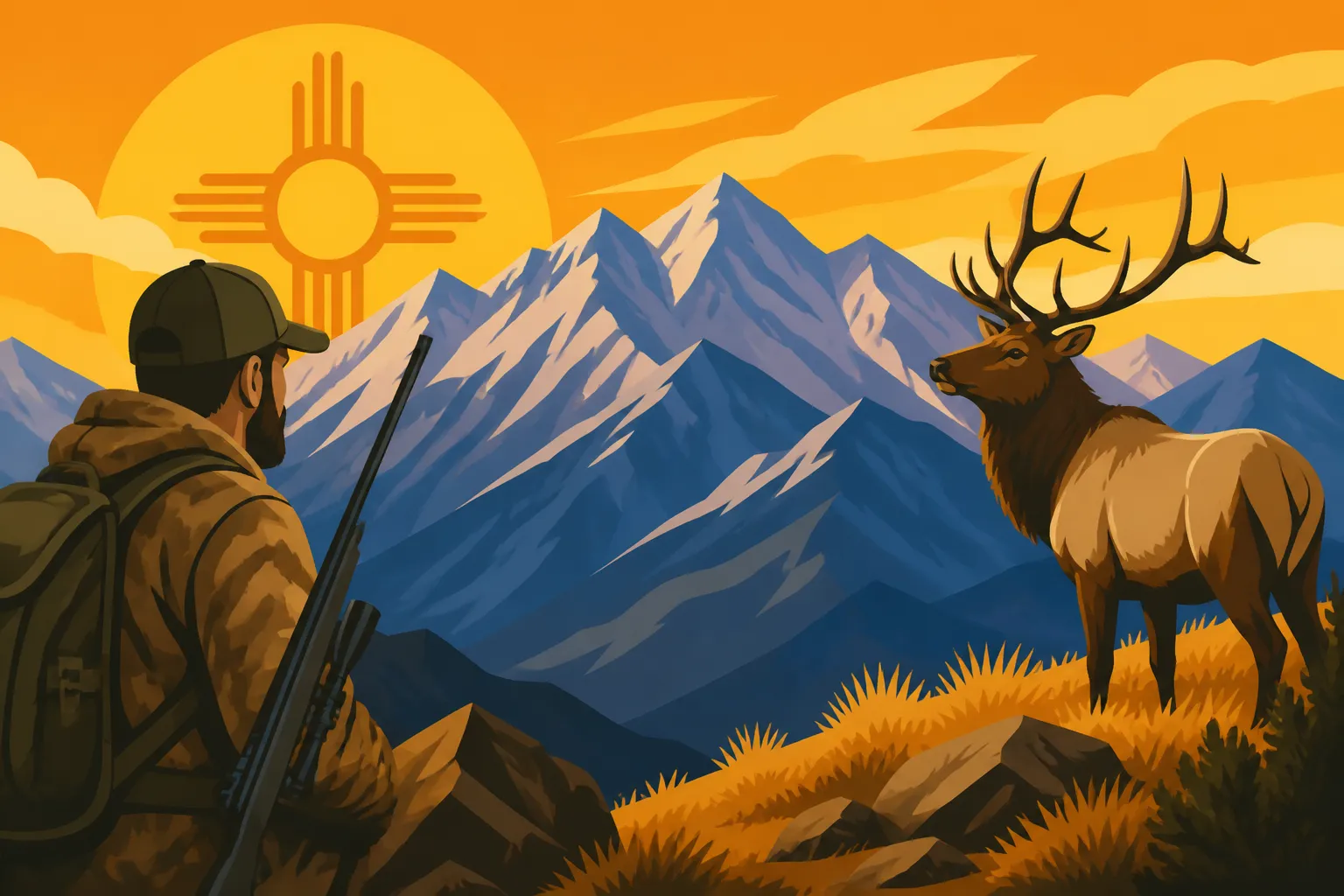
The Sangre de Cristo Mountains, often called the "Sangres" by locals, are the southernmost subrange of the Rocky Mountains, stretching from southern Colorado down into north-central New Mexico. For hunters, this means dramatic elevation changes, diverse habitats, and a wilderness experience unlike almost anywhere else. It’s a place where you can be glassing a high alpine basin at dawn and picking your way through dense aspen groves by mid-morning.
High Elevations and Rugged Terrain
When we talk about the Sangres, we're talking about elevation. Many of these peaks soar above 12,000 feet, with some topping out over 13,000 feet. This isn't flat-land hunting, folks. Expect steep climbs, rocky scree fields, and deep canyons carved by ancient glaciers. The air is thinner up here, which means physical conditioning isn't just a suggestion; it's a non-negotiable requirement. I've seen more than a few hopeful hunters, myself included in my younger days, underestimated what a climb from 9,000 feet to 11,000 feet with a pack felt like. It’s humbling, to say the least.
The terrain shifts dramatically as you gain or lose elevation. Below the timberline, you'll find vast stands of ponderosa pine, Douglas fir, and spruce, often interspersed with dense patches of aspen that blaze gold in the fall. These timbered areas provide crucial cover and forage for elk and deer. As you climb higher, the trees give way to alpine meadows, rock outcroppings, and tundra, offering expansive glassing opportunities but little cover for an approach. Understanding these elevation bands and how game uses them throughout the day and the season is key to success. This isn't just a physical challenge; it's a mental game of reading the land and anticipating animal movement in truly wild country.
Dominant Public Land Types
Most of the huntable land within the New Mexico portion of the Sangre de Cristo Range falls under the jurisdiction of two primary National Forests: the Carson National Forest to the north and the Santa Fe National Forest further south. These vast tracts of federal land are the lifeblood of public land hunting in the region.
Hunting on National Forest land generally means open access, as long as you adhere to local regulations regarding motorized travel, camping, and fire restrictions. However, "open access" doesn't mean "easy access." Roads can be rough, seasonal closures are common, and many prime hunting spots require significant hiking or even packing in on horseback.
While the National Forests dominate, it's also worth remembering that patches of New Mexico State Trust Land might exist within or adjacent to the National Forest boundaries. Unlike some other states, New Mexico makes it relatively straightforward for licensed hunters to access State Trust Land for hunting, treating your hunting license as your access permit. However, specific rules can apply, such as The 14-Day Scouting Window on Trust Land which limits pre-hunt scouting to two weeks before your season. Always verify land ownership using a reliable mapping app like onX Hunt before venturing out, as private inholdings can create frustrating access issues or lead to inadvertent trespass if you’re not careful. The patchwork nature of land ownership demands vigilance and a detailed understanding of your chosen hunting unit.
Gaining Access to the Sangres' Hunting Grounds
Accessing the remote corners of the Sangre de Cristo Range requires diligent planning, keen map-reading skills, and often, a willingness to leave the truck behind for miles. It’s not always as simple as driving up to a trailhead, especially during specific times of the year or in certain areas.
Navigating National Forest Roads and Trailheads
The Sangre de Cristo Mountains are crisscrossed by a network of Forest Service roads, ranging from well-maintained gravel paths to barely-there two-tracks that demand high-clearance 4×4 vehicles. The challenge often lies in knowing which roads are open, when they close, and where they actually lead. Many of these roads, particularly at higher elevations, are subject to seasonal closures due to snow or to protect critical wildlife habitat during sensitive times like calving season. These closures can significantly alter your access strategy, sometimes turning a relatively short drive into a multi-mile hike.
Before you even leave home, you need to pore over maps. Digital tools like onX Hunt are invaluable for overlaying road networks with land ownership and topographic data. You’ll want to pay close attention to the designated Motor Vehicle Use Maps (MVUMs) provided by the Forest Service, which explicitly outline where motorized travel is permitted. Don't rely solely on general navigation apps; they won't tell you about seasonal closures or specific restrictions. Reading a Forest Service Road Map is a crucial skill for any hunter planning to explore these mountains. When you identify trailheads, research parking regulations and any specific rules for wilderness areas you might be entering. The Sangres hold significant wilderness designations, such as the Pecos Wilderness and parts of the Latir Peak Wilderness, where motorized and mechanized travel (including mountain bikes) are strictly prohibited, requiring you to go fully foot-powered or on horseback.
Understanding Land Ownership and Boundaries
New Mexico, like many western states, can have a checkerboard pattern of land ownership, especially along the fringes of public lands. Private parcels, sometimes small and sometimes encompassing entire ranches, can butt right up against National Forest land. This creates the perennial hunter's headache: ensuring you're on public ground and not inadvertently trespassing.
This is where a premium mapping application becomes your best friend. I can’t stress enough how much a tool like onX Hunt has revolutionized navigating these complex landscapes. It allows you to clearly see property lines, landowner names, and which land is public versus private. This is vital not just for avoiding trespass but also for finding those crucial access corridors into landlocked public parcels.
Imagine you've scouted a beautiful basin that's clearly public land, but the only road leading to it crosses a small corner of private property. Without clear mapping, you might unknowingly trespass or, conversely, assume the public land is inaccessible when it might not be. Always double-check your intended route and boundaries. If crossing private land is the only option, you absolutely must obtain written permission from the landowner beforehand. Ignorance of boundaries is not a legal defense, and the last thing you want is a trespass citation spoiling your hunt or, worse, damaging landowner relations for all hunters. Reading a Land Ownership Layer Correctly is a skill that will pay dividends far beyond simply avoiding a ticket; it will open up more hunting opportunities.
Prime Species and Hunting Opportunities
The Sangre de Cristo Range offers a diverse array of big game hunting, with elk and mule deer being the primary draws for many. The sheer ruggedness of the terrain, combined with significant timber and varied forage, creates ideal habitat for these iconic western species.
Elk in the High Timber
Elk hunting in the Sangre de Cristos is, for many, the pinnacle of a western hunt. The high timbered slopes, aspen groves, and secluded alpine parks provide everything a herd needs: food, water, and security cover. These mountains are part of what makes New Mexico's elk hunting so legendary. While they might not consistently produce the colossal bulls of the Gila, the Sangres offer a true wilderness elk experience with the chance at mature animals.
Hunting elk here means being ready for steep climbs and long days. Early archery seasons often coincide with the tail end of the bugle, offering an exhilarating, physically demanding hunt. Later seasons, whether muzzleloader or rifle, require adaptability as elk shift from higher summer ranges to lower-elevation wintering grounds in response to snow and pressure. You’ll often find elk feeding in timbered parks and meadows during low-light hours, then bedding down in dense stands of dark timber during the day. Glassing large basins and then executing strategic stalks into timber are common tactics. Be prepared for Terrain That Hides an Approach at 10,000 Feet—it's what makes the hunt so challenging and rewarding. Understanding New Mexico Elk Season Dates by Unit is critical, as seasons vary, and drawing a tag can be highly competitive.
Mule Deer in the Aspens and Cedars
Mule deer are another highly sought-after species in the Sangres. While elk might draw more attention, the mule deer here are true mountain animals, often found in the same high-elevation habitats as elk, particularly in the aspen forests and on brushy, south-facing slopes. These deer thrive in the broken country, utilizing the varied terrain for escape and forage.
Hunting mule deer in the Sangres often involves covering a lot of ground, looking for feeding deer in open pockets within the timber, or spotting bedded bucks on shaded benches. During the late archery or muzzleloader seasons, you might find them transitioning lower, especially if early snows push them out of the high country. For those who draw a rifle tag, the post-rut in November and December can offer incredible opportunities as bucks are often more focused on feeding than evasion. Mule Deer Across Northern New Mexico describes the general habitat, but in the Sangres, expect even more vertical movement and dense cover. Look for transitional areas where different vegetation types meet, like where an aspen grove gives way to a ponderosa stand or a rocky ridge. These "edge" habitats are often magnets for deer.
Black Bear and Merriam's Turkey
Beyond the big two, the Sangre de Cristo Range also offers opportunities for black bear and Merriam's turkey. Black bears are common throughout the timbered slopes, especially in areas with abundant oak brush for acorns or berry patches. Bear seasons often overlap with elk and deer seasons, providing a bonus opportunity if you're lucky enough to spot one while pursuing other game. Remember, New Mexico has specific rules regarding baiting and harvest limits for bears, so always check the current regulations. New Mexico Black Bear Population Estimate will give you an idea of the healthy populations in the state.
Merriam's turkeys, with their distinctive white-tipped tail feathers, are a beautiful sight and a fun challenge for spring hunters. They prefer the ponderosa pine forests and mixed conifer stands, often found along riparian corridors or near springs. Their unmistakable gobble echoing through the quiet mountains is an experience every hunter should have. The Sangres provide excellent habitat for these birds, particularly the lower and mid-elevation timbered areas. Merriam's Turkey Through New Mexico Timber covers more about their habits and preferred habitats within the state.
Strategic Planning for a Sangre de Cristo Hunt
Successfully hunting the Sangre de Cristo Mountains isn't just about showing up with a rifle or bow; it's about meticulous preparation, both mental and physical, and leveraging modern tools to your advantage.
Pre-Season Scouting and E-Scouting
In a range as vast and rugged as the Sangres, pre-season scouting is non-negotiable. If you can physically visit the unit months before your hunt, that's ideal. Hiking trails, identifying game sign, and getting a feel for the topography on the ground will give you an invaluable advantage. However, for many, especially non-residents, extensive in-person scouting isn't feasible. This is where e-scouting shines.
Digital tools like onX Hunt and GoHunt are essential for effective e-scouting. Start by identifying the unit you've drawn or plan to apply for. Then, use satellite imagery and topographic maps to identify potential bedding areas (dense timber on north-facing slopes), feeding areas (open parks, aspen groves, berry patches), water sources (springs, seeps, drainages), and travel corridors (ridges, saddles, game trails connecting these features). Pay close attention to elevation changes and potential natural funnels.
GoHunt offers detailed draw odds and unit breakdowns that can help you understand the unit's potential and how competitive it is. E-Scouting a New Mexico Unit Before the Season covers more techniques. Look for areas with a mix of cover and forage, especially those that are harder to access, as these often hold less pressured animals. Identify multiple entry and exit points, and always have a Plan B (and C and D) in case your primary spot is occupied or doesn't pan out. Remember, snow can drastically change access and animal movement, so consider how different weather patterns might affect your chosen areas.
Physical Preparation and Gear Considerations
Hunting the Sangre de Cristo Range will test your physical limits. The high altitude alone means less oxygen, which can quickly turn a moderate hike into an exhausting ordeal if you're not prepared. Start a rigorous training regimen months before your hunt, focusing on cardiovascular endurance, strength training, and, critically, hiking with a weighted pack on varied terrain. Don't just walk on flat ground; find hills or stairs and simulate the kind of climbs you'll encounter. Preparing Physically for a High Elevation Hunt is essential reading for anyone planning a mountain hunt.
Your gear needs to be up to the challenge too. Layering is paramount in the mountains, where temperatures can swing wildly from freezing mornings to warm afternoons, and sudden storms can roll in. You'll need good base layers, insulating mid-layers, and a waterproof/windproof outer shell. Layering for Gila Temperature Swings provides excellent principles that apply directly to the Sangres. Footwear is perhaps the most critical item; choose sturdy, well-broken-in boots that provide excellent ankle support and traction on rocky, uneven ground. Choosing Boots for Rocky Desert Ground has valuable advice.
Beyond clothing, you’ll need reliable navigation tools (GPS device and paper map/compass), a quality spotting scope and binoculars for glassing, plenty of water and filtration, a first-aid kit, and emergency signaling devices like a satellite messenger. Lightweight, durable gear that can withstand abuse is worth the investment. Think about what you'll need to pack out a harvested animal – game bags, strong rope, and a sturdy pack frame.
Draw Odds and Tag Strategies
New Mexico operates on a lottery system for its big game tags, and tags for prime units in the Sangre de Cristo Range are highly coveted and competitive. Unlike some western states, New Mexico does not have a preference or bonus point system, meaning every applicant, resident or nonresident, has an equal chance each year, regardless of how many times they've applied in the past. This is both a blessing and a curse: you don't accumulate points, but you always have a shot, even as a first-time applicant.
Understanding How New Mexico Draw Odds Work Without Points is key to setting your expectations. Before applying, research the draw odds for specific units and hunt codes that interest you. GoHunt's Insider platform, for example, is excellent for this, providing detailed statistics on success rates and draw odds for various species and units. You'll need to decide if you want to apply for a highly sought-after trophy unit with low odds, or a more accessible unit with better odds but perhaps lower trophy potential. Most applicants list multiple choices on their application, so strategically ranking your unit choices is crucial. Don't just pick the "best" units; consider a mix of dream hunts and more realistic opportunities. Be prepared for the possibility of not drawing a tag, and have a backup plan, whether that's applying for leftover tags or planning a different hunt entirely.
| Species | Primary Habitat (Sangre de Cristo) | Hunting Challenge | Recommended Methods |
|---|---|---|---|
| Elk | High timber, aspen groves, alpine meadows | High elevation, dense cover, long stalks, steep climbs | Spot & stalk, calling (archery), still hunting (rifle) |
| Mule Deer | Aspen forests, brushy slopes, timbered ridges | Stealth, glassing, navigating broken terrain | Spot & stalk, still hunting, post-rut cruising |
| Black Bear | Dense timber, oak brush, berry patches | Opportunity based, tracking, identifying sign | Incidental during other hunts, still hunting |
| Merriam's Turkey | Ponderosa pine forests, mixed conifer, riparian | Calling, patience, scouting roosts | Calling (spring), ambush near water/feed (fall) |
Disclaimer
This article is for general informational purposes only and does not constitute professional advice. Laws, prices and regulations vary by location and change over time. Consult a qualified professional for guidance on your specific situation.