What the 14-Day Scouting Window Allows
Trying to figure out the ins and outs of public land access in New Mexico can feel like deciphering ancient hieroglyphs, especially when you start looking at State Trust Land. It's not always as straightforward as National Forest or BLM ground, and one common point of confusion revolves around the specific "14-day scouting window." If you've ever wondered exactly what you're allowed to do on State Trust Land before your hunt truly begins, this guide is going to clear up that mystery and help you maximize your pre-season efforts.
Understanding New Mexico State Trust Land: More Than Just Dirt
First off, let's talk about what New Mexico State Trust Land actually is. Unlike federal lands managed by the Forest Service or Bureau of Land Management (BLM) for multiple uses, State Trust Land is managed by the New Mexico State Land Office with a very specific purpose: to generate revenue for designated beneficiaries, primarily public education. This fundamental difference means the rules for using it can be a bit distinct.
When you purchase a New Mexico hunting license, you're actually acquiring an easement that grants you access to certain State Trust Lands for hunting purposes during open seasons. It's a privilege, not an inherent right, and it comes with specific stipulations. The biggest one, and often the most misunderstood, is the 14-day rule for scouting. This isn't just a suggestion; it's a hard and fast regulation that dictates when and how you can be on these lands before your hunt officially starts. Many hunters, especially those new to the state or used to more lenient federal land rules, find this limiting, but once you understand its purpose and boundaries, you can use it to your advantage. It’s critical to remember that A New Mexico License Is Your State Trust Land Easement, but that easement has conditions.
What is New Mexico State Trust Land?
Imagine vast stretches of New Mexico, from high mountain plateaus to rolling deserts, that aren't federally managed or privately owned. That's often State Trust Land. These lands were granted to the state by the federal government at statehood, with the mandate that any income generated from them — whether through grazing leases, mineral extraction, or recreational permits — goes directly to support public institutions like schools, hospitals, and universities. This means that while they offer incredible hunting opportunities, their primary function isn't recreation, and access is tightly regulated to prevent interference with other income-generating activities or potential damage. For a comprehensive overview, you might want to read more about New Mexico State Trust Land Access Rules.
General Access for Hunting on State Trust Land
The general rule for hunting on State Trust Land is that your valid New Mexico hunting license acts as your permit. You don't need to apply for a separate recreation permit, unlike some other trust lands in different states. However, this access is strictly limited to the dates of your valid hunting license for the species you are pursuing. This is where the crucial distinction between hunting season and scouting window comes in. During the actual hunt, you can be on the land according to legal shooting hours, but outside of those dates, special rules apply. And yes, those rules are different from federal lands where you can typically access year-round for non-motorized recreation. It’s a common frustration to see fantastic habitat on a map but know you can’t simply hike through it whenever you please.
The Specifics of the 14-Day Scouting Window
Now, let's dive into the core of the matter: what that 14-day scouting window actually allows. This regulation is designed to give hunters a specific, limited opportunity to conduct pre-season scouting on State Trust Land without impacting other uses or causing undue disturbance for an extended period. It’s a balancing act between providing hunter access and protecting the land for its primary purpose. Many hunters, myself included, have found themselves frustrated by its limitations, especially if you're traveling a long distance, but knowing the rules helps you plan smart. Remember, You May Scout New Mexico Trust Land 14 Days Before a Hunt, but you need to know what "scout" truly means in this context.
Defining the Window: When it Starts and Ends
The 14-day scouting window opens exactly 14 days before the start date of your specific hunt. For example, if your archery elk hunt opens on September 1st, you can begin scouting on State Trust Land on August 18th. This window closes on the official start date of your hunt. During this period, you are explicitly allowed to be on State Trust Land for the purpose of scouting. Beyond this, without an active hunt tag for that specific area, your hunting license does not grant you access for general recreation or long-term scouting. This means if you drew a September deer tag, you can’t scout in July for an October elk hunt you hope to draw next year. Each hunt code, each species, each unit, has its own distinct 14-day window. It's vital to check the exact dates of your specific license. The most important thing to internalize is When Trust Land Access Actually Opens for your particular hunt.
Allowed Activities: What You CAN Do
During this two-week pre-season window, you can engage in activities directly related to scouting for your upcoming hunt. Think of it as a reconnaissance mission.
- Walking and Foot Travel: You can walk the land, exploring drainages, glassing hillsides, and generally getting a feel for the terrain. This is crucial for understanding travel routes, identifying bedding areas, and finding potential ambush points. You can traverse the property on foot just as you would during your actual hunt.
- E-Scouting Verification: While many of us start our scouting from home with tools like onX Hunt or GoHunt, there's no substitute for boots on the ground. The 14-day window is perfect for verifying those e-scouting observations. Did that satellite image really show a good bench for glassing? Is that "tank" on the map actually holding water, or is it bone dry? You can check out potential water sources that concentrate desert game, like specific Water Sources That Concentrate Desert Game or verifying the existence of Finding Stock Tanks on a Unit Map.
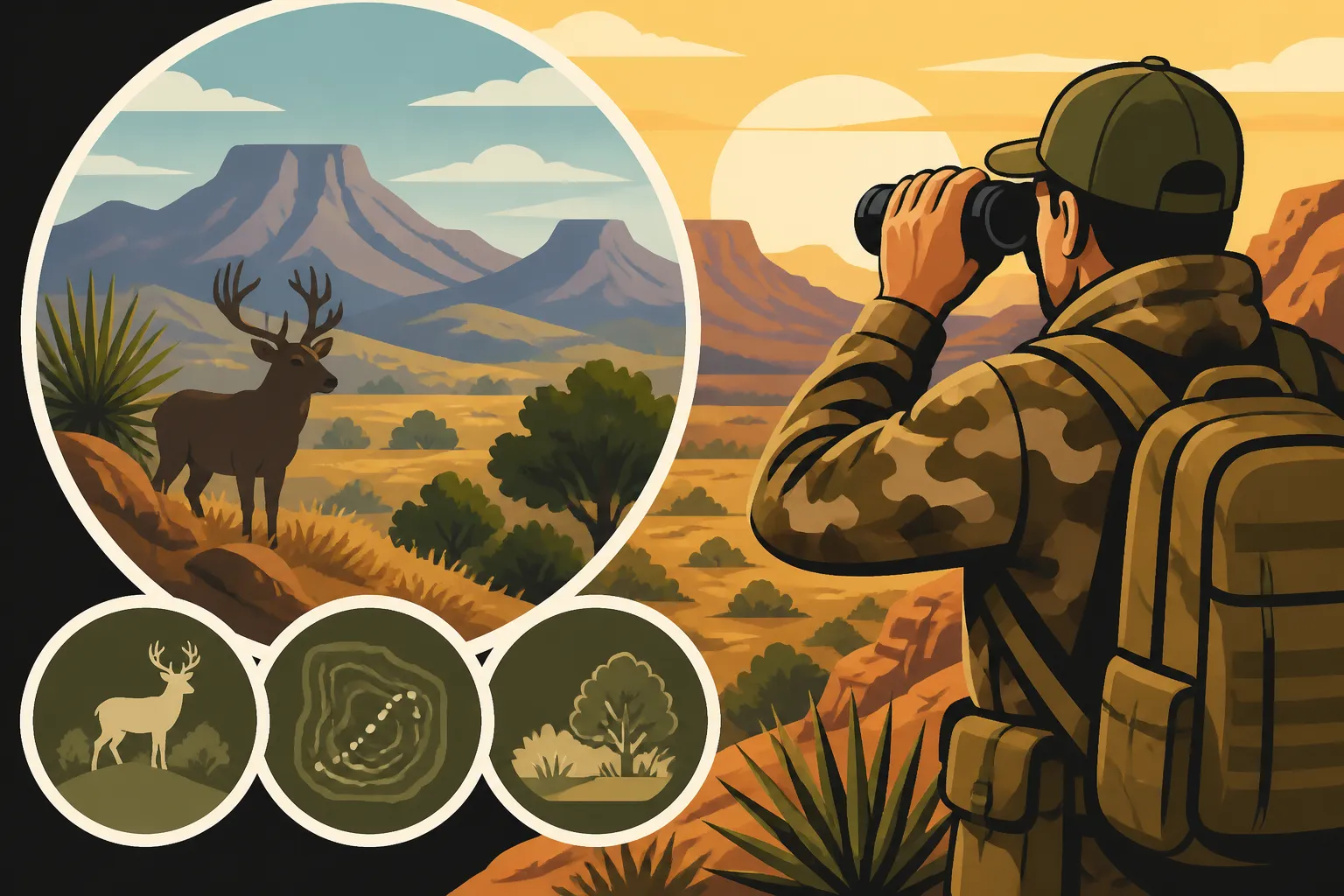
- Glassing and Observation: Bring your binoculars and spotting scope! You are allowed to sit and glass, watching for game movement, identifying travel corridors, and even locating specific animals if you're lucky. This is pure observation, gathering intelligence for the hunt ahead. You can look for sign, rubs, scrapes, and tracks to understand game patterns.
- Familiarization: This window allows you to get comfortable with your chosen unit and the specific piece of State Trust Land you plan to hunt. How long does it take to get to that ridge? Where are the best spots to park? What does the access road really look like after a summer monsoon? It’s all about removing unknowns for opening day. Using an app like onX Hunt during this time is invaluable for marking waypoints, assessing terrain, and reading a land ownership layer correctly to avoid accidental trespass.
Prohibited Activities: What You CANNOT Do
This is where many hunters trip up, as the 14-day window does not grant you carte blanche for all hunting-related preparations. These restrictions are in place to prevent long-term occupation or alteration of the land before the season, again, protecting the trust land's primary mission.
- Setting Up Camp: You absolutely cannot set up a hunting camp, even a spike camp, on State Trust Land during the 14-day scouting window. Camping is generally not allowed on State Trust Land unless a specific permit is obtained, and your hunting license does not cover this. This is a big one for those hoping to get a head start on wilderness trips. If you want to know more, check out Can You Camp on New Mexico Trust Land?.
- Baiting: Baiting big game animals is largely illegal in New Mexico, and even where it might be permitted for certain species (like some predators), setting up bait sites on State Trust Land during the scouting period for big game is definitely not allowed. The rules around baiting are strict and generally aimed at fair chase.
- Placing Trail Cameras: While trail cameras are legal on certain public lands in New Mexico for specific purposes, placing them on State Trust Land during the 14-day scouting window (or any time outside your active hunt, really) is generally not permitted without additional authorization. The intent of the window is for your physical presence scouting, not for passive, long-term monitoring. This falls under the general Trail Camera Rules on New Mexico Public Land and is usually restricted.
- Building Blinds or Stands: You cannot construct or leave any permanent structures, including treestands or ground blinds, on State Trust Land during the scouting period. While portable treestands are usually allowed during the hunt on public land (with specific rules about leaving them overnight), the scouting window is not the time to deploy them.
- Leaving Gear Unattended: You cannot leave gear, supplies, or equipment unattended on State Trust Land, even if you plan to return the next day. Everything you bring in for scouting must be packed out with you each day. This prevents accumulation of trash and unauthorized occupation.
- Hunting: This one should be obvious, but it's worth stating: the 14-day window is for scouting, not hunting. Your hunting season has not officially opened yet. Discharging a firearm or bow with intent to harvest game before your season starts would be a serious violation.
Maximizing Your 14-Day Scouting Window
Given these specific constraints, planning becomes paramount. You only have a limited amount of time on the ground, so you need to be efficient and strategic. It’s not about endless days in the woods; it’s about targeted reconnaissance.
Planning Your Scouting Trips
Start by breaking down your unit and identifying key areas of interest from your E-Scouting a New Mexico Unit Before the Season. Prioritize spots you believe will hold game, have crucial water, or offer strategic advantages during the hunt.
| Scouting Day | Focus Area | Goal | Tools to Bring | Notes |
|---|---|---|---|---|
| Day 1 | Access Roads/Trailheads | Verify drivability, identify parking | Truck/SUV, Map, GPS | Note any recent washout or closures |
| Day 2 | Primary Water Sources | Check water levels, fresh tracks | Binos, Map, Water filter | Look for game trails leading to water |
| Day 3 | Glassing Knobs/Ridges | Identify game travel routes, bedding areas | Spotting scope, Tripod, Binos | Focus on early morning/late evening |
| Day 4 | Potential Stalking Routes | Assess cover, wind direction challenges | Rangefinder, Map, Wind checker | Identify quiet routes to approach game |
| Day 5 | Alternative Entry/Exit | Explore less obvious approaches | Backpack, Headlamp | Good for avoiding pressure on opening day |
This table provides a framework. You might spend multiple days on one activity or combine them. The key is to have a clear objective for each trip. Don't just wander aimlessly; have a list of questions you want answered about the terrain and game sign.
Tools for Effective Scouting
Technology has revolutionized how we approach scouting, and it's particularly useful within the confines of New Mexico's 14-day rule. Since you can't leave gear out, you need to maximize your daily observations.
- Mapping Apps (onX Hunt, GoHunt): These are non-negotiable. With detailed topo maps, satellite imagery, and crucial land ownership overlays, apps like onX Hunt are invaluable. You can mark waypoints for water sources, game sign, potential glassing points, and even confirm unit boundaries. Using onX layers for New Mexico public land, you can instantly see where State Trust Land begins and ends, preventing accidental trespass onto private property. GoHunt's Insider tool can also provide crucial draw odds and harvest data, helping you refine where to focus your efforts. Reading a Land Ownership Layer Correctly is crucial to staying legal.
- Optics (Binoculars, Spotting Scope): Since you're primarily observing, quality optics are your best friend. A good pair of 10x binoculars for general scanning and a powerful spotting scope (15-45x or 20-60x) for picking apart distant hillsides will help you cover vast amounts of ground from a single vantage point.
- Rangefinder: Practice ranging key landmarks during your scouting trips. This helps you get a better feel for distances in the real terrain, so when a shot opportunity arises during the hunt, you're not caught off guard.
- Notebook and Camera: Jot down observations about fresh sign, game trails, or anything that catches your eye. Take photos of the terrain to review later. These details can fade from memory quickly.
- Wind Checker: Understanding prevailing thermals and wind patterns is critical, especially in canyon country. Use a wind checker (or a handful of dry dirt) to test the air currents at different times of day and in various drainages.
Respecting the Land and Other Users
Even within the 14-day window, you're a guest on State Trust Land. The land is often leased for grazing, so you might encounter cattle, fences, and even ranchers.
- Leave No Trace: Pack out everything you pack in. This means all trash, food wrappers, and anything else. The principle of "leave it better than you found it" applies.
- Respect Private Property: State Trust Land parcels can be intermingled with private land. Always be aware of your location, especially when using an app like onX Hunt, to ensure you don't accidentally trespass. Crossing Private Ground to Reach New Mexico Public Land is a common issue, and requires written permission.
- Close Gates: If you open a gate, close it behind you. These gates are there to manage livestock, and leaving them open can cause serious problems for lessees.
- Share the Road: You might encounter other hunters scouting, or even other recreational users, during this window. Be courteous and respectful. Everyone is out there trying to enjoy the outdoors.
By understanding and adhering to the specifics of New Mexico's 14-day scouting window on State Trust Land, you can conduct valuable pre-season reconnaissance, significantly increasing your chances of success without running afoul of regulations. It requires diligent planning and a good understanding of the rules, but the payoff of a successful hunt makes it all worthwhile.
Disclaimer
This article is for general informational purposes only and does not constitute professional advice. Laws, prices and regulations vary by location and change over time. Consult a qualified professional for guidance on your specific situation.