Do Both Oryx Sexes Carry Horns?
You've probably heard that New Mexico's oryx are a unique big game animal, and one of the most common questions I get from hunters, especially those new to pursuing these incredible creatures, is whether both the males and females sport those impressive horns. It's a fantastic question, and one that highlights a key difference between oryx and many other big game species. This guide is going to walk you through exactly why and how both sexes of oryx carry horns, what that means for hunters in the field, and how you can approach identifying these magnificent animals on your next New Mexico adventure.
The Unique Horns of Both Male and Female Oryx
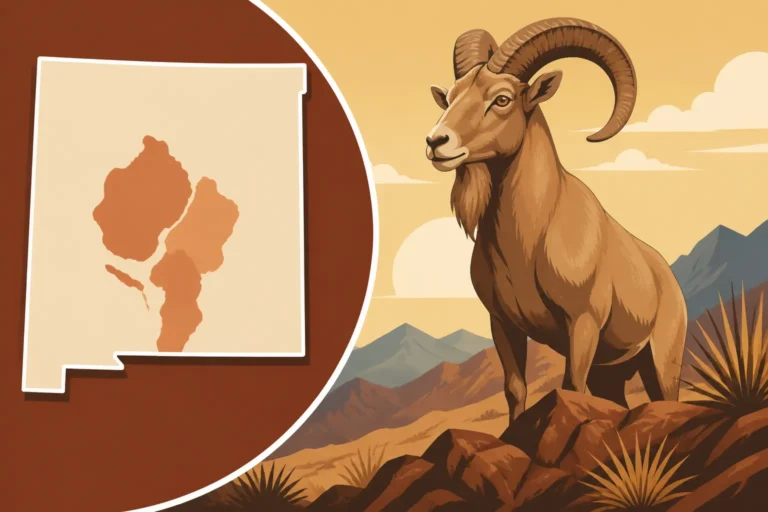
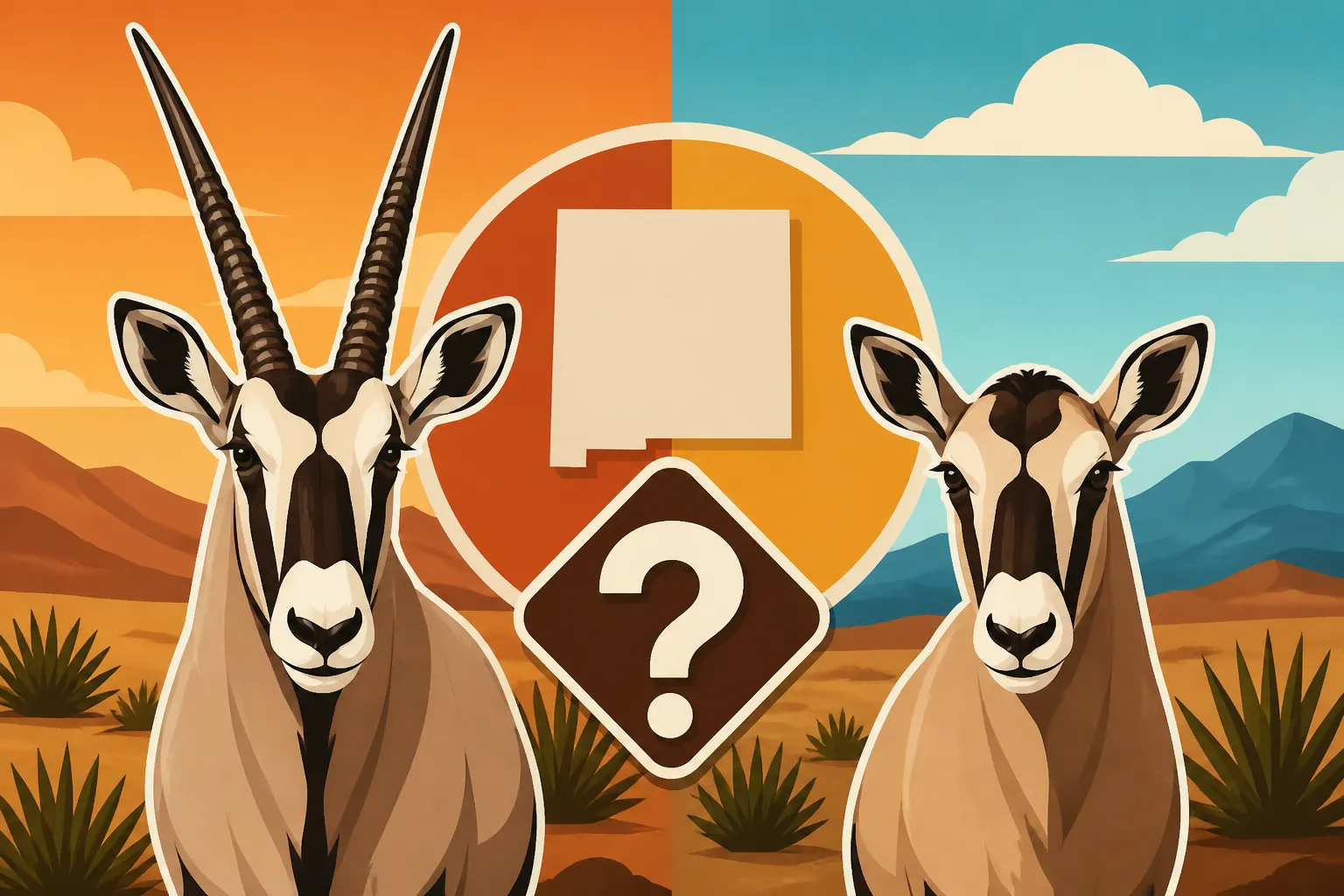
One of the most striking characteristics of the New Mexico oryx, often called gemsbok in their native Africa, is that both males (bulls) and females (cows) possess horns. This isn't like deer or elk where antlers are typically shed annually by males. Oryx horns are true horns – they are permanent structures that grow throughout the animal's life and are never shed. This fact immediately sets oryx apart from most North American big game and presents a fascinating challenge for hunters trying to judge animals in the field.
Imagine standing on a mesquite-dotted ridge, glassing a distant herd through your binoculars. You see a mature animal with long, straight, black-tipped horns spiraling skyward. Is it a bull or a cow? With many other species, those horns would be an instant giveaway, but with oryx, it's just the beginning of the puzzle. This shared horn characteristic is an evolutionary adaptation that serves both sexes, likely for defense against predators and for establishing dominance within the herd, regardless of gender. It’s truly a sight to behold, a testament to their rugged beauty and survival prowess in the arid New Mexico landscape.
Characteristics and Growth of Oryx Horns
The horns of a New Mexico oryx are truly magnificent. They are typically long, straight, and spear-like, often reaching impressive lengths. They are usually black or dark brown, with prominent rings or ridges along the lower two-thirds of the horn, smoothing out towards the sharp, dark tips. The length is what most hunters focus on for a trophy, and horns regularly exceed 30 inches, with some pushing even longer.
Genetics, age, and nutrition all play significant roles in horn development. Young oryx will have shorter, less developed horns, while older animals will display the full impressive length and girth. While the overall structure is similar, there can be subtle differences between the sexes. Bulls sometimes have slightly thicker horn bases, giving them a heavier appearance, though not always significantly longer. Cows, on the other hand, can sometimes grow horns that are just as long, or even longer and more slender, making it incredibly tricky to differentiate at a distance based on horn length alone. This is why when you're preparing for a hunt, resources like GoHunt scouting tools can be invaluable for understanding the types of animals and terrain you might encounter, though they won't magically sex an oryx for you!
The horns grow continuously, unlike antlers, which means an older animal will almost always have longer horns, assuming no breakage or damage. Breakage can occur during fights, rubs, or accidents, which can affect the symmetry and trophy potential of an individual animal. Knowing these nuances about horn growth can make all the difference when you're trying to quickly assess an animal in the field under pressure.
Field Judging Oryx Sex: More Than Just Horns
Because both sexes carry horns, successfully field judging an oryx to determine if it's a bull or a cow requires looking beyond just the headgear. This is where the real challenge and skill come into play for a New Mexico oryx hunter. It's a common frustration, especially for those who draw a sought-after tag, that you can be staring at a magnificent animal and still not be sure of its sex.
Here's what experienced hunters look for:
- Body Size and Musculature: Bulls tend to be noticeably larger and more heavily muscled, especially in the neck and shoulders. They have a more robust, blocky appearance compared to the more slender and graceful build of a cow. Think of it like comparing a linebacker to a sprinter.
- Head and Neck Thickness: A bull's neck will often appear thicker and more powerful, particularly during the breeding season. Their heads can also seem larger in proportion to their bodies.
- Behavior: Bulls can often be seen pushing other animals around, asserting dominance. If you see an oryx with a calf, it's almost certainly a cow. Observing herd dynamics can provide crucial clues. Cows are typically more vigilant and protective when they have young.
- Facial Markings: While not a definitive indicator of sex, some subtle differences in facial markings might be noted by very experienced observers, but these are often too indistinct for reliable field judging at typical hunting distances.
- Proximity to Calves: This is probably the most reliable indicator. If you see an adult oryx consistently with a very young calf, you can be almost certain it's a cow. However, oryx calves can grow quickly, and identifying a "calf" from a distance can also be tough.
Successfully judging an oryx in the field requires patience, good optics, and often, a keen eye for subtle differences that only come with experience. Utilizing high-quality optics, like what you might research through a platform like GoHunt, is critical for picking up these subtle cues from a distance without disturbing the animal. This skill is vital, especially on hunts like those on White Sands Missile Range where opportunities can be limited and the terrain vast.
The Hunter's Perspective: Trophy Potential and Challenges
For many hunters, the ultimate goal is a trophy bull, largely due to the perception of overall size and thicker horns. However, an old cow with exceptionally long, perfectly symmetrical horns can be just as impressive, if not more so, than a bull with shorter or damaged horns. New Mexico’s oryx draw hunters from across the country, all seeking these unique trophies.
The fact that both sexes carry horns means that hunters must be extra careful and diligent in their field judging, especially if they have a specific preference (e.g., bull-only tag, or simply wanting to harvest a bull for its larger meat yield). Mistakes can happen, and harvesting an animal other than what you intended is a disheartening experience for any ethical hunter. This is why spending time before your hunt studying photos and videos of oryx, distinguishing between bulls and cows, is absolutely essential. Many hunters spend considerable time scouting units before the season, familiarizing themselves with local herd characteristics. Knowing New Mexico Oryx Draw Odds and securing a tag is just the first step; the real work begins with effective field preparation.
Hunting oryx in New Mexico is a truly unique experience. These animals thrive in the harsh desert environment, often found in challenging terrain that demands physical fitness and mental fortitude. Whether you're hunting an off-range unit or are one of the lucky few to draw a tag for How an Oryx Hunt Actually Runs on the White Sands Missile Range, the experience is unforgettable. The presence of horns on both sexes adds another layer of complexity and excitement to what is already a high-stakes, once-in-a-lifetime hunt for many. Be sure to check into details like Once-in-a-Lifetime Oryx Rules in New Mexico to understand the long-term implications of your harvest.
New Mexico Oryx: An Introduced Species That Thrives
To understand the oryx in New Mexico, it helps to know a little about their history. These magnificent animals aren't native to North America; they were introduced from their native Africa starting in the late 1960s. The arid, open landscapes of New Mexico, particularly around the White Sands Missile Range, proved to be an incredibly suitable habitat, mirroring much of their ancestral home. The success of the introduction has led to a robust population, allowing for managed hunting opportunities that are highly sought after. If you're curious about their origins, learning How Oryx Were Introduced to New Mexico provides fascinating context.
Today, New Mexico manages the oryx population carefully to balance herd health with recreational hunting. Hunts occur both on and off the White Sands Missile Range. The off-range populations have expanded into various desert units, offering different types of hunting experiences. Understanding Where New Mexico Oryx Live Outside White Sands can help you choose the right unit for your application. Regardless of where you hunt them, the oryx are formidable game animals, perfectly adapted to their environment.
The blend of their physical prowess, their keen senses, and the challenging terrain they inhabit makes an oryx hunt a true adventure. And the fact that both sexes are armed with those formidable horns just makes the hunt that much more intriguing. Whether you're chasing them in the vastness of the White Sands or the rugged badlands of an off-range unit, using detailed mapping and planning resources, perhaps even with the help of platforms that integrate satellite imagery and public land data like GoHunt, will be key to your success.
Comparing Male and Female Oryx Characteristics for Hunters
To summarize the key differences and help you in the field, here’s a quick reference table. Remember, these are general guidelines, and individual animals can always defy expectations!
| Feature | Male Oryx (Bull) | Female Oryx (Cow) |
|---|---|---|
| Horns | Present, typically thicker at the base. Can be very long and impressive. | Present, often appear more slender but can be just as long or even longer than a bull's. |
| Body Size | Larger, heavier, more robust build with a thicker neck and shoulders. Average weight often higher. | Smaller, more slender, and graceful build. Generally lighter in weight. |
| Neck & Shoulder | Noticeably thicker and more muscular, especially the neck. | Thinner, more refined neck. |
| Facial Appearance | Can appear broader in the face. | Can appear more delicate in the face. |
| Behavior | May be more assertive, often seen testing dominance within the herd. Can be solitary. | Often seen with calves; more protective and herd-oriented. |
| Calves | Rarely seen directly tending calves. | Will be seen with and nursing calves. This is a primary differentiator. |
| Overall Impression | Powerful, stocky, "built like a tank." | Elegant, agile, "built for speed and endurance." |
When you're out there, patiently observing, keep these points in mind. A solid understanding of these physical and behavioral traits, combined with good glassing techniques, will significantly improve your chances of identifying the animal you're looking for. It's truly a test of your hunting acumen.
Conclusion: A Unique Challenge and Reward
So, do both oryx sexes carry horns? Absolutely, and it's one of the defining characteristics that makes hunting these majestic animals in New Mexico such a distinct and exciting challenge. Far from simplifying the hunt, this fact adds a layer of complexity to field judging that demands a hunter's full attention, patience, and skill.
Whether you're holding out for a massive-bodied bull or you're simply aiming for a legal, mature oryx with impressive length, understanding these nuances is critical. The experience of spotting an oryx in the vast New Mexico landscape, meticulously field judging it, and then executing a successful stalk is a memory that lasts a lifetime. It’s a hunt that tests your abilities and rewards you with one of the most unique and beautiful big game trophies in North America.
Disclaimer
This article is for general informational purposes only and does not constitute professional advice. Laws, prices and regulations vary by location and change over time. Consult a qualified professional for guidance on your specific situation.