How Elevation Shapes Hunting Seasons
Hunting in New Mexico is a truly unique experience, offering a staggering diversity of landscapes and species. But if you’ve ever found yourself scratching your head trying to figure out why a certain hunt code runs in September while another similar one kicks off in November, or why elk are in one spot early season and completely gone later, you’re not alone. Much of that mystery boils down to one critical factor: elevation. Understanding how the changing altitude sculpts everything from climate to animal behavior and vegetation is key to unlocking success in the Land of Enchantment.
Understanding New Mexico's Diverse Elevations
New Mexico is a land of dramatic contrasts, boasting some of the lowest desert floors in the Southwest and some of the highest peaks in the Rocky Mountains, all within its borders. This incredible vertical range, from roughly 2,800 feet near the Red Bluff Reservoir to over 13,100 feet at Wheeler Peak, isn't just a pretty picture on a postcard; it's the fundamental driver behind how hunting seasons unfold here. Without grasping this geographical reality, you're essentially hunting blind.
From Desert Lowlands to Alpine Peaks
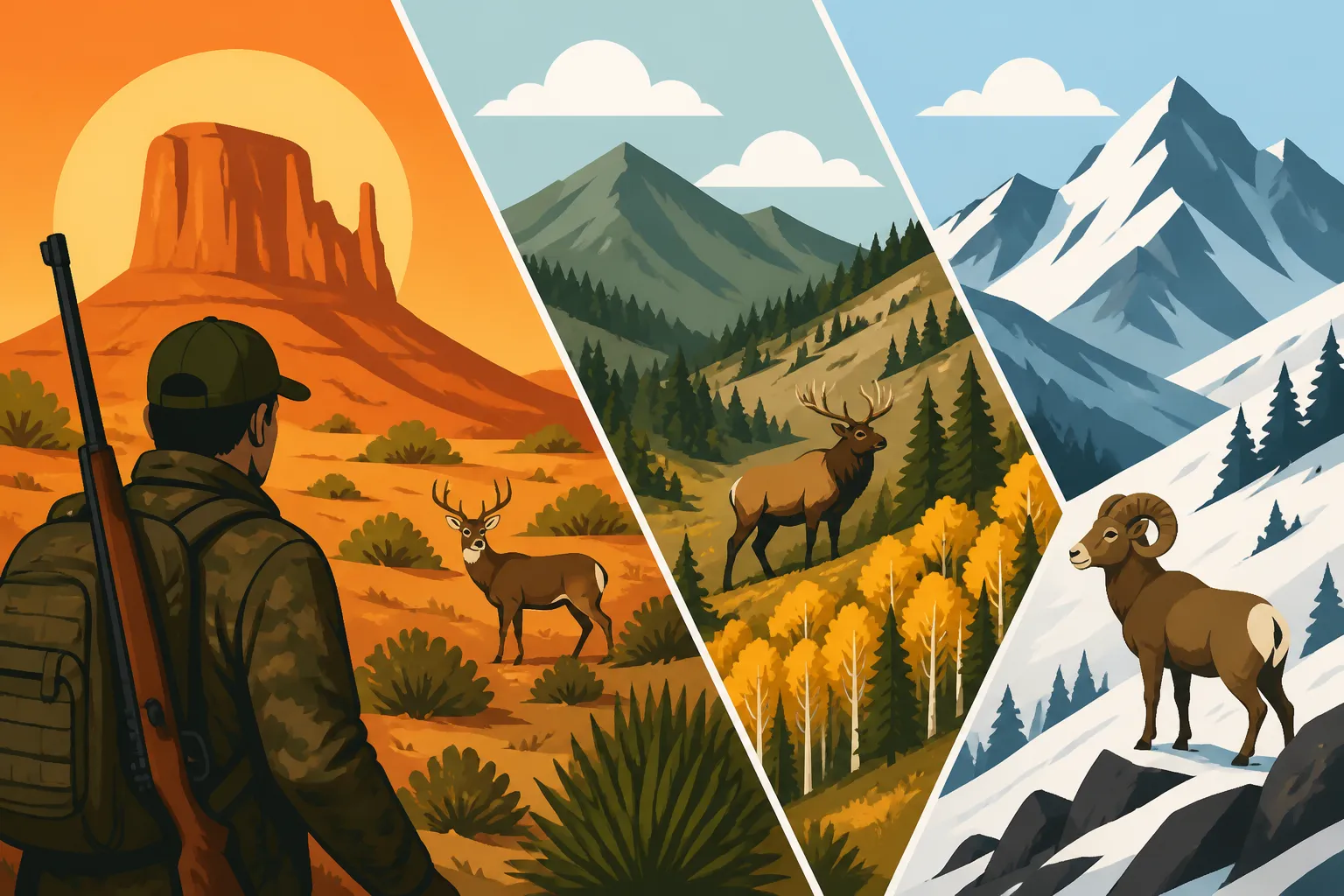
Imagine starting your morning hunt in the vast, open expanses of the Chihuahuan Desert, where cactus and creosote dot the landscape, temperatures soar, and game like oryx and desert mule deer thrive. By lunchtime, you could theoretically be driving through piñon-juniper foothills, and by evening, find yourself amidst towering ponderosa pines and aspens in a high-elevation mountain range, where elk and mule deer roam. This isn't just an arbitrary change in scenery; each elevation band represents a distinct ecosystem with its own set of rules for both wildlife and hunters. The lower deserts, often below 5,000 feet, offer hunts that demand intense heat management and focus on water sources. Mid-elevations, from 5,000 to about 8,000 feet, often serve as transition zones, crucial during migrations. Then you have the high country, often above 8,000 feet, with its dense timber, rugged terrain, and cooler temperatures, especially in the northern parts of the state.
How Elevation Creates Microclimates
These vast differences in elevation directly lead to what we call "microclimates." For every thousand feet you climb in New Mexico, the temperature can drop several degrees, and precipitation patterns shift dramatically. The desert lowlands receive minimal rainfall, creating arid conditions that dictate when and where animals can find sustenance. Conversely, the high mountains often receive substantial snowpack and more regular rain, supporting lush vegetation and diverse forests. This isn't just about comfort for the hunter; it fundamentally shapes the entire ecosystem. A rain shower in the Sacramento Mountains might mean nothing for a hunter in the vast plains units near Tucumcari, but that rain dictates feed and water availability for animals high above. Understanding these microclimates is like having an insider's tip on where game might be holding or moving.
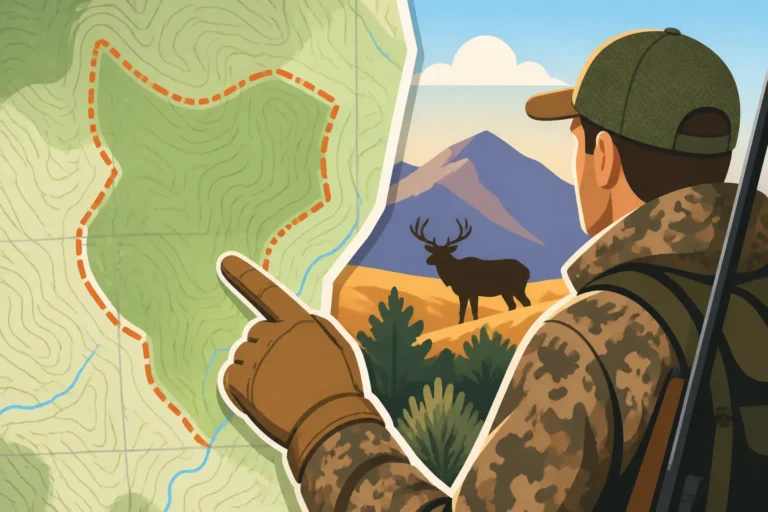
When you're looking at a hunt unit, it's never just one flat environment. A single unit, especially in western New Mexico, can encompass multiple elevation bands, each with its own prevailing weather patterns and resulting flora. This means that even within the same game management unit, hunting strategies might need to vary drastically depending on whether you're working the shaded north slopes at 9,000 feet or the sun-baked mesas at 6,000 feet. This kind of detailed understanding is where tools become invaluable. For instance, using mapping software like onX Hunt allows you to visualize these elevation changes directly on your screen, with contour lines and topo maps that clearly delineate these shifts, helping you identify potential bedding areas, travel corridors, and water sources based on elevation.
Elevation's Influence on Game Movement and Behavior
The direct link between elevation and wildlife isn't just theoretical; it’s observable in how and where animals live, move, and even reproduce. New Mexico's diverse terrain means that different species, and even different populations of the same species, react to elevation in unique ways, often defining the success or failure of a hunting season.
Elk and Mule Deer: The High Country Shuffle
Consider New Mexico's iconic elk and mule deer populations. For much of the spring and summer, especially in areas like the Gila National Forest or the Sangre de Cristo Mountains, these animals are found at higher elevations, seeking out cooler temperatures, abundant forage, and protective cover. As hunters, we often refer to this as "high country game." The lush alpine meadows and dense timber above 8,000 feet provide everything they need, from nutritious grasses to security from predators. This is why early archery seasons often target these higher reaches, before the snows begin to fall. Hunting New Mexico From 4,000 Feet to 10,000 dives deeper into navigating these vertical challenges.
However, as autumn progresses and temperatures drop, especially with the first significant snowfalls, elk and mule deer begin their annual migration. They'll start to descend from their summer ranges, moving into mid-elevation wintering grounds, typically between 6,000 and 8,000 feet, where snow is less deep and forage is more accessible. This migration is a direct response to elevation and dictates the timing and location of many rifle and muzzleloader seasons. A hunter scouting a unit needs to understand these seasonal patterns to predict where the animals will be during their specific hunt dates. If you’re hunting early November, you might be catching the tail end of this descent, targeting transition areas. By late December, you’re almost certainly looking for them on lower, more protected slopes.
Desert Species: Thriving in the Lowlands
While elk and mule deer are busy with their high-country shuffle, other species are masters of the lower elevations. Pronghorn, for example, are creatures of the open plains, rarely venturing into dense timber or steep mountains. You'll find them primarily in units where the elevation is consistently below 6,000 feet, often much lower, relying on their incredible eyesight and speed to survive. Their seasons reflect this, often taking place in the late summer or early fall when the plains are still relatively open and accessible.
Then there’s the iconic oryx, an introduced species that has thrived in the Chihuahuan Desert. These magnificent animals call the flat, arid plains of White Sands Missile Range and surrounding off-range areas home, where elevations are often below 5,000 feet. Hunting oryx involves navigating vast, open terrain, and the season timing is less about temperature and more about access and population management. Even desert mule deer, while they might use some rocky hills, primarily inhabit the lower, more rugged desert ranges of southern New Mexico, where they’ve adapted to extreme heat and sparse water. When planning a hunt for these species, understanding their preference for lower, drier elevations is paramount, and it will significantly influence your scouting strategy.
Seasonal Migrations and Rutting Activity
Elevation also plays a huge role in the timing of the rut for many species, a critical period for hunters. For elk, the peak of the rut, when bulls are most vocal and active, generally occurs in mid-September. At this time, bulls are often still in their higher-elevation summering grounds or beginning to stage slightly lower. Weather patterns, which are influenced by elevation, can either prolong or shorten this intense period. A sudden cold snap and early snow in the high country can sometimes kick off earlier movements, while warmer-than-average temperatures can delay the intensity of the rutting activity. Knowing When the Elk Rut Peaks in New Mexico is only half the battle; understanding how elevation affects where those bugling bulls will be is the other.
Similarly, for mule deer, the rut typically occurs later in the fall and into early winter, often when animals are already moving into lower or mid-elevation winter ranges. Bucks, driven by the urge to breed, become less cautious and more visible, making them a prime target. The exact timing can vary by unit, largely due to the elevation and associated climate. A unit with significant high-elevation terrain might see deer rutting as they descend into lower, more accessible areas, while a low-desert unit will experience its rutting activity entirely within its typical range, often influenced more by photoperiod than significant elevation shifts. This interplay of elevation, temperature, and biology creates a dynamic hunting landscape that is constantly shifting.
Adapting Your Hunting Strategy to Elevation Changes
Ignoring elevation in New Mexico is like trying to navigate without a map; you might get lucky, but you're more likely to get lost. Successful hunters recognize that elevation isn't just a number on a topo map but a dynamic factor demanding specific strategies throughout the season.
Early Season: Chasing High-Country Game
When the early archery seasons kick off in August and early September, particularly for elk and high-country mule deer, you're almost certainly going to be hunting at higher elevations. Think 8,000 feet and above in the Gila or the northern mountains. Temperatures are still warm, even hot in the afternoons, but the mornings can be cool and crisp. Animals are often scattered but can be found in lush basins, near snowmelt streams, or around timbered pockets that offer shade and security. Your strategy here needs to focus on patient glassing from high points, covering vast amounts of ground on foot, and paying close attention to water sources that might be drying up in the late summer heat. For elk, this is often about finding wallows or bedding areas in the cool timber. For deer, it’s about identifying summer patterns before they begin to transition. New Mexico Archery Deer Season Structure highlights some of these early opportunities.
The challenges of early-season high-country hunting are significant. You're dealing with demanding terrain, potentially active monsoon weather patterns, and the animals are often still in larger summer bachelor groups or less concentrated. This requires a high level of physical fitness and a willingness to hike deep into roadless areas. Without proper preparation, you risk not only missing out on opportunities but also serious safety concerns. This early period is also when you need to be most mindful of Heat Management on an Early Season Hunt, ensuring you have enough water and knowledge of available sources.
Mid-Season: Following Game as Temps Drop
As the calendar turns to late September, October, and into early November, the dynamics shift dramatically. The high country begins to see its first frosts and snows, pushing game slowly down into mid-elevations. This is often when many muzzleloader and rifle hunts take place. The animals are now typically found in the 6,000 to 8,000-foot range, where forage is still available, and the weather isn't as severe as the peaks. These transition zones become critical, often acting as bottlenecks where migrating animals pass through.
During this mid-season period, the rut for elk is in full swing in September, and deer are entering their pre-rut or rut in October/November. The strategy here often involves intercepting animals moving between feeding and bedding areas, focusing on saddles, ridges, and benches that serve as natural travel corridors. Learning to read the wind in a deep canyon, or understanding how to approach game in varied terrain, becomes essential. The colder temperatures mean you might be layering up, but still contending with significant temperature swings between day and night.
Late Season: Winter Range and Lower Elevation Hunts
By late November, December, and into January, winter has fully set in across much of New Mexico. Heavy snows at higher elevations force most elk and mule deer down to their traditional winter ranges, which are typically at lower elevations, often below 6,000 feet. Here, the snow is less deep, and they can access crucial browse and forage to survive the colder months. This is when you'll find those late-season rifle hunts for deer or cow elk hunts specifically targeting these lower-elevation wintering grounds.
Hunting during the late season means confronting bitter cold, challenging snow conditions, and often targeting animals that are much more concentrated. Your strategy shifts to covering specific winter range areas, often focusing on south-facing slopes that melt out first, providing accessible feed. It requires rugged gear, a keen understanding of game trails leading to these areas, and the ability to track animals in snow. This is where Reading a New Mexico Hunt Code Before You Apply becomes crucial, as certain units will have specific late-season opportunities designed to manage herds on these winter ranges. Understanding these late-season movements is paramount for success, as animals will be in entirely different parts of the unit than they were during the early fall.
Practical Considerations for Elevation-Specific Hunts
Beyond just understanding animal behavior, elevation dictates many practical aspects of your hunt, from the gear you pack to your physical readiness. Neglecting these details can quickly turn a dream hunt into a miserable, or even dangerous, experience.
Gear Choices: Layering and Traction
The vast elevation changes in New Mexico demand a highly adaptable gear system. You might start your day hiking through freezing fog at 9,000 feet, only to be shedding layers by midday as the sun beats down in a timbered canyon at 7,500 feet. This is why layering is not just a suggestion, but a necessity. Forget bulky, single-purpose garments. Instead, pack a moisture-wicking base layer, insulating mid-layers (like fleece or puffy jackets), and a waterproof/windproof outer shell. This system allows you to add or remove layers as the temperature and activity level change throughout the day. For more on this, check out Layering for Gila Temperature Swings.
Footwear is another critical consideration. High-elevation, rocky terrain demands sturdy, ankle-supporting boots with excellent traction, especially if you anticipate snow or steep ascents. Conversely, a low-desert hunt might benefit from lighter, more breathable boots that handle heat better but still offer protection from thorns and rocky ground. Don't forget items like trekking poles, which can be invaluable for stability and reducing strain on your knees during steep descents, regardless of the specific elevation.
Water Sources: A Critical Factor at All Elevations
Water, or the lack thereof, is often the single most limiting factor for both wildlife and hunters in New Mexico, especially in lower and mid-elevation units. While high country might have more consistent springs and snowmelt early in the season, even these can dry up during prolonged droughts. In the desert, water sources are few and far between, often concentrated around stock tanks or guzzlers. Knowing where these critical water points are, and having a plan for carrying and filtering water, is non-negotiable.
Always carry more water than you think you’ll need, especially on early-season or desert hunts. A simple mistake can lead to dangerous dehydration. Many seasoned hunters carry a personal water filter, like a Sawyer or Katadyn, to safely replenish from natural sources, assuming they can find them. Planning your routes around known water sources can be a game-changer. For desert hunts, specifically, you need to know Water You Must Carry on a Desert Day Hunt to avoid serious issues. Relying solely on a single water source can be risky, as it might be dry, fenced off, or heavily pressured.
Using GoHunt and Other Resources for Elevation Data
Modern hunting tools like GoHunt, along with the aforementioned onX Hunt, have revolutionized how hunters approach elevation. These platforms allow you to conduct extensive e-scouting from the comfort of your home, studying topo maps, elevation profiles, and satellite imagery to understand the lay of the land before you ever set foot in the unit. You can identify potential ridges, canyons, benches, and saddles that will funnel game, all based on their elevation characteristics.
GoHunt, in particular, often provides detailed unit analyses, including elevation breakdowns and how game might be utilizing different aspects of a unit based on the season. Combining this digital reconnaissance with historical harvest data and local weather forecasts allows you to build a comprehensive picture of what to expect. Don't underestimate the power of these tools; they can help you visualize a unit boundary on a forest map or understand complex terrain, saving you countless hours of fruitless hiking and putting you in a much better position for success. The more data you can gather about a unit's elevation profile and how it interacts with game movement, the better equipped you'll be.
Disclaimer
This article is for general informational purposes only and does not constitute professional advice. Laws, prices and regulations vary by location and change over time. Consult a qualified professional for guidance on your specific situation.