Monsoon Road Conditions in the Gila
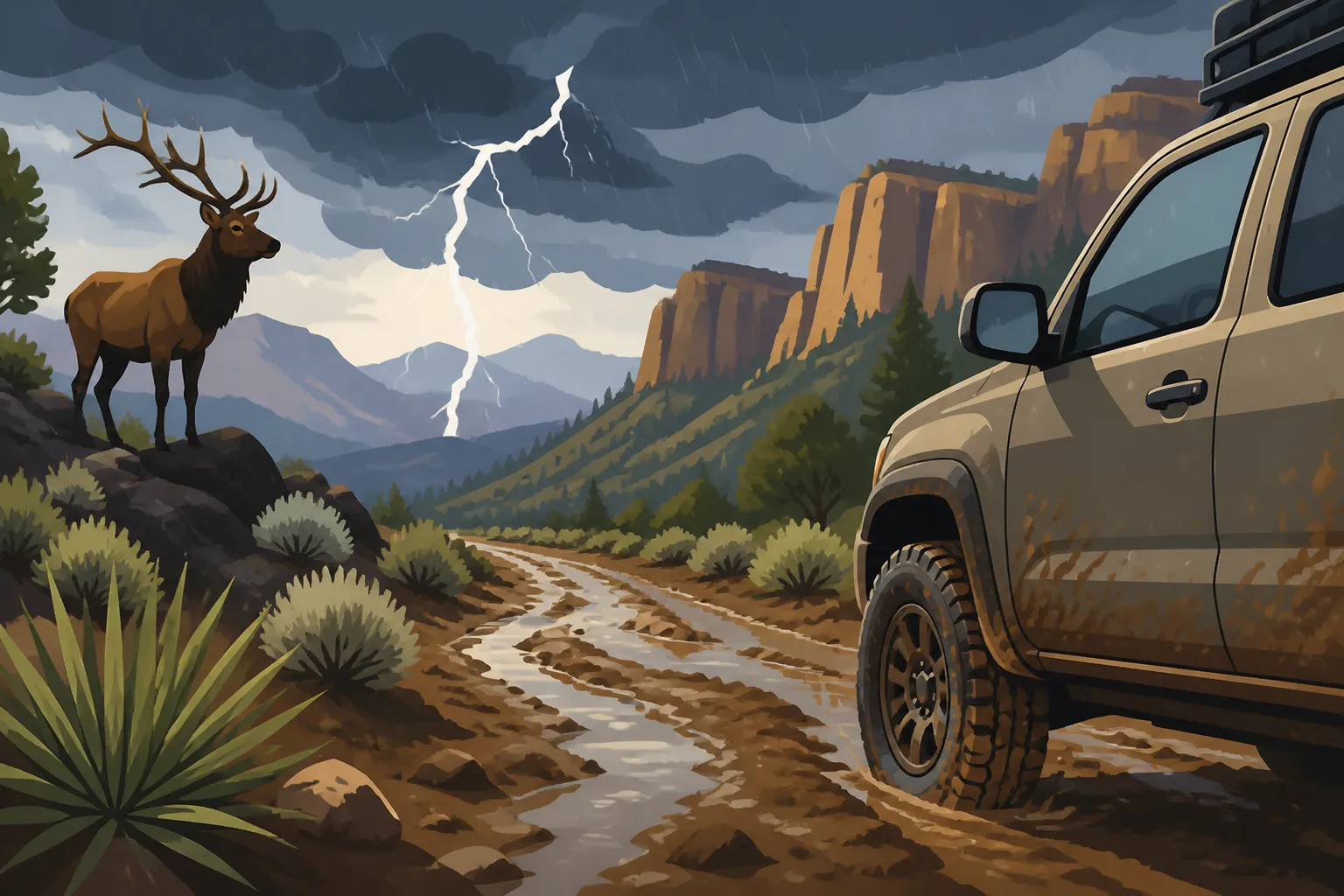
Picture this: you've finally drawn that coveted Gila elk tag, spent months preparing, and driven countless miles to reach your hunting unit. You wake up to that fresh, crisp September air, ready to hit the timber, only to find the two-track you planned to use is now a muddy, impassable mess, or worse, a raging river where a dry wash used to be. The New Mexico monsoon season, though a lifegiver to the parched landscape, can turn travel in the Gila National Forest into an absolute nightmare, leaving hunters stranded, routes impassable, and plans completely derailed. This guide is here to walk you through understanding these fickle monsoon road conditions, how to anticipate them, and what to do when they inevitably strike, so you can focus on the hunt, not the mire.
Understanding the Gila Monsoon Season and Its Impact
The Gila National Forest, a vast and wild expanse of mountains, canyons, and high deserts, is an incredible place to hunt, but it's also profoundly shaped by its weather patterns. Among the most impactful of these is the annual monsoon season. If you're planning an early season hunt, especially for archery elk or deer, understanding this weather phenomenon isn't just helpful, it's absolutely critical to your success and safety. The monsoon brings life, but it also brings a very real potential for chaos on the roads.
What Exactly Is the Gila Monsoon?
For those unfamiliar with the Southwest, the term "monsoon" might conjure images of distant, tropical lands. But here in New Mexico, particularly across the western half of the state where the Gila resides, it's a very real and distinct weather pattern. Typically, the monsoon season kicks off in early July and can extend all the way through September, sometimes even into early October. It's characterized by a dramatic shift in atmospheric moisture, pulling humid air from the Gulf of California and the Gulf of Mexico northeastward. This moisture, combined with intense daytime heating in our high desert and mountain terrain, creates incredibly unstable atmospheric conditions.
What does that look like on the ground? Well, you might start your morning under clear, blue skies, feeling the sun's warmth, only to see towering cumulus clouds building by lunchtime. By early to mid-afternoon, these clouds can explode into violent thunderstorms, often dumping an incredible amount of rain in a very short period. These storms can be highly localized, meaning one canyon could get a deluge while the ridge just a mile away stays relatively dry. This unpredictability is a major part of what makes planning for monsoon road conditions so challenging. It's not a gentle, all-day drizzle; it's often an intense, localized downpour that rapidly transforms the landscape.
How Monsoon Rains Affect Gila Roads
The Gila National Forest is crisscrossed by thousands of miles of roads, ranging from well-maintained gravel Forest Service roads to barely-there two-tracks and primitive dirt paths. The impact of monsoon rains on these roads varies dramatically, but almost all are susceptible to becoming impassable. The soil in many parts of the Gila is a mix of decomposed granite, clay, and silt. When dry, it can be dusty and firm, but introduce heavy moisture, and it quickly turns into a slick, sticky, or soupy mess.
Imagine a gravel road: typically solid, easy to drive. After a monsoon downpour, the fine particles in the gravel wash away, leaving loose, larger rocks that can be hard on tires and suspension. Worse still, the water can undercut the roadbed, creating washouts and deep ruts that can swallow a tire. Then there are the countless dirt roads and two-tracks, often graded infrequently. These become slick as ice with just a little moisture, and with heavy rain, they transform into deep mud bogs that can trap even the most capable 4×4. The water doesn't just sit there; it flows, carving new channels, eroding shoulders, and making previous crossings unrecognizable. This is why knowing Reading a Forest Service Road Map is so crucial, as it gives you a baseline for what to expect.
The Immediate Dangers of Flash Flooding
Perhaps the most dangerous and visually dramatic impact of monsoon rains in the Gila is flash flooding. The region's topography, with its steep canyons, numerous arroyos, and dry washes, is perfectly set up for these sudden, powerful events. A dry creek bed, which you might easily walk across in the morning, can become a raging torrent of muddy water, rocks, and debris within minutes of a distant thunderstorm.
These flash floods are incredibly dangerous because they often occur with little to no warning, especially if the storm causing them is miles upstream and out of sight. You might be driving along a Forest Service road, cross a small dip, and then encounter a full-blown river just around the next bend. Vehicles can be swept away, bridges can be destroyed, and roads can be obliterated in moments. Low-water crossings, common in the Gila, become death traps. Even if the water looks shallow, the force of the current can be deceptive, and the bottom can be washed out, hiding deep holes or debris. Never, ever attempt to cross flowing water if you're unsure of its depth or the strength of the current. It's simply not worth the risk to yourself or your vehicle.
Predicting and Preparing for Monsoon Road Challenges
The key to successfully navigating the Gila during monsoon season lies in proactive preparation and constant vigilance. You can't stop the rain, but you can certainly prepare for its consequences. This involves everything from checking forecasts to outfitting your vehicle and having contingency plans. Ignoring these steps is a recipe for a bad day, or even a dangerous situation, deep in the backcountry.
Tools for Monitoring Weather and Road Conditions
In the age of smartphones and satellite technology, there are excellent resources available to help you keep tabs on the weather and terrain. Before you even leave home, and especially when you're in the field, leveraging these tools is paramount.
- Weather Apps and National Weather Service (NWS): Reliable weather apps that provide radar and hourly forecasts are invaluable. Pay close attention to flash flood watches and warnings issued by the NWS, specifically for the areas you'll be hunting. The NWS website often provides highly localized forecasts and specific alerts for national forests. Remember, cell service is spotty in the Gila, so download forecasts for your area before you head out, and consider a satellite communication device for real-time updates while in the field.
- Satellite Imagery and Mapping Apps: This is where modern hunting tools truly shine. Apps like
onX Huntallow you to download maps for offline use, showing roads, trails, land ownership, and topography. Before your hunt, spend time usingonX Huntto identify potential problem areas: low-water crossings, roads that follow washes, and sections of road in narrow canyons. Look for alternative routes and higher-ground options. You can also use satellite imagery to identify areas that might drain poorly or have particularly steep, erosive sections. This E-scouting can save you hours of driving into a dead end or dangerous situation. Another useful platform for scouting and planning isGoHunt, which often includes detailed public land maps and filtering options that can help assess road access. - Forest Service Resources: Check the Gila National Forest website directly before your trip. They often post road closures, conditions updates, and fire restrictions that can impact your plans. These official sources are often the most accurate for major forest roads. Sometimes, they even have maps indicating Seasonal Road Closures Across New Mexico that are updated based on conditions.
Vehicle and Gear Preparation for Wet Conditions
Your vehicle is your lifeline in the backcountry, and during monsoon season, it needs to be ready for anything. A standard 2WD pickup might get you in on a sunny day, but it could leave you utterly stranded after a storm.
- Vehicle Choice and Maintenance: A reliable 4×4 vehicle with good ground clearance is almost a necessity for hunting in the Gila, especially during monsoon season. Ensure your tires are in excellent condition, preferably all-terrains with good tread for shedding mud. Check all fluids, brakes, and your spare tire. Consider carrying a small air compressor to air down your tires for better traction in mud and then air back up for pavement.
- Recovery Gear: Never head into the Gila without adequate recovery gear. This should include:
- A high-quality winch (and knowing how to use it safely).
- Recovery straps (kinetic ropes are excellent for mud).
- Shovel.
- Traction boards (like Maxtrax or equivalent).
- Gloves.
- A hi-lift jack (and again, know how to use it safely).
- A chainsaw if you anticipate downed trees across roads.
- Communication Devices: Cell service in the Gila is notoriously spotty. A satellite messenger (like Garmin InReach or Spot) is not optional; it's essential. This allows you to communicate for help, send texts to family, and receive weather updates even when off-grid. A two-way radio can also be useful for communicating with hunting partners who might be in another vehicle or scouting nearby. Understanding Cell Coverage Across New Mexico Hunt Units is vital for planning your communication strategy.
- Emergency Supplies: Pack extra food, water, warm layers, a first-aid kit, and an emergency blanket. If you get stuck or stranded, you might be there for a while. Remember Water You Must Carry on a Desert Day Hunt is a year-round necessity, but even more so if you're exposed.
Alternative Access Planning and Scouting
Even with the best preparation, a road might become impassable. This is where having contingency plans and knowing your unit intimately pays off. Think of it as having Plan B, C, and D for getting to your hunting area.
- Identifying Escape Routes: When studying your maps with
onX Huntor similar tools, don't just plan your primary route in. Look for multiple ways into and out of an area. What happens if the main road is washed out? Is there a longer, higher-elevation road you can take? Are there roads that stay on ridgetops rather than dropping into washes? - Higher Ground Options: Roads that traverse ridgetops or high mesas tend to fare better during heavy rains than those in canyon bottoms or crossing numerous drainages. Identify these higher-elevation routes during your E-scouting phase.
- Foot Travel Contingency: If vehicle access becomes impossible, are you prepared to go in on foot? This might mean a longer hike, packing lighter, or staging gear closer to your target area. For early season archery hunts, knowing How Close a Bowhunter Needs to Get on Elk is key, and sometimes that extra mile on foot is what it takes. Consider the implications for Packing an Elk Out of the Gila Alone if your vehicle can't reach the animal.
- Scout Multiple Access Points: If possible, before your hunt or even during your trip, scout multiple access points. Drive the first mile or two of different roads leading into your unit. This way, you'll have firsthand knowledge of current conditions rather than relying solely on maps or outdated reports. This is a perfect example of why E-Scouting a New Mexico Unit Before the Season is so helpful.
Navigating and Managing Monsoon Road Conditions in the Field
Even with meticulous planning, you'll inevitably encounter challenging road conditions in the Gila during monsoon season. The decisions you make in the moment can be the difference between a minor inconvenience and a serious problem. It's about combining caution with common sense and knowing your limits and those of your vehicle.
On-the-Ground Assessment: When to Push, When to Turn Back
This is arguably the most critical skill: learning to read the road and the conditions in front of you. It's easy to get "truck fever" or "hunt fever" and push too hard, only to regret it.
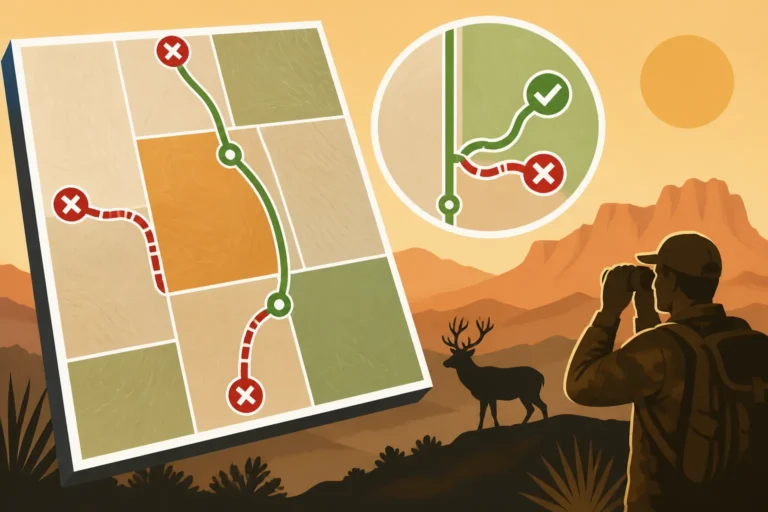
- Reading the Terrain: Pay attention to what the road is telling you. Are there fresh washouts? Is the mud getting progressively deeper? Are there signs of previous vehicles getting stuck? Look for standing water or new rivulets flowing across the road. If the water is murky and moving swiftly, that’s a huge red flag.
- Water Depth and Current: If you must cross water, get out and walk it first if it's safe to do so. Check the depth with a stick and assess the bottom for obstacles, rocks, or soft spots. Even seemingly shallow, slow-moving water can hide dangers. If the water is above your hubs, or the current feels strong enough to move your vehicle, do not attempt to cross. As a general rule, if you can't see the bottom and don't know the exact depth and conditions, turn back. No hunt is worth risking your life or vehicle.
- Mud Consistency: Not all mud is created equal. Sticky clay mud can quickly pack into tire treads, turning them into slicks. Deep, soupy mud can swallow a vehicle. If you see signs of other vehicles having significant trouble, or if your tires are already packing up with mud, it's a strong indicator that conditions are worsening. It's far better to turn around, find an alternate route, or even hike in, than to spend hours trying to recover a stuck vehicle, possibly missing prime hunting time or even worse, getting stranded overnight.
Safe Driving Techniques for Mud and Water
If you've assessed the situation and decided it's safe to proceed, use proper driving techniques to minimize your risk.
- Engage 4WD Early: Don't wait until you're already stuck. Engage 4-wheel drive (4-high for light mud, 4-low for deeper mud or climbing slick grades) before you enter the challenging section. This gives you maximum traction and control.
- Maintain Steady Momentum: In mud, a consistent, steady pace is often better than aggressive acceleration and braking. Too much speed can cause you to lose control, while too little can cause you to bog down. Find that sweet spot where your tires are spinning just enough to shed mud but not so much that you're digging in.
- Avoid Deep Ruts (if possible): Sometimes you can't avoid them, but if you can, try to drive on the high ground between ruts, or create your own path. Driving in existing ruts can high-center your vehicle, leaving your tires with no traction.
- In Water Crossings: Approach slowly and steadily. Maintain a bow wave in front of your vehicle to keep water from rushing into the engine compartment. Once you're through, drive slowly for a bit to allow your brakes to dry out and regain full effectiveness.
- Steering and Braking: Be gentle with your steering inputs in mud, as sudden movements can cause a skid. Braking distances will be significantly longer, so anticipate stops well in advance. Engine braking in 4-low can be very helpful on slippery downhill sections.
Dealing with Unexpected Closures and Getting Stuck
Despite your best efforts, things can still go wrong. Roads might be officially closed due to washouts you weren't aware of, or you might find yourself stuck in a mud bog.
- Respect Closures: If you encounter a Forest Service sign indicating a road closure, respect it. These closures are for your safety and the preservation of the road. Trying to bypass them can lead to fines, vehicle damage, or putting yourself and others in danger. Always have your Motorized Travel Rules on New Mexico Public Land handy for reference.
- When Stuck: Stay Calm and Assess: The immediate reaction when getting stuck is often panic or aggressive actions. Resist this. Take a deep breath. Assess the situation. Where are you stuck? What direction do you need to go? What recovery gear do you have?
- Attempt Self-Recovery First: If you have traction boards, try using them. Clear mud from in front of and behind your tires. Try airing down your tires further. Sometimes, just a slight adjustment in tire pressure or getting a little material under the tires is enough.
- Winching Safely: If winching, ensure your winch is properly anchored to a strong, stable point (tree saver around a robust tree, another vehicle, or a rock anchor). Use a damper on the winch line. Always ensure no one is near the winch line during operation. Winching is a powerful tool, but dangerous if not done correctly.
- Call for Help (if necessary): If self-recovery isn't working, and you have a satellite messenger, use it. Provide your exact GPS coordinates and a clear description of your situation. Be patient; help in the Gila can take many hours to arrive.
- Ethical Considerations: If you do get stuck and recover your vehicle, try to minimize your impact on the landscape. Don't create huge new ruts by spinning your tires excessively. If you damage a road, report it to the Forest Service when you can. Leaving a massive mess only hurts future access for everyone.
Road Conditions in the Gila National Forest During Monsoon Season
| Road Type | Typical Condition (Dry) | Monsoon Impact | Recovery Difficulty | Tips for Navigation |
|---|---|---|---|---|
| Paved Roads | Excellent | Minor slickness, standing water, debris from washes | Low | Drive cautiously, watch for debris. |
| Main Gravel FS Roads | Good, some washboarding | Slick, muddy in sections, ruts, washouts, loose rock | Moderate | Engage 4WD, steady speed, anticipate hazards. |
| Dirt Roads/Two-Tracks | Dusty, firm | Extremely slick, deep mud, ruts, potential bogs | High | 4-low, traction boards, scout ahead on foot. |
| Low-Water Crossings/Washes | Dry, sandy | Flash flood danger, raging water, hidden debris, washed out | Extreme | Never cross if water is flowing or depth unknown. |
| Steep Grades | Good traction | Very slick, erosion, deep ruts, potential for sliding | Moderate to High | 4-low, careful throttle/brake control, maintain momentum. |
Understanding and respecting the dynamic nature of Gila roads during monsoon season is crucial for any hunter. With thoughtful preparation, the right gear, and a healthy dose of caution, you can mitigate many of the challenges and still enjoy a successful, memorable hunt in one of New Mexico's wildest places. Remember, the game will still be there, but your safety is paramount.
Disclaimer
This article is for general informational purposes only and does not constitute professional advice. Laws, prices and regulations vary by location and change over time. Consult a qualified professional for guidance on your specific situation.