Camping Limits on State Wildlife Areas
It's incredibly frustrating when you're planning a New Mexico hunt, pouring over maps, and realize that the rules for where you can pitch a tent seem to change with every different color on the public land layer. State Wildlife Areas, in particular, often have their own specific quirks that can catch an eager hunter off guard. This guide is going to walk you through the ins and outs of camping limits on New Mexico State Wildlife Areas, helping you understand what to expect and where to find the precise details you need to stay legal and enjoy your time outdoors.
Why Camping on State Wildlife Areas Feels Different
New Mexico offers an amazing amount of public land for hunters, from vast stretches of BLM ground to sprawling National Forests. When you’re used to the more flexible "dispersed camping" rules of these federal lands, transitioning to a State Wildlife Area (SWA) can feel like hitting a brick wall of regulations. This isn't because the state wants to make things harder; it's often a reflection of the primary purpose and specific management objectives for these unique parcels.
State Wildlife Areas are fundamentally different from other public lands. While federal lands like those managed by the Bureau of Land Management (BLM) or the U.S. Forest Service (USFS) have a "multiple-use" mandate that balances recreation, grazing, timber, and wildlife, SWAs are almost exclusively focused on wildlife conservation and providing public hunting and fishing access. This singular focus means that activities like camping are often more tightly controlled to minimize disturbance to game animals, protect sensitive habitats, or manage human impact in areas that might be smaller or more intensely used for hunting during specific seasons. It's a valid source of confusion for many hunters who assume "public land" means "camp anywhere," and it's essential to understand this distinction before you ever pack your tent.
The varying nature of these rules can make planning an overnight hunt a real headache. You might find some SWAs that allow primitive camping with certain restrictions, while others are strictly day-use only, leaving you scrambling for an alternative place to stay. This inconsistency means you can't rely on a blanket rule; you have to do your homework for each specific area. For those of us who cherish the freedom of setting up a quiet camp right where we want to hunt, these regulations can feel like a definite curveball in our New Mexico hunting plans. It's a common struggle, but one that's easily overcome with a bit of research.
General Camping Rules You'll Encounter on New Mexico SWAs
When it comes to camping on New Mexico State Wildlife Areas, the keyword is variability. Unlike the often consistent rules across large federal land designations, each SWA can, and often does, have its own set of specific regulations. This makes it challenging to give a one-size-fits-all answer, but we can definitely lay out the general parameters you'll encounter and what you should always be looking for.
Designated Campsites vs. Dispersed Camping
Many SWAs will restrict camping to designated campsites or specific areas only. This is a big departure from the freedom of dispersed camping you might enjoy on National Forest or BLM lands, where you can often pull off a road and set up shop as long as you're a certain distance from water or other users. On an SWA, "designated" means exactly that: look for signs, picnic tables, fire rings, or clear indications of established camping spots. If you don't see them, or if the regulations for that SWA don't explicitly mention dispersed camping, assume it's not allowed.
The logic here is often about concentrating human impact to protect the broader wildlife habitat. By limiting camping to specific zones, the state can manage waste, prevent widespread soil compaction, and minimize disruption to animals that might be using other parts of the SWA for feeding, bedding, or migration. It’s not always about convenience, but about conservation. Always check the specific rules for the SWA you intend to visit; what’s permitted at Water Canyon SWA might be strictly prohibited at Urraca Wildlife Area.
Length of Stay and Specific Restrictions
Even if camping is allowed, there will almost certainly be limits on the length of your stay. These are often shorter than federal land limits, sometimes only a few nights, or even specific to the dates of an open hunting season. Some SWAs might be day-use only, meaning you can park your truck, hunt all day, and even enjoy a sunset meal, but you must pack up and leave before legal closing hours, typically after dark. This can be a real inconvenience if you're planning a multi-day hunt and discover your chosen State Wildlife Management Areas in New Mexico is day-use only.
Other common restrictions include rules against open fires, especially during dry conditions. Always check for Fire Restrictions During Hunting Season before you even think about lighting a match. You'll also find strict rules on vehicle use, typically limiting travel to designated roads and parking areas only. Off-road travel is almost universally prohibited on SWAs to protect habitat and prevent erosion. And, of course, the golden rule of "pack it in, pack it out" applies with extra vigor – leave no trace of your visit.
Comparing SWA Camping Rules to Other Public Lands
To help clarify the unique nature of SWA camping rules, here's a general comparison with other common public land types in New Mexico. Remember, this is a generalization, and specific conditions and local rules can always apply.
| Feature | State Wildlife Areas (SWAs) | National Forests (USFS) | BLM Lands (Bureau of Land Management) |
|---|---|---|---|
| Primary Focus | Wildlife conservation, hunting/fishing access | Multi-use (timber, recreation, wildlife) | Multi-use (grazing, energy, recreation, wildlife) |
| Camping Style | Often restricted to designated sites; some primitive areas; many day-use only | Dispersed camping widely allowed; designated campgrounds | Dispersed camping widely allowed; designated campgrounds |
| Length of Stay | Highly variable, often shorter (e.g., 3-5 days); seasonal | Generally 14-16 days in a 30-day period | Generally 14 days in a 28-day period |
| Fires | Often restricted, check local rules rigorously | Fire restrictions common, check alerts | Fire restrictions common, check alerts |
| Vehicles | Limited to designated roads/parking areas | Limited to designated roads/trails | Limited to designated roads/trails |
| Permits Required? | Sometimes for specific SWAs/activities | Generally not for dispersed; fees for developed sites | Generally not for dispersed; fees for developed sites |
| Pets | Often restricted or required to be leashed | Leash rules common near developed areas | Leash rules common near developed areas |
As you can see, the SWAs tend to be the most restrictive, which often catches hunters by surprise. This table highlights why it's so critical to treat each SWA as its own unique entity with its own specific set of access and camping guidelines.
Navigating Specific Situations and Finding Local SWA Information
The varying rules on State Wildlife Areas mean that good planning and a bit of detective work are your best friends. Don't just assume; investigate. This proactive approach will save you from potential fines, forced relocations, and unnecessary frustration during your hunt.
Understanding the Day-Use Dilemma
Many New Mexico SWAs are strictly day-use. This means you can enter at sunrise, hunt, fish, hike, and enjoy the area, but you absolutely must be out by sunset or the posted closing time. For a multi-day hunt, this creates a logistical challenge: where do you sleep? If your target SWA is day-use only, you'll need to find nearby National Forest, BLM land, or private campgrounds that allow overnight stays. Sometimes, a short drive from the SWA boundary to adjacent federal land is all it takes.
It's tempting to think you can just "stealth camp" in a day-use SWA, but the reality is that game and fish wardens patrol these areas specifically because of their tighter regulations. Getting caught can result in a citation and ruin your hunt. Always plan for alternative camping locations if your primary hunting area is day-use. This might involve Packing an Elk Out of the Gila Alone and driving it to a different camp, or making sure your vehicle is ready to handle a longer drive out each evening.
Where to Find the Official Rules and What to Look For
The absolute best and most reliable source for specific SWA camping limits is the New Mexico Department of Game and Fish (NMDGF) website. They typically have individual pages or sections dedicated to each SWA, outlining permitted activities, seasons, and any specific regulations. Don't rely solely on general public land maps; while mapping tools like onX Hunt are invaluable for showing land ownership boundaries – helping you identify SWAs in the first place – they generally don't contain the granular details about camping rules. GoHunt, another excellent resource for Western hunters, can sometimes provide links or summaries, but the NMDGF site is the ultimate authority.
When you're looking at the NMDGF information, pay close attention to:
- "Permitted Activities": Does it explicitly list camping, and if so, what kind (primitive, designated sites, RVs)?
- "Hours of Operation": Does it say "Day Use Only" or "Open from X to Y"?
- "Special Regulations": This is where you'll find unique rules regarding fires, vehicles, group sizes, or seasonal closures.
- Contact Information: Many SWA pages will have a phone number for the local NMDGF office or area manager. If you're in doubt, a quick phone call can save you a lot of grief. Don't hesitate to reach out; they're there to help you stay legal and safe.
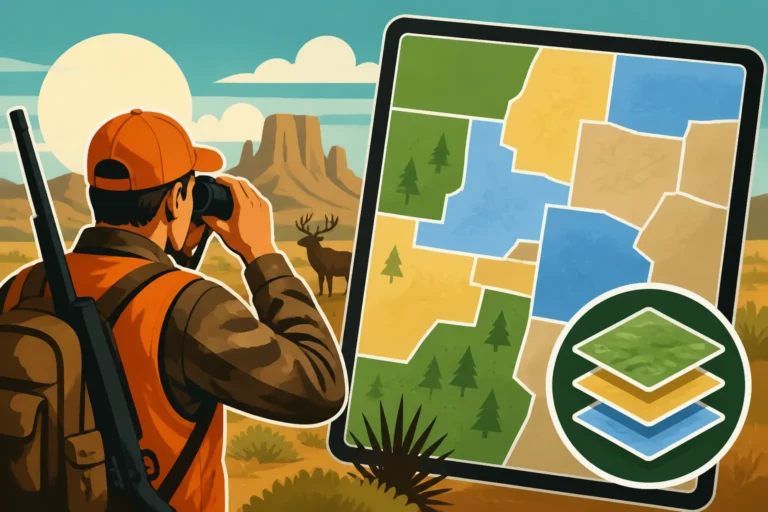
Using a mapping application like onX Hunt is incredibly helpful for visualizing SWA boundaries in the field. You can toggle on the public land layer and instantly see if you're inside an SWA, National Forest, or BLM parcel. However, remember that the map shows where the land is, not necessarily how you can use it for camping. Always cross-reference your map with the official NMDGF regulations for that specific SWA. This dual approach ensures you're hunting in the right place and camping legally. Don't forget to check the New Mexico Rules and Info Booklet for general statewide regulations that might also apply.
Planning Your Overnight Stays Beyond SWAs
If an SWA doesn't allow camping, or if its restrictions are too tight for your needs, pivot to adjacent federal lands. BLM and National Forests are often nearby and provide more lenient dispersed camping options. This is where your detailed map work with onX Hunt truly pays off. You can identify potential camping spots just outside the SWA boundary on BLM or Forest Service ground, ensuring you have a legal place to rest your head at night without disrupting the SWA's wildlife.
Remember that even on federal lands, there are basic dispersed camping etiquette rules, such as not driving off-road, packing out all your trash, and respecting quiet hours. Always plan your camp at least 200 feet from any water source to allow animals access. If you're looking for Water Sources That Concentrate Desert Game, you'll want to ensure your camp is a good distance away. And while Scouting New Mexico State Trust Land Fourteen Days Out allows specific pre-hunt access, general camping on Trust Land usually requires a specific permit beyond your hunting license, so don't assume you can just pull off there either. Always check the rules for all land types.
Disclaimer
This article is for general informational purposes only and does not constitute professional advice. Laws, prices and regulations vary by location and change over time. Consult a qualified professional for guidance on your specific situation.