Hunting Boundaries Around National Parks
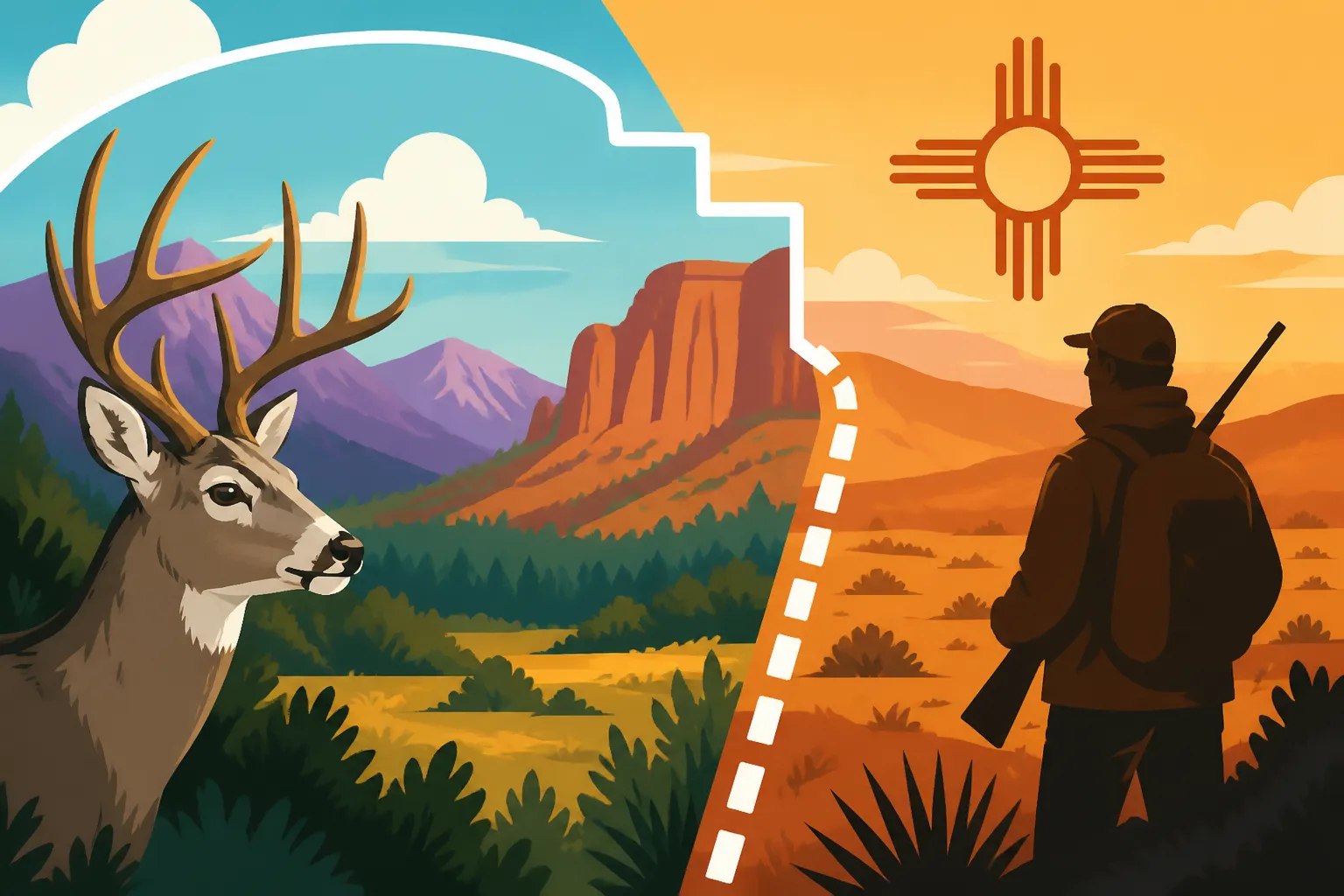
One of the biggest anxieties for any hunter, especially when exploring new territory in New Mexico, is the fear of inadvertently crossing a boundary where you shouldn't be. And when it comes to National Parks, that anxiety is completely justified. These are protected areas with very specific rules, and misunderstanding those can lead to serious legal headaches. This guide aims to clear up the confusion surrounding National Park boundaries, helping you identify huntable lands nearby and ensuring your New Mexico hunting adventures remain both successful and fully legal.
The Absolute No-Go Zones: Understanding National Park Status
It's crucial to understand from the outset that, with very few exceptions, hunting is strictly prohibited within the boundaries of a designated National Park. These areas are established for the preservation of natural and cultural resources, and that mission inherently conflicts with the act of harvesting game animals. Think of them as sanctuaries where wildlife is protected from hunting pressure.
Why National Parks Are Off-Limits to Hunters
The primary reason National Parks prohibit hunting stems directly from their foundational mandate. The National Park Service Organic Act of 1916 dictates that parks are to "conserve the scenery and the natural and historic objects and the wildlife therein and to provide for the enjoyment of the same in such manner and by such means as will leave them unimpaired for the enjoyment of future generations." Hunting, in almost all circumstances, runs contrary to this preservation ethic. While wildlife management does occur within parks, it's typically conducted by park staff or designated agencies and does not involve recreational public hunting.
For hunters, this means National Park boundaries are ironclad lines you simply do not cross with a firearm or bow, especially when pursuing game. The consequences of doing so can be severe, ranging from hefty fines and confiscation of equipment to loss of hunting privileges and even imprisonment. It's not a place to test the limits or "just check it out." The rules are clear, and enforcement is vigilant.
Differentiating Park Designations and Their Impact on Hunting
While the general rule is "no hunting in National Parks," New Mexico, like other states, has a variety of federal land designations, and not all of them carry the same restrictions. It’s important for hunters to understand the nuances. For example, a National Preserve might allow hunting under specific regulations, often mirroring state laws, because their enabling legislation typically includes resource extraction (like hunting) as a permitted activity. Similarly, some National Monuments or National Recreation Areas might have different rules depending on their specific congressional mandate.
However, for a designated National Park, the prohibition on hunting is nearly universal. Always assume a National Park is a non-hunting zone unless you have explicit, confirmed information to the contrary from the New Mexico Department of Game and Fish (NMDGF) regulations and the specific park's official rules. Never rely on hearsay or assumptions when dealing with federal land boundaries, especially around protected areas.
Navigating the Edge: Identifying Huntable Lands Adjacent to Parks
National Parks in New Mexico rarely exist in isolation. They are often nestled within or adjacent to vast expanses of other public lands, such as National Forests or Bureau of Land Management (BLM) acreage, or bordered by private ranches. Understanding this patchwork is key to finding huntable ground without inadvertently trespassing into a protected area.
The Patchwork of Public and Private Land Surrounding Parks
Imagine a National Park as an island of non-hunting territory surrounded by a sea of mixed land ownership. This "sea" can include significant portions of National Forest land, where hunting is generally permitted following state regulations, or BLM lands, which often offer abundant How Much Public Land New Mexico Holds and hunting access. There are also large tracts of New Mexico State Trust Land, which typically require an access permit (your hunting license often serves this purpose) but are huntable. Interspersed within all these public lands are private landholdings, some vast ranches and some smaller parcels, which require explicit Written Permission Is Required to Cross Private New Mexico Ground for access.
The challenge, and where diligence is paramount, is that these boundaries can be complex and aren't always marked with clear signage on the ground. A game management unit (GMU) might encompass a National Park, but the hunting rules within that GMU dramatically shift when you enter the park's federal jurisdiction. Knowing which type of land you're on at all times is the hunter's responsibility. This is where digital mapping tools become absolutely indispensable.
How Game Management Units Interact with Park Boundaries
New Mexico's hunting regulations are structured around Game Management Units (GMUs), which are geographical areas defined by the NMDGF. You apply for tags and hunt within specific GMUs. The issue is that a GMU boundary might cut right through a National Park, or a park might be entirely contained within a GMU. Just because your tag is for GMU X and that GMU contains part of a National Park doesn't mean you can hunt inside the park.
The NMDGF regulations will always defer to federal law and park-specific rules regarding non-huntable areas. So, while your tag might be valid for a particular GMU, you must simultaneously ensure you are only hunting on lands within that GMU that are legally open to hunting. This often means carefully studying both the NMDGF unit maps and federal land ownership maps. Understanding How New Mexico Numbers Its Game Management Units and Reading a Game Management Unit Boundary is a crucial first step, but it must be layered with park-specific boundary knowledge.
Essential Tools and Strategies for Boundary Identification
Given the complexity of land ownership and the strict rules around National Park boundaries, relying on guesswork or outdated information is a recipe for disaster. Modern technology, combined with traditional scouting methods, provides the best defense against unintentional trespass.
The Indispensable Role of Digital Mapping Applications
In today's hunting world, digital mapping applications like onX Hunt have become absolutely essential for navigating complex land ownership patterns. These apps layer satellite imagery with property boundaries, showing you in real-time whether you're on public land (like a National Forest or BLM parcel), private property, or, critically, within the boundaries of a National Park. When you're standing on a ridge looking into a canyon, your phone or GPS device can confirm exactly which side of a line you're on. This is especially useful for E-Scouting a New Mexico Unit Before the Season, allowing you to identify potential hunting areas and exclusion zones long before you ever set foot on the ground.
These applications typically use color-coded overlays to distinguish land types, making it easy to see National Park boundaries (often marked distinctly) and surrounding public lands. You can download maps for offline use, which is critical in remote New Mexico units where cell service is non-existent. Before heading out, spend considerable time Reading a Land Ownership Layer Correctly on these apps. Zoom in, pan around, and trace potential routes. This proactive approach with tools like onX Hunt significantly reduces the risk of making an honest, but costly, mistake. Many serious hunters also use platforms like GoHunt for planning, which often integrate mapping features and regulations, further aiding in identifying huntable areas.
Physical Maps and Ground Verification
While digital maps are incredible, they should complement, not entirely replace, physical maps and on-the-ground observation. Bring paper maps of the National Forest or BLM area you intend to hunt, as well as a dedicated GPS unit. Batteries die, phones get dropped, and technology can fail. A physical map and compass are reliable backups.
When you're actually in the field, pay close attention to physical boundary markers. These can include:
- Boundary Signs: "No Hunting," "National Park Boundary," or signs designating different land agencies.
- Fences: While not always definitive, a fence can often indicate a change in land ownership or management.
- Vegetation Changes: Sometimes, different land management practices result in visible changes in timber density or ground cover that can hint at a boundary.
- Roads and Trails: Consult your maps to see if specific roads or trails are designated as boundaries.
Always cross-reference what you see on the ground with your maps. If you encounter a boundary you're unsure about, err on the side of caution. It's better to retreat and re-evaluate than to push forward into a potentially illegal situation. Consider also Scouting New Mexico State Trust Land Fourteen Days Out to get a feel for the terrain and boundaries before your actual hunt starts.
Pre-Hunt Scouting and Due Diligence
Before your hunt, research isn't just about finding game; it's about understanding where you can and cannot go. Beyond mapping apps, thoroughly read the current New Mexico Department of Game and Fish regulations booklet. This resource will detail specific unit rules and any special provisions regarding federal lands.
Don't hesitate to contact the local NMDGF office or the specific National Park Service office for clarification if you have questions about boundaries. While I can't advise you to call them myself, the general principle is that they are the definitive source for rules and regulations. They would rather answer a question than deal with a violation. This due diligence is a critical part of being a responsible hunter.
| Land Type | Hunting Status (General) | Access Requirements (Typical) | Key Identifying Features (Mapping/Ground) |
|---|---|---|---|
| National Park | Generally Prohibited | None (recreational access only) | Distinctive boundary lines on maps; park signs, visitor centers |
| National Forest | Generally Permitted | State hunting license | Green/dark green on maps; Forest Service signs, roads, campgrounds |
| BLM Land | Generally Permitted | State hunting license | Yellow/light brown on maps; sparse roads, undeveloped areas |
| State Trust Land | Generally Permitted | State hunting license (often acts as permit); sometimes specific STLO permit | Light blue/gray on maps; often adjacent to other public lands |
| Private Land | Prohibited without permission | Written permission from landowner | White/uncolored on maps; fences, "No Trespassing" signs |
Consequences and Best Practices for Staying Legal
The stakes are high when hunting near National Park boundaries. An honest mistake can still lead to severe repercussions, so adopting a proactive and conservative approach is always the best strategy.
The Risks of Trespassing onto Protected Federal Lands
Trespassing onto a National Park with a firearm or when actively hunting is a serious offense. The consequences can include significant financial penalties, which might run into the thousands of dollars, depending on the severity and nature of the violation. Additionally, you could face the confiscation of your weapon, vehicle, and any harvested game. Perhaps most damaging for a dedicated hunter, a conviction can lead to the suspension or permanent revocation of your hunting privileges, not just in New Mexico but potentially across state lines through interstate compacts. In some egregious cases, federal charges and jail time are also possibilities. These aren't just abstract threats; park rangers and federal law enforcement are specifically trained and equipped to patrol these boundaries and enforce these laws rigorously.
Furthermore, aside from the legal ramifications, there's the ethical consideration. Hunting in a protected area undermines the conservation efforts of the park system and can negatively impact the perception of all hunters. It erodes trust and can contribute to anti-hunting sentiment. It's simply not worth the risk.
When in Doubt, Back Out: Giving Boundaries a Wide Berth
The most important best practice when hunting near any sensitive boundary, especially a National Park, is simple: when in doubt, back out. It's far better to err on the side of caution, give a boundary a wide berth, and potentially miss out on an animal than to risk a violation. Your GPS or mapping app might show you are 50 yards from the line, but elevation changes, GPS inaccuracies, or even a slight error in reading the map can quickly put you on the wrong side.
A good rule of thumb is to maintain a buffer zone. If the map shows a boundary, consider it a no-go zone for at least 100-200 yards on your side, or more if the terrain is difficult to navigate or visibility is poor. This creates a margin of error that protects you. Always be aware of your surroundings and continually check your location, particularly when tracking game or moving quickly through unfamiliar territory. Pay attention to how the terrain changes, and look for any clues on the ground that might indicate a property line, even if it's not a formal fence. Remember that Retrieving Game From Private Land in New Mexico also requires permission, so plan your shots carefully near any boundary to minimize the chance of a downed animal running into a forbidden zone.
Respecting the Resource and Other Users
Beyond the legalities, adhering to National Park boundaries is about respecting the land, the wildlife, and the non-hunting public who visit these areas. National Parks are treasured by many for their pristine nature and opportunities for wildlife viewing, hiking, and camping. As hunters, we share a passion for the outdoors and its wildlife, and upholding ethical standards helps ensure that hunting continues to be a respected tradition.
By meticulously respecting boundaries, you contribute positively to the image of hunters as responsible stewards of the land. This includes not just National Park boundaries, but all land designations, whether it's Crossing Private Ground to Reach New Mexico Public Land or understanding the rules for Motorized Travel Rules on New Mexico Public Land. Our collective actions shape public perception and the future of hunting access.
Disclaimer
This article is for general informational purposes only and does not constitute professional advice. Laws, prices and regulations vary by location and change over time. Consult a qualified professional for guidance on your specific situation.