Written Permission Is Required to Cross Private New Mexico Ground
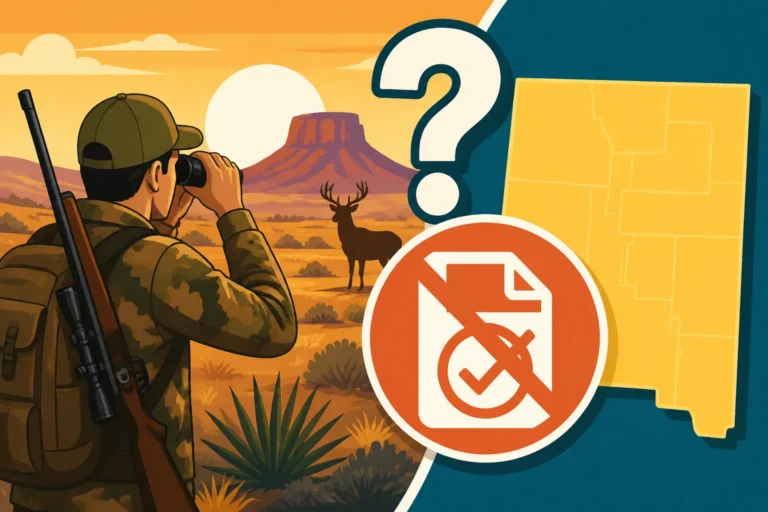
There's nothing quite as frustrating as meticulously scouting a promising ridge or a secluded canyon bottom on public land, only to discover that the most direct, or even the only, practical way to get there involves crossing a strip of private ground. We’ve all been there, staring at a property line on our mapping app, knowing a trophy animal is just beyond, but a fence and a "No Trespassing" sign stand in the way. This guide is all about navigating those often-tricky land access issues in New Mexico, focusing on the absolute necessity of obtaining written permission before you even think about setting foot on private property.
The Frustrating Reality of Landlocked Public Land in New Mexico
New Mexico boasts an incredible amount of public land – we're talking millions of acres of national forests, BLM ground, and state trust land. It's a hunter's paradise, but the reality on the ground often isn't as simple as those big numbers suggest. Many of us have experienced the sheer exasperation of finding prime hunting territory on public land that's entirely surrounded by private holdings, creating what feels like an impenetrable fortress of fences and "No Trespassing" signs. It’s a common scenario that can turn what should be an exciting scouting trip into a baffling exercise in frustration.
The Checkerboard Effect and Access Challenges
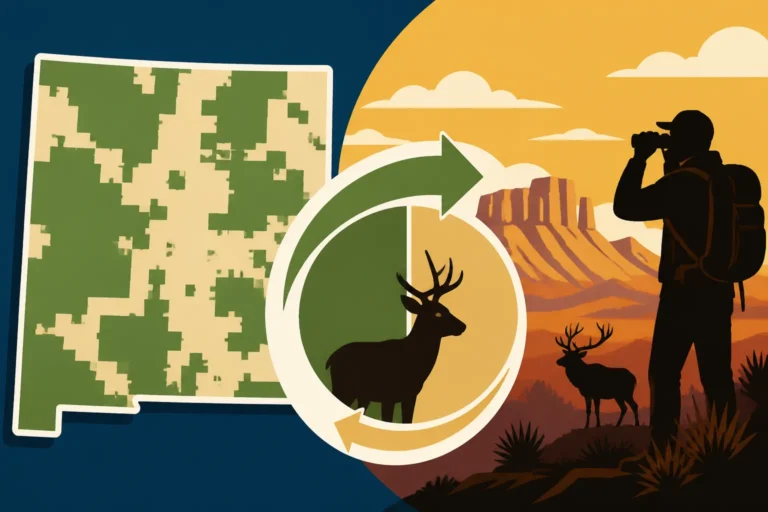
The way land was surveyed and settled across the West, especially in states like New Mexico, often resulted in a "checkerboard" pattern of land ownership. Imagine alternating squares of public and private land, sometimes in a neat grid, other times in a jumbled mess. This historical land distribution means that what looks like a vast expanse of public acreage on a map can, in reality, be fragmented by numerous private parcels. A beautiful canyon might be public at the bottom, but the easiest, or only, way to descend into it is across a rancher's grazing pasture. This fragmented ownership is a massive headache for hunters, making direct access to public ground incredibly difficult, if not impossible, in many areas.
These access challenges aren't just minor inconveniences; they can completely derail a hunting plan. You might have drawn a dream tag for a unit with fantastic public land, only to spend countless hours trying to figure out how to even get to it. Sometimes, there's literally no legal public access road or trail that doesn't involve traversing private property. It's a situation that often forces hunters to either abandon their planned spot or embark on incredibly long, arduous detours, adding miles to their pack-out and shaving precious daylight from their hunting time. The frustration is real, and it’s a hurdle every New Mexico hunter has likely faced at some point.
Why 'Just Crossing' Isn't an Option
I know the temptation. You see that public land just beyond the fence, and you rationalize, "It's just a quick walk across. No one will know." But this mindset is a dangerous gamble with serious consequences. In New Mexico, "just crossing" private land, even if it's to access public land, is considered trespass unless you have explicit, written permission from the landowner. This isn't just about being a good neighbor; it's a legal requirement. The concept of "implied consent," where a gate being open or a fence being down might suggest you're allowed to pass, is a myth that can land you in deep trouble.
Respecting private property boundaries is paramount for several reasons. First and foremost, it’s the law, and breaking it can lead to fines, confiscation of your weapon, loss of hunting privileges, and even criminal charges. No tag, no matter how coveted, is worth that kind of risk. Secondly, and just as important, is the ethical consideration. Landowners have a right to control their property, and violating that right erodes trust and gives all hunters a bad name. Every instance of trespass makes it harder for the next hunter to secure permission, slowly but surely closing off more potential access points for everyone. We have a responsibility to act as ambassadors for hunting, and that starts with respecting the land, whether it's public or private.
Understanding New Mexico's Written Permission Requirement
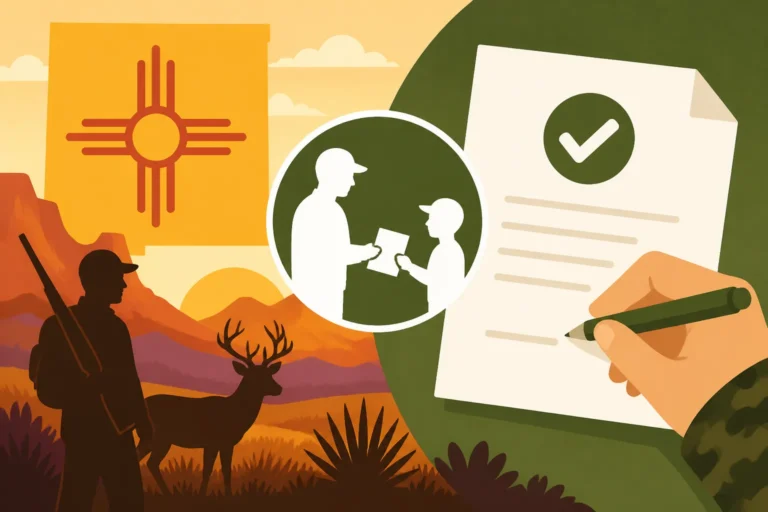
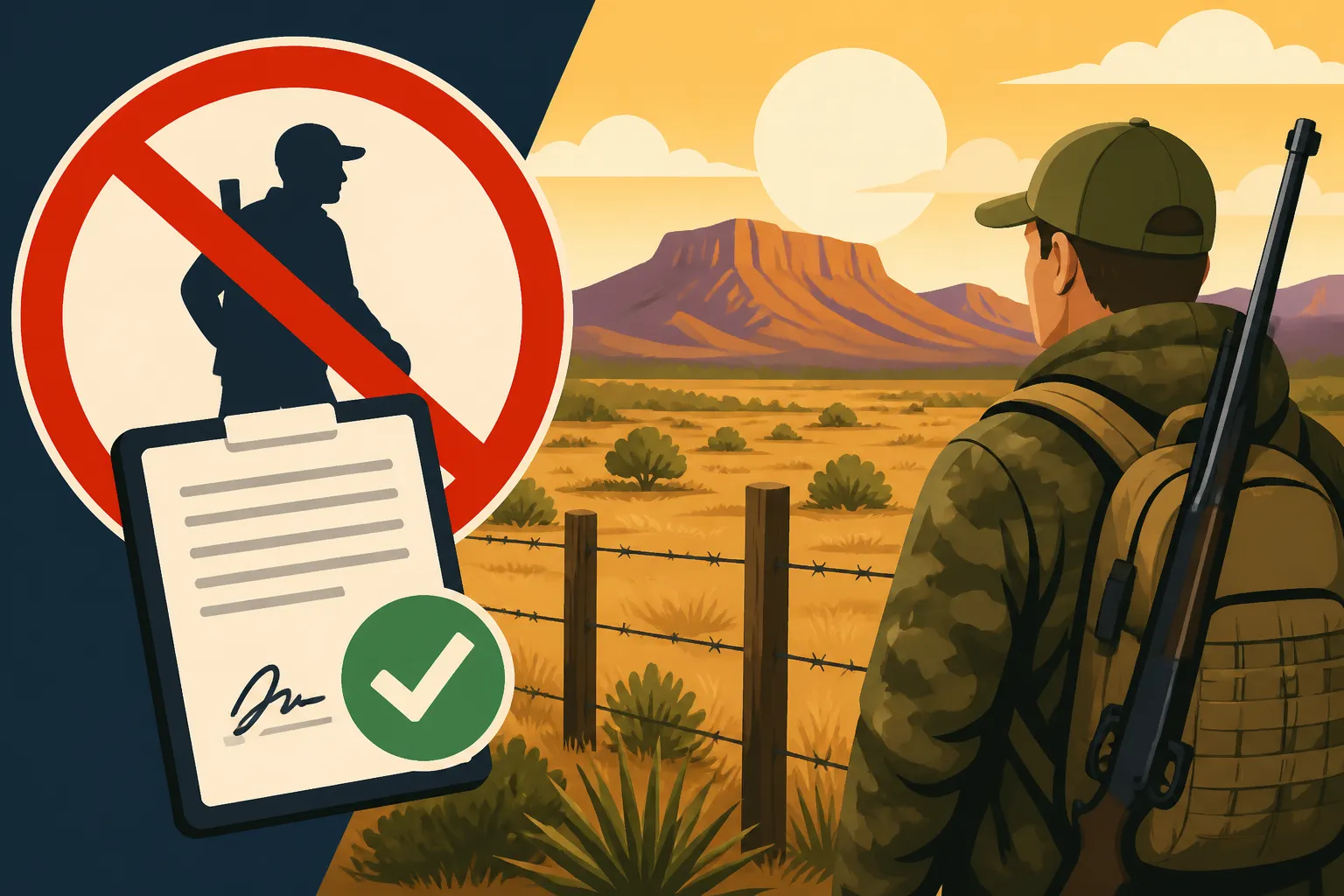
The cornerstone of legal access across private land in New Mexico is written permission. This isn't a suggestion; it's a firm rule. You cannot rely on a verbal "sure, go ahead," a friendly wave, or the assumption that because a landowner was nice once, that permission extends to perpetuity. The New Mexico Department of Game and Fish (NMDGF) is very clear on this: if you're on private land without written consent, you're trespassing, plain and simple.
What Constitutes Valid Written Permission?
So, what exactly does "valid written permission" look like? It needs to be explicit, clear, and comprehensive. At a minimum, it should include:
- The specific dates for which the permission is granted. "Indefinite" permission is a red flag.
- Your full name (the hunter) and contact information.
- The landowner's full name and contact information.
- A clear description of the property or, even better, a map with the approved access route highlighted.
- The purpose of your presence (e.g., "to access adjacent public land for elk hunting").
- Any specific restrictions or conditions the landowner might impose (e.g., "stay on the main two-track," "no driving off-road," "close all gates").
- The landowner's signature and date.
While an email or text message could theoretically be presented as written permission, it's often insufficient and leaves too much room for ambiguity or dispute. Imagine trying to prove specific access points or conditions with a hurried text. The gold standard is a signed, physical document or a detailed, dated email exchange that clearly covers all the essential points. When in doubt, always err on the side of formality and detail. A simple, one-page letter signed by both parties is far more robust than a quick message. Ensure you have this document with you at all times when on the private property, ready to present to any inquiring game warden or landowner.
The Legal Ramifications of Trespass Without Permission
Ignoring the written permission rule is not just frowned upon; it carries significant legal weight in New Mexico. The penalties for trespassing can range from substantial fines to far more severe consequences that could impact your hunting career for years. A game warden investigating a trespass complaint isn't going to be swayed by stories of good intentions or mistaken identity. If you cannot produce valid written permission, you are in violation of the law.
Potential legal ramifications include:
- Fines: These can be hefty, often starting in the hundreds of dollars, and they can increase significantly depending on the severity and frequency of the offense.
- Loss of hunting privileges: A trespass conviction can lead to the suspension or revocation of your hunting license, not just in New Mexico but potentially in other states as well through interstate compacts. This means your passion could be put on hold for months, or even years.
- Confiscation of equipment: In some cases, your firearm or hunting equipment could be seized.
- Criminal charges: Depending on the circumstances, trespass can escalate from a civil infraction to a misdemeanor, potentially leading to jail time.
- Damage to reputation: Beyond the legal penalties, a trespass incident can damage your personal reputation and, by extension, the reputation of the hunting community as a whole. Landowners who have negative experiences with hunters are far less likely to grant permission in the future, closing off more access for everyone.
The message is clear: never risk it. Always ensure you have legitimate, detailed written permission before you step foot on any private land, even if it's just a narrow strip separating you from prime public hunting ground.
Strategies for Obtaining Written Permission from Landowners
Getting written permission can feel like a daunting task, especially if you're not used to knocking on doors or making cold calls. But with the right approach and a bit of persistence, it's absolutely possible. The key is to be respectful, prepared, and understand the landowner's perspective. They are, after all, granting you a privilege.
Researching Landowner Information
Before you can ask for permission, you need to know who to ask. This step is crucial and requires a bit of detective work. Your best friend here will be modern mapping technology and local government resources. Tools like onX Hunt are invaluable, as they typically overlay property boundaries with landowner names directly on your map. This allows you to visually identify the private parcels blocking your access and immediately see who owns them. Reading a Land Ownership Layer Correctly is a skill worth developing to ensure you're getting the most accurate information.
You can also cross-reference this information with county assessor's offices or local plat maps, which are public records. These resources often provide contact information or at least mailing addresses for landowners. Keep in mind that many landowners, especially those with large ranch holdings in New Mexico, might be absentee owners, living in a different state. This adds a layer of challenge, as a face-to-face conversation might not be possible. However, a polite, well-written letter explaining your request can still be effective. Some hunters even find success using resources like GoHunt, which often integrates land ownership data with other hunting information, helping you identify potential access points and the landowners involved.
The Approach: How to Ask for Access
Once you have the landowner's contact information, how do you make the ask? This isn't the time for an aggressive or demanding tone. Think of it as a professional courtesy. Here are some tips for a successful approach:
- Be polite and respectful: Always start with a genuine "hello" and an introduction. Explain who you are, why you're contacting them, and that you understand and respect their property rights.
- Be prepared: Have your maps ready. Clearly point out the public land you want to access and the specific private parcel you'd like to cross. Show them you've done your homework.
- Explain your intentions: Be transparent. "I'm looking to access the BLM land beyond your property for a deer hunt. I'd only be crossing a short stretch of your pasture, and I'll stick to the existing two-track."
- Offer assurances: Address their likely concerns proactively. "I promise to close all gates, leave no trash, avoid any livestock, and report anything unusual I see on your property, like downed fences or suspicious activity."
- Offer something in return (if appropriate): Sometimes, offering a helping hand can go a long way. "If you ever need a hand mending fences or checking on things, please let me know." Some hunters even offer a small payment, though this isn't always expected.
- Be flexible: If they say no to one route, ask if there's an alternative. If they have specific days they don't want you on the property, respect that.
- Respect their decision: If they say no, thank them for their time and move on gracefully. Pushing the issue will only create animosity and make it harder for other hunters in the future.
The best times to contact landowners are usually during off-peak hours, when they're not busy with chores or their own family time. Weekday evenings or weekend afternoons can often be good windows. Remember, a face-to-face conversation, where possible, almost always builds more trust than a phone call or letter, but all methods can yield results.
Crafting a Permission Agreement
When a landowner agrees to grant you access, make it easy for both of you by having a simple permission agreement ready. This document protects both parties by clearly outlining the terms and conditions. While a lawyer isn't necessary for this, clarity is key.
Key elements to include in your written agreement:
- Header: "Private Land Access Permission Agreement"
- Parties: Your full name, address, phone number, and hunting license number. Landowner's full name, address, and phone number.
- Property Description: Legal description of the property, or a very clear physical description, perhaps referencing a map. Include the Game Management Unit (GMU) number.
- Dates of Access: Specify the start and end dates of the permission. Avoid open-ended dates.
- Purpose of Access: Clearly state you are accessing for hunting or scouting purposes, specifically to cross their land to reach public land.
- Approved Route: Describe the exact path you are allowed to take (e.g., "along the main two-track road, not deviating more than 10 yards"). Attach a map with the route marked if possible.
- Vehicle Use: Specify if you are allowed to drive a vehicle, and if so, what type (e.g., 4×4 truck, ATV) and where.
- Rules/Conditions: List any specific requirements from the landowner, such as:
- "All gates must be left as found (closed or open)."
- "No littering."
- "Stay clear of livestock."
- "No overnight camping."
- "Hunter agrees to retrieve any downed game from public land via the agreed-upon route."
- "Hunter will report any unusual activity or damage to the property."
- Hold Harmless Clause (Optional but Recommended): A statement that the hunter agrees to hold the landowner harmless from any liability arising from the hunter's presence on the property. This can be a huge comfort to landowners.
- Signatures: Spaces for both your signature and the landowner's signature, along with the date. Make two copies, one for you and one for the landowner.
A clear, unambiguous agreement like this helps prevent misunderstandings, ensures both parties know what to expect, and provides crucial documentation if you're ever questioned by law enforcement or a game warden. This formal approach shows respect and professionalism, which can foster goodwill for years to come.
Navigating Different Types of Private Land Encounters
Not all private land is the same, and understanding the varying concerns of different landowners can significantly improve your chances of securing permission. A small residential parcel owner might have different priorities than a large-scale cattle rancher. Tailoring your approach to their specific situation is key.
Ranchers and Agricultural Land
When you're trying to cross vast expanses of private land in New Mexico, you're most likely dealing with ranchers, farmers, or large landholders whose property is tied to agricultural production. Their primary concerns are almost universally related to the safety and well-being of their livestock, their crops, and the integrity of their infrastructure like fences, gates, and water sources. Driving off-road, leaving gates open, or disturbing cattle can quickly sour any chance of access.
Building trust with a rancher often involves demonstrating that you understand and respect their way of life. When you approach them, talk about their cattle, their fences, or the local conditions. Offer to keep an eye out for issues on their property – a downed fence, a broken water pipe, or even identifying someone else trespassing. Explicitly state that you will "close all gates as found," "drive only on existing roads," and "make every effort to avoid disturbing livestock." Many ranchers appreciate knowing who is on their land and that those individuals are responsible. Sometimes, offering to help with a small chore, like mending a short stretch of fence or clearing some brush, can open doors (or gates!). This shared understanding and mutual respect are the bedrock of long-term access.
Residential or Smaller Private Parcels
Gaining permission to cross smaller, often residential, private parcels can sometimes be even more challenging than with large ranches. The concerns shift from livestock and crops to personal privacy, noise, safety, and the perception of strangers near their homes. These landowners might be less accustomed to hunters, and their property might be closer to towns or roads, increasing their apprehension.
When approaching these landowners, emphasize your quiet, respectful nature. Reassure them about noise levels (no unnecessary vehicle use, certainly no target practice), and the minimal impact you'll have. Focus on demonstrating that you are a responsible outdoors person, not a threat. For example, you might say, "I'll be walking quietly and won't be stopping near your home. My only goal is to get to the public land just beyond." If they have pets, mention that you'll be careful to avoid them. Sometimes, these smaller parcels are owned by people who are not tied to agriculture and may simply value their peace and quiet above all else. If they deny access, respect that decision completely. There might be valid reasons you're unaware of, and pushing the issue will only confirm their initial reservations about hunters.
Technology and Mapping Tools for Identifying Land Ownership
In today's hunting world, digital mapping tools are no longer a luxury; they are an absolute necessity, especially when dealing with the complexities of land ownership in New Mexico. Gone are the days of fumbling with paper plat maps in your truck. Modern apps provide real-time, detailed information that can make or break your hunting access.
The Indispensable Role of Mapping Apps
When it comes to understanding land ownership, onX Hunt stands out as an indispensable tool for New Mexico hunters. It overlays detailed property boundaries directly onto satellite imagery or topographic maps, color-coding public and private land. Crucially, it often provides landowner names and sometimes even addresses or parcel IDs, allowing you to accurately identify who owns the land you need to cross. Before I even leave my house to scout, I'm poring over onX, looking for those critical access points. This allows you to pinpoint exactly where private land creates a barrier to public ground, and, more importantly, who to contact for permission.
Using these tools for pre-scouting is a game-changer. You can virtually explore an entire unit, identify potential bottlenecks, and see if there are any alternative public access routes that avoid private land altogether. In the field, having onX Hunt on your phone or GPS device ensures you always know exactly where you stand, preventing accidental trespass. Imagine being deep in a canyon, unsure if you've crossed a boundary – a quick glance at your phone provides immediate clarity. This proactive use of mapping technology not only keeps you legal but also greatly enhances your efficiency and reduces stress. E-Scouting a New Mexico Unit Before the Season is an excellent way to leverage these tools to their fullest potential.
Cross-referencing Information for Accuracy
While mapping apps like onX Hunt are incredibly powerful, it's vital to remember that no single source of information is always 100% infallible. Property lines can be dynamic, surveys can be old, and data can have minor discrepancies. Always exercise a degree of caution and, whenever possible, cross-reference the information you find in your app with other reliable sources.
For critical access points, or if you encounter conflicting information, consider checking with the county assessor's office or the Bureau of Land Management (BLM) office for federal lands, or the local Forest Service office for National Forests. These governmental bodies maintain the official records for land ownership and boundaries. Sometimes, what looks like a clear boundary on an app might have a specific easement or right-of-way that isn't immediately obvious. This due diligence ensures you're working with the most accurate and up-to-date information, minimizing any risk of misunderstanding or accidental trespass. Reading a Land Ownership Layer Correctly involves not just looking at the colors but understanding the nuances and potential for slight variations in the field.
Comparison of Land Types and Access Requirements in New Mexico
| Land Type | Typical Access Requirement | Key Considerations | Mapping Tools Usage |
|---|---|---|---|
| Private Land | Written Permission (Mandatory) | Owner concerns: livestock, crops, privacy, liability. Build trust, be respectful. | Critical for identifying owner, boundaries, and planning approach. onX Hunt is essential. |
| State Trust Land | Valid New Mexico Hunting License acts as Easement | No camping without permit. Respect 14-day scouting rule. Stay on established roads. | Identify these parcels with specific layers. Use for scouting and access routes. |
| BLM Land | Generally Open Access, no additional permit (beyond license) | Watch for private inholdings/landlocked parcels. Respect motorized travel rules. | Easily identify vast tracts of BLM. Plan routes to avoid private blockers. |
| National Forests | Generally Open Access, no additional permit (beyond license) | Respect seasonal road closures, wilderness area rules. Primitive weapon units exist. | Identify trailheads, roads, and wilderness boundaries. Plan for backcountry trips. |
| Military Reservations | Special Permit Required, often highly restricted | Very strict rules, specific hunt dates, no deviation from routes. Usually draw only. | Useful for identifying boundaries; direct inquiry for specific hunt rules is paramount. |
| Tribal Lands | Separate Tribal Permits and Guides Required | Different rules, seasons, and fees. Respect cultural significance. | Identify boundaries; always contact the specific tribe for accurate, up-to-date information. |
What to Do When Permission Is Denied or Unobtainable
It's going to happen. You'll put in the effort, make the calls, or knock on the doors, and the answer will be "no." Or, perhaps you simply can't find the landowner, or they never return your calls. It's frustrating, demoralizing even, but it's part of hunting the West. When that door closes, it's not the end of your hunt, but a signal to change your strategy.
Alternative Access Points
A "no" from one landowner doesn't mean your hunt is over. It simply means you need to get creative and look for alternative ways to reach that promising public ground. Often, this means going the long way around. I've had to add hours to a hike or drive dozens of extra miles just to avoid a small private parcel. This might involve:
- Exploring different roads or trails: Use your mapping app to search for public roads, easements, or designated public access points, even if they're far out of the way. Sometimes, a lesser-used forest service road on the opposite side of a ridge might provide a legal entry point.
- Hiking further: If vehicle access is blocked, maybe a long, arduous hike is the answer. It requires more physical preparation and a heavier pack, but it's often the only way to get to low-pressure areas.
- River or creek access: In some rare instances, a navigable waterway might offer a legal path, though New Mexico's laws regarding stream access can be complex and should be thoroughly researched.
Remember, New Mexico holds over Hunting New Mexico Holds Over 30 Million Acres of Public Hunting Land, so while one specific spot might be blocked, there's always more ground to explore. Persistence in finding legal alternatives is a hallmark of a dedicated hunter. How Much Public Land New Mexico Holds gives you an idea of the sheer volume of alternative options available if you're willing to work for them.
Understanding Corner Crossing and Its Ambiguity
The concept of "corner crossing" has gained a lot of attention, and for good reason. It refers to stepping from one piece of public land to another at a common corner point, where the four corners of two public and two private parcels meet. The legal status of this maneuver is highly ambiguous and fiercely debated, particularly in Western states. In New Mexico, it's generally advised to avoid corner crossing, as the legal precedent is unclear, and it can very easily lead to trespass charges.
While some argue that you're never touching private land, the air column above private property is often considered part of that property. Moreover, the act of "hovering" over a corner often requires you to physically step onto a private corner, however briefly. Until there is clear legal precedent or legislation, engaging in corner crossing is a high-risk activity that could result in legal trouble, fines, and potentially even loss of hunting privileges. It’s far better to err on the side of caution and pursue clearly legal access. Corner Crossing Legality in New Mexico is a complex issue, and it's best to educate yourself thoroughly and understand the potential risks involved before even considering it.
Respecting the "No" and Moving On
This is perhaps the hardest pill to swallow: when a landowner says no, or when all avenues for permission are exhausted, you must respect that decision and move on. It's disheartening, I know. You've invested time, effort, and possibly even money into scouting that particular spot. But refusing to accept a "no" or attempting to trespass anyway not only puts you at legal risk but also harms the entire hunting community.
Every negative interaction a landowner has with a hunter erodes trust and makes them less likely to grant permission to anyone in the future. Burning bridges isn't just a personal failing; it's a collective detriment to hunting access. Maintaining a positive image for hunters means adhering to ethical conduct, respecting property rights, and demonstrating good sportsmanship, even when faced with disappointment. There are other mountains to climb, other canyons to explore, and other units to hunt. Focus your energy on those accessible opportunities, and continue to be an ambassador for responsible hunting.
Public Land That Requires Specific Access Considerations
While this guide has focused heavily on private land, it's crucial to remember that not all public land is uniformly accessible. Some public land categories in New Mexico come with their own unique rules and regulations regarding access, scouting, and permitted activities. Understanding these nuances is just as important as knowing how to navigate private parcels.
New Mexico State Trust Land
New Mexico State Trust Land (SLT) is a massive resource, comprising millions of acres across the state. These lands are managed to generate revenue for specific beneficiaries, primarily public education. The good news for hunters is that a valid New Mexico hunting license acts as an easement for legal public access to State Trust Land for hunting, fishing, and trapping. This is a huge benefit, essentially meaning your license is your key to unlocking these valuable acres. A New Mexico License Is Your State Trust Land Easement is a critical piece of information for any hunter.
However, access comes with specific rules:
- No camping is allowed on State Trust Land without a separate permit from the State Land Office. This is often a surprise to hunters who assume "public land" means "public camping."
- Scouting is limited: You are allowed to scout State Trust Land for a specific hunt only within a You May Scout New Mexico Trust Land 14 Days Before a Hunt of the hunt's opening day. This prevents year-round intrusion and pressure.
- Motorized vehicle restrictions: Stay on established roads and trails. Off-road travel is generally prohibited.
- No littering, no permanent structures, and respect for existing leases. Many SLT parcels are leased for grazing, so treat them as if you were on private ranch land in terms of gates and livestock.
Always check the current State Land Office regulations in conjunction with NMDGF rules before heading out to hunt or scout on these lands.
Federal Lands (BLM, National Forest) and Inholdings
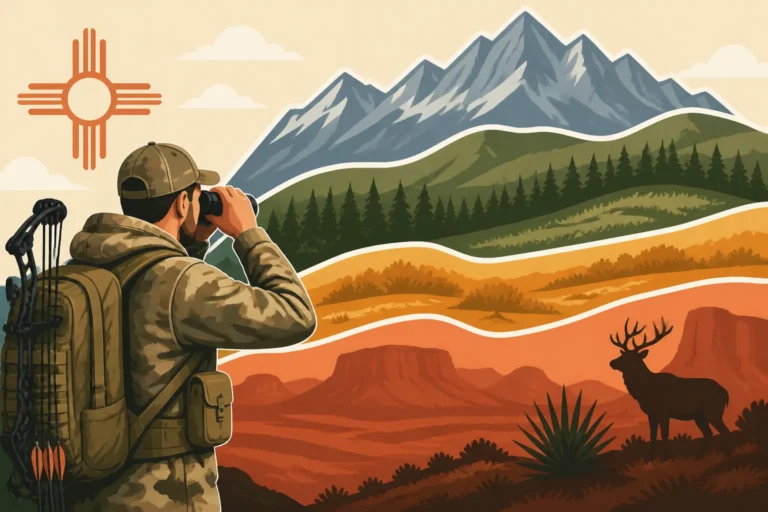
Federal lands, primarily those managed by the Bureau of Land Management (BLM) and the U.S. Forest Service (USFS), constitute a significant portion of New Mexico's public hunting opportunities. These lands are generally open to public hunting with a valid New Mexico hunting license. BLM Ground Carries Most of New Mexico's Open Access across the state, particularly in the more arid, southern regions. Similarly, the Nine Million Acres of New Mexico National Forest provide crucial habitat for elk, deer, bear, and other species, especially in the mountainous north.
However, even on these vast federal holdings, you must remain vigilant for private inholdings. These are private parcels of land that lie completely within federal boundaries. They can be remnants of old homesteads, mining claims, or other historical land grants. Just because you're in the middle of a national forest doesn't mean every square foot is public. Your mapping app is your best defense against accidental trespass onto these private islands within public seas. Always double-check your position, especially if you see fences or other signs of private ownership. Additionally, be aware of specific regulations on federal lands, such as:
- Motorized travel restrictions: Many areas have seasonal road closures or designated travel management plans.
- Wilderness Area rules: These areas are designed for primitive, non-motorized recreation and have strict rules against mechanized transport, permanent camps, and sometimes even specific weapon restrictions.
- Cultural and archaeological sites: These are protected, and disturbing them is illegal.
Understanding the specific rules for the type of federal land you're on, and always being aware of private inholdings, ensures a legal and respectful hunting experience.
Ensuring Ethical and Responsible Conduct
Ultimately, every hunter carries the responsibility of upholding the integrity and future of hunting. Our actions, whether on public land or while seeking access across private property, reflect on the entire community. Ethical and responsible conduct isn't just about following the law; it's about being a good steward of the land and a respectful participant in the broader outdoor community.
Leaving No Trace and Respecting the Land
The "Leave No Trace" principles are not just for backpackers; they are fundamental for hunters, especially when operating on or near private land. Every piece of trash, every rutted trail, every disturbed fence line that is left behind reinforces negative stereotypes about hunters and makes landowners even more hesitant to grant access.
When you're granted the privilege of crossing private land, treat it with the utmost respect:
- Pack it in, pack it out: This means everything, including spent casings, food wrappers, and even biodegradable waste like orange peels (they can take a very long time to decompose in arid environments).
- Stay on designated routes: Do not drive off-road or create new trails. Stick to existing two-tracks or clearly defined paths.
- Leave gates as you find them: If a gate is closed, close it behind you. If it's open, leave it open. Never assume.
- Avoid disturbing livestock: Give cattle, horses, or other animals a wide berth. Do not harass them or drive your vehicle through a herd.
- Prevent wildfires: Be extremely careful with campfires or any heat sources, especially during dry conditions. New Mexico has frequent fire restrictions.
- Protect water sources: Be mindful around water tanks, springs, or riparian areas. These are critical resources for wildlife and often for livestock. Water Sources and Ethics in Desert Hunting are paramount, as these are often the lifeblood of arid landscapes.
By consistently practicing Leave No Trace principles, you demonstrate that hunters are responsible land users, helping to build goodwill and maintain access for generations to come.
Building a Positive Reputation for Hunters
Every interaction you have, every piece of trash you pick up (even if it's not yours), every polite conversation with a landowner contributes to the collective reputation of hunters. Sadly, it only takes a few bad apples to spoil the bunch, and the actions of a disrespectful hunter can lead to private land being permanently closed off, impacting everyone.
Think of yourself as an ambassador for hunting. When you're courteous, respectful, and adhere strictly to the rules, you're helping to ensure that landowners remain open to granting access. When you educate others about ethical conduct, you're strengthening our community. In an era where hunting access is increasingly challenged, our collective behavior is our most powerful tool for preserving opportunities. By actively demonstrating respect for the land, wildlife, and property owners, you help foster a positive image of hunting, which is vital for its long-term health and public perception.
Disclaimer
This article is for general informational purposes only and does not constitute professional advice. Laws, prices and regulations vary by location and change over time. Consult a qualified professional for guidance on your specific situation.