Maximum Group Size in a New Mexico Application
Many hunters dream of sharing the thrill of a successful hunt with their closest friends or family, but trying to navigate the complex application systems of state game and fish departments can quickly turn that exciting prospect into a frustrating puzzle. When it comes to New Mexico, specifically applying for those coveted big game tags as a group, understanding the exact rules, particularly around the maximum group size, is absolutely essential. This guide will walk you through everything you need to know to ensure your group application is correctly submitted, maximizing your chances of hitting the field together.
Understanding the Basics of Group Applications in New Mexico
Applying for a New Mexico hunting tag is an annual ritual for many, but doing so with a group adds a layer of shared hope and strategy. It’s designed to keep hunting parties together, ensuring that if one person is lucky enough to draw, the entire crew gets to participate in the hunt.
Defining a Group Application
At its core, a group application in New Mexico is simply multiple hunters submitting their names together for the exact same hunt code. The intention behind this system is straightforward: to allow friends, family, or hunting partners to embark on their outdoor adventures as a cohesive unit. It’s about more than just convenience; it’s about preserving the camaraderie and shared experience that are so integral to hunting culture. The fundamental principle is that if any member of your group application is successfully drawn for a specific hunt code, then every single individual listed on that application also receives a tag for that same hunt. This "all-in" approach ensures that you won't find yourself in the awkward position of having some members of your party drawn while others are left out.
Conversely, this also means that if your group’s application unit isn't selected in the draw, then, unfortunately, no one in your party will receive a tag for that particular hunt. This all-or-nothing outcome is a critical aspect to understand before committing to a group application. It means that everyone is linking their luck together, sharing equally in both the potential excitement of drawing a tag and the disappointment if the draw doesn't go your way. For many hunters, the opportunity to share the experience, from the rigorous scouting to the campfires and the hunt itself, far outweighs the risk of a collective "no draw." It streamlines logistics and planning immensely, making it much easier to coordinate travel, gear, and camp preparations once you have that shared confirmation of success.
The entire system is a testament to the social nature of hunting for many participants. It validates the desire to share sunrises from a glassing knob, the quiet moments of tracking, and the triumphant (or even challenging) packing out of an animal with trusted companions. A group application eliminates the potential heartbreak of drawing a coveted Gila elk tag only to realize your longtime hunting partner didn’t, forcing you to choose between your tag and their company. Instead, it ensures that if you're hitting the field, they're right there with you, making those bonds even stronger.
Maximum Group Size and Eligibility
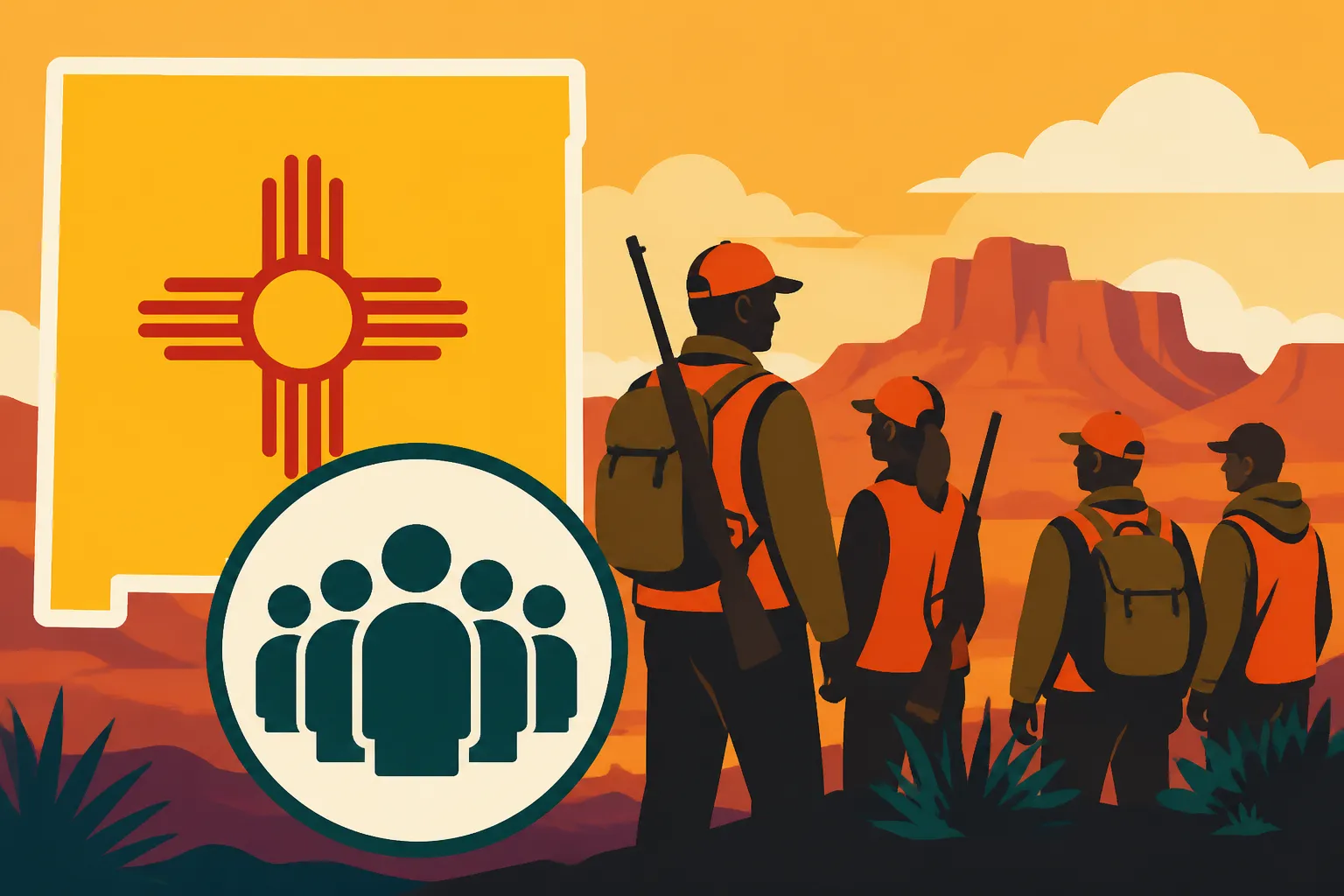
Now for the crucial detail: how many people can actually apply together? The New Mexico Department of Game and Fish (NMDGF) maintains a clear rule for group applications: a maximum of four (4) applicants are allowed per single group application for big game draw hunts. This standard applies across the board for most species you’d be applying for, including elk, deer, antelope, and oryx. It's a non-negotiable limit, so attempting to include a fifth person will undoubtedly lead to your application being rejected or encountering significant complications that could ultimately jeopardize your group's chances. Adhering strictly to this four-person cap is vital for a smooth application process.
This group size limit isn't arbitrary; it's a deliberate part of how NMDGF manages hunt quotas, ensures equitable access across a vast pool of applicants, and maintains healthy game populations. While hunting regulations can vary significantly from state to state, New Mexico has consistently adopted the four-person maximum. Any individual who meets the general eligibility requirements for a New Mexico hunting license can be part of a group application, regardless of whether they are a New Mexico resident or a non-resident. The key is that everyone must have all their necessary licenses, identification, and other required documentation in order well before the application deadline, which for the majority of big game species is firmly set on The March Deadline for New Mexico Applications at 5 p.m. MST. Proactive preparation prevents last-minute panic and potential errors.
A very common query, especially for families, concerns the inclusion of youth hunters in group applications. The good news is, yes, young hunters are absolutely welcome and encouraged to be part of your group. If you're planning an outing with a New Mexico Mentored Youth Can Hunt Two Years Before Certifying, they can be seamlessly integrated into your group, counting towards that four-person maximum. This provides an excellent framework for introducing children to the hunting tradition, ensuring they get to learn alongside experienced hunters. Just remember to verify that all specific requirements for the youth hunter, such as their valid youth license or any necessary mentor numbers, are fully met prior to submitting the application. It's a fantastic way to pass on the outdoor legacy.
It’s important to clarify that while the maximum is four, a group can certainly consist of fewer members—two or three individuals are perfectly acceptable. The hard rule is simply not to exceed the four-person ceiling. To stay completely current, always make it a point to consult the most recent "New Mexico Rules and Information Booklet" published by the NMDGF. Although the group size limit has remained fairly stable for many years, regulations can sometimes be adjusted. Quick checks on reliable resources like GoHunt or the official NMDGF website before you finalize your application are always a smart move to confirm the very latest guidelines.
The Logistics and Limitations of Group Applications
Once you understand the basic concept and the maximum group size, the next step is to navigate the practicalities of submitting a group application. This process demands careful coordination and an awareness of how it impacts your draw odds.
How to Submit a Group Application
Submitting a group application, while not inherently complex, certainly requires a precise and detail-oriented approach to ensure everything is processed correctly. Typically, one individual within the group takes on the role of the "group leader" or the primary applicant. This person is usually the one who initiates the application online via the official New Mexico Department of Game and Fish portal. After entering their own personal details, they will then be prompted to add the other members to their group application. Think of it like organizing a shared trip: one person spearheads the booking, but everyone provides their necessary information.
Before the group leader even begins to fill out the online form, it is absolutely paramount to collect all the required information from every single member of the hunting party. This isn't just a suggestion; it's a critical prerequisite. You’ll need their unique customer ID numbers, their precise residency status, accurate dates of birth, and if applicable, their hunter education numbers. Any minor discrepancy or error in this critical data could easily lead to the rejection of the entire group's application. To avoid this potential setback, make sure every member has purchased their valid New Mexico Game Hunting License for the current year, along with any other mandatory validations such as the Habitat Management & Access Validation (HMAV) and a Habitat Stamp, both of which are required for hunting on federal lands across New Mexico.
Perhaps the most crucial logistical requirement, and a point where many groups unfortunately falter, is that all members within a group application must select the exact same hunt codes, in the exact same order of preference. This is not a guideline; it is an absolute mandate. For example, if one hunter in your group lists a specific Unit 15 elk hunt as their first choice and a Unit 17 hunt as their second, every other member of that group must have the identical Unit 15 first and Unit 17 second. Any deviation, no matter how small, will cause the NMDGF system to invalidate your entire group's submission. This necessitates a thorough, pre-application meeting with your entire group to definitively decide on your preferred hunt choices and carefully plan your Choice Order Strategy in the New Mexico Draw. This uniformity is absolutely non-negotiable for a successful group application.
Finally, the financial aspect of a group application is typically centralized through the designated group leader. All application fees for each species applied for are generally charged immediately upon submission to the group leader's payment method. Should your group be fortunate enough to be successful in the draw, the full license fees for every single applicant in the group will then be automatically charged to the same credit card on file. This underscores why open and honest communication about financial responsibilities and contributions is indispensable within any hunting group. Reviewing the New Mexico Application Fees Per Species well in advance can prevent any unexpected surprises or disputes down the line.
Impact on Draw Odds
It’s easy to fall into the trap of thinking a group application somehow magically boosts your chances of drawing a tag, but let's clear up a common misunderstanding right away: applying as a group in New Mexico does not improve your individual or collective statistical draw odds. Many states operate on preference point or bonus point systems, where longevity or past unsuccessful applications can give you an edge. New Mexico is different. The state operates on a true lottery system; there are no preference points to accrue. This means every applicant, whether applying individually or as part of a group, essentially starts with the same statistical chance in each year's draw. Thinking that more people in your group equals better odds is simply incorrect. The How New Mexico Draw Odds Work Without Points article really dives into this.
When a group submits an application, the NMDGF system doesn't see four separate chances; it views the entire group of up to four individuals as a single, unified application unit. If that particular "unit" is randomly selected in the draw, then every member within that unit receives a tag. If it's not selected, then unfortunately, no one in the group gets a tag. The probability of that single group unit being drawn is precisely the same as the probability of a single individual application being drawn. You are not multiplying your chances by adding more people to your application; you are simply ensuring that if luck strikes, everyone gets to go together. This "all-or-nothing" aspect is a fundamental principle that all group members must clearly understand when strategizing their applications.
To put it into perspective, consider a highly sought-after elk hunt with 100 available tags and 10,000 total applications. An individual applicant has a 1 in 100 chance. If you apply as a group of four, your group still has that same 1 in 100 chance of being selected for four tags. Your individual chance hasn't quadrupled; rather, you’ve pooled your outcomes. The group's success hinges entirely on that one metaphorical lottery ticket that represents your entire party. Explaining this clearly to your hunting partners, especially if they are new to the New Mexico draw process, is crucial to manage expectations.
While the raw statistical odds aren't altered by group size, resources like GoHunt's Insider platform can still offer valuable insights by analyzing historical draw data, sometimes even showing success rates for different group sizes. However, always remember that these statistics reflect the inherent lottery nature of the draw. The true, undeniable benefit of a group application in New Mexico is the absolute guarantee of hunting together, rather than any calculated improvement in your statistical probability of drawing a tag. Diligently checking Where New Mexico Posts Draw Success Tables can provide historical context, but the core principle of an even playing field remains.
Strategic Considerations for Group Hunting Applications
Deciding to apply as a group involves more than just understanding the rules; it requires strategic thinking to make the most of the system and maximize the collective hunting experience.
When to Choose a Group Application
The decision to apply as a group versus individually largely hinges on your primary motivations and priorities for the upcoming hunting season. For a significant number of hunters, the experience of sharing the rugged beauty of New Mexico’s backcountry with specific friends, family members, or trusted hunting partners is the ultimate goal. If the camaraderie, the shared challenges, the inside jokes around the campfire, and the collective celebration of success are paramount to your hunting philosophy, then a group application is unquestionably the most logical path. Many would argue that the deep bonds forged during a shared hunt, the memories that last a lifetime, far outweigh any perceived individual advantage in the draw.
Group applications prove particularly advantageous for family-oriented hunts, especially when involving younger generations. If you’re planning a memorable outing with a New Mexico Mentored Youth Can Hunt Two Years Before Certifying, applying as a group ensures that both the mentor and the youth draw tags simultaneously, making the entire experience considerably smoother and more impactful. This setup alleviates the stress and potential disappointment that could arise if a youth draws but their mentor doesn’t, or vice-versa. With everyone drawing together, the focus can remain entirely on instruction, safety, enjoyment, and the invaluable process of passing down hunting traditions.
Beyond the shared experience, group applications also offer substantial logistical benefits, simplifying many of the complex aspects of trip planning. Knowing that every member of your party either has a tag or doesn't allows for unified decisions regarding travel arrangements, booking accommodations, securing specialized equipment, and even coordinating with potential guides or pack services. Imagine the logistical nightmare of trying to orchestrate a multi-day Gila elk hunt where some members have tags for an early season while others drew a late-season deer tag – it would be an absolute scheduling headache. A group application streamlines these considerations, freeing up valuable time and mental energy to concentrate on crucial preparations like E-Scouting a New Mexico Unit Before the Season and ensuring everyone is physically prepared for the demands of a backcountry hunt.
Certain hunting scenarios, by their very nature, are much better suited to a group dynamic. For instance, embarking on a challenging backcountry elk hunt, especially in vast wilderness areas like the Gila National Forest, benefits immensely from multiple sets of eyes for glassing, additional callers during the rut, and critically, extra hands for packing out a harvested animal. A well-coordinated four-person group can often accomplish tasks, such as quartering and hauling out an entire elk, with relative ease compared to a solo hunter facing what could be an impossible, multi-day endeavor. In rugged New Mexico units, having a capable crew isn't just a preference; it can literally be a necessity for both safety and success.
Maxing Out Your Odds Within the Rules
While a group application, by itself, doesn't change the mathematical draw odds for a given hunt, you can still employ smart strategies to significantly increase your group's overall chance of drawing any tag in New Mexico. This journey begins with comprehensive and meticulous research. Leveraging sophisticated platforms like GoHunt's Insider service allows you to delve deeply into the historical draw odds for a vast array of units and specific hunt codes. It’s absolutely essential to gain a clear understanding of How New Mexico Draw Odds Work Without Points, as this insight helps your group differentiate between hunts that are genuine long shots and those that offer a more realistic probability of success.
One of the biggest pitfalls many applicants fall into is exclusively applying for the most high-profile, low-odds "trophy" units. While it's perfectly understandable to list a dream hunt as your group's first choice, a truly strategic approach involves balancing that ambition with more attainable options for your second, third, and fourth choices. New Mexico’s draw system processes choices in the order they are listed, meaning a thoughtfully constructed Choice Order Strategy in the New Mexico Draw is critical. A group that demonstrates flexibility and agrees to include some higher-odds hunts—even if they're not the absolute "unicorn" units—will dramatically improve their collective likelihood of getting to hunt somewhere in New Mexico that season.
Beyond specific unit odds, it’s also wise to consider the various types of hunts available. For example, early season archery hunts for mule deer or elk often present more favorable draw odds compared to highly popular rifle hunts later in the season. Similarly, cow elk tags, particularly those in early seasons or certain management hunts, are typically easier to draw than those for mature bulls. Engaging in open discussions as a group about these alternative hunt types and maintaining a flexible mindset can significantly enhance your collective success in securing a tag. Remember that Applying for Multiple Species in One Year is also an option for individual applicants, though each species requires its own separate application and fee.
Finally, staying consistently informed about any potential rule adjustments or newly introduced opportunities from the NMDGF is paramount. The annual "Rules and Information Booklet" should be your group's go-to resource for the most current information. Furthermore, paying meticulous attention to the New Mexico Application Deadline Date cannot be overstated. Missing the deadline, even by a mere hour, can mean your entire group misses out on an entire hunting season. Proactive planning, timely submission, and careful verification are the best ways to leverage the group application system effectively and strategically to your advantage.
| Feature | Individual Application | Group Application (2-4 people) | Notes |
|---|---|---|---|
| Max Applicants | 1 | 4 | Strict maximum of 4 per group application. |
| Draw Odds Impact | No preference points | No preference points | Odds are the same per application unit, not per individual. |
| Hunt Choices | Individual | Must be Identical | All group members must apply for the exact same hunt codes/order. |
| Payment Process | Individual | Group Leader (all fees) | Application fees charged upfront; tag fees charged if drawn. |
| Outcome | Draw or Don't Draw | All Draw or None Draw | Ensures all members hunt together if successful. |
| Flexibility | High | Lower | Less flexibility in hunt choices once group is set. |
| Ideal For | Specific solo hunts | Shared experiences, family hunts | Especially good for backcountry or youth hunts where teamwork helps. |
Avoiding Common Pitfalls and Ensuring Success
Even with a clear understanding of group application rules, minor oversights can derail your entire group’s hunting plans. Being aware of critical errors and adopting best practices will significantly improve your chances of a successful application and a harmonious hunting experience.
Critical Errors to Avoid
Applying for a hunting tag in New Mexico, particularly when coordinating a group application, demands an almost obsessive level of accuracy and attention to detail. One of the most critical errors that can, and often does, result in the rejection of an entire group’s application is mismatched hunt choices. I cannot emphasize this point enough: every single member listed on your group application must have an identical list of hunt codes, presented in the exact same order of preference. If there's even a minuscule deviation—a different unit number, a swapped preference, or a missing choice—the New Mexico Department of Game and Fish (NMDGF) system will automatically flag the discrepancy, rendering your entire group application invalid. This is a recurring source of immense frustration and disappointment for many groups, so it’s imperative to double-check, then triple-check, and finally, have each group member independently verify the hunt code sequence. Understanding Reading a New Mexico Hunt Code Before You Apply is essential for this step.
Another absolutely fatal error that countless hunters make each year is simply missing the application deadline. For most big game species in New Mexico, this deadline is an unyielding, hard stop, typically set for March 18 at 5 p.m. Mountain Standard Time. There are no exceptions, no grace periods, and no appeals for late submissions. If your group's application, or any component of it, is not fully submitted and successfully processed by that precise timestamp, it will be automatically excluded from the draw. For a group application, if the designated group leader fails to submit on time, the entire party misses out. To circumvent this devastating outcome, proactively mark your calendars, set multiple digital reminders, and, most importantly, aim to submit your application several days before the absolute final minute. This strategy helps you avoid any last-minute technical glitches, internet connectivity issues, or unforeseen personal emergencies that could jeopardize your hunt. Remember, The March Deadline for New Mexico Applications is firm.
Submitting incomplete or inaccurate personal information for any group member is yet another common pitfall that can lead to the rejection of the entire application. This encompasses issues like outdated customer ID numbers, incorrect dates of birth, or missing hunter education numbers. Every required field on the application form must be accurately completed for every single applicant. This is particularly crucial if you have a New Mexico Mentored Youth Can Hunt Two Years Before Certifying participating in your group, as their specific requirements and certifications must be meticulously met. Ensure that every member has their current New Mexico Hunter Education Requirement accurately reflected in their NMDGF profile. A highly recommended best practice is for each group member to independently log into their personal NMDGF online account well in advance of the application period to verify that all their personal data is current and correct.
Finally, ensure that every hunter in your group possesses all the necessary prerequisite licenses and stamps before the draw application is even submitted. This list typically includes a valid Game Hunting License for the current year, and, crucially, a Habitat Management & Access Validation (HMAV) and a Habitat Stamp, which are mandatory for hunting on most public lands in New Mexico. These are not optional accessories; they are foundational requirements. Without these valid credentials, even if your group application is successfully drawn, the NMDGF will be unable to issue the actual hunting tag. Verify that everyone has purchased and renewed these essential documents well in advance of the application opening.
Best Practices for Group Harmony and Success
The ultimate success of a group hunting application extends far beyond merely being drawn; it profoundly depends on fostering group harmony and employing sound strategies, both before and during the actual hunt. This essential process begins with cultivating clear and open communication long before the application period even opens. Engage in candid discussions about everyone’s expectations for the hunt, their preferred types of hunting experiences, target species, and specific units they are interested in. Are some members solely focused on harvesting a trophy bull, while others are content with a meat elk? Addressing these varying aspirations upfront is crucial for formulating a cohesive Choice Order Strategy in the New Mexico Draw and ensuring that every group member feels heard, understood, and genuinely aligned with the collective goals.
While one individual might naturally assume the role of "group leader" for the administrative task of submitting the application, the responsibility for a successful outcome should never rest solely on their shoulders. Every single member of the group ought to be actively engaged in the process. This includes participating in the research phase, meticulously studying potential units and historical draw odds using valuable resources like GoHunt, diligently verifying their own personal information within the NMDGF system, and meticulously confirming the agreed-upon hunt choices. This proactive, shared ownership not only minimizes the potential for errors or misunderstandings but also cultivates a stronger, more cohesive hunting party. It transforms the eventual success—or indeed, the shared disappointment—into a truly collective experience.
Flexibility emerges as an incredibly valuable asset when navigating the New Mexico draw, especially as a group. While it's natural for everyone to harbor a dream unit or a specific trophy ambition, the stark reality of New Mexico's draw odds often necessitates a willingness to consider a broader range of options. A group that remains open to hunting in different units, or even being flexible about the target species (e.g., pursuing mule deer if elk tags prove too elusive), significantly enhances their collective chances of securing any tag. This adaptability ensures that the primary objective – getting to hunt together – can still be achieved, even if the location or species differs from the initial dream. Researching units with higher public land percentages and better access, often highlighted when Reading a New Mexico Hunt Code Before You Apply, can also broaden your group's horizons and present more attainable options.
Finally, even with the inherent "all-or-nothing" nature of a group application, it's a wise practice to engage in some level of contingency planning. While the group draw means you either all get a tag or none do, it's beneficial to discuss future scenarios. What if, in subsequent years, some members decide to apply individually for specific, low-odds trophy units? What if a few members are only interested in a very particular, hard-to-draw hunt and prefer to go solo if the group isn't targeting it? Having these candid conversations ensures that individual hunting goals are respectfully acknowledged and planned for, even within the context of the group dynamic. And when that nerve-wracking draw day arrives, knowing How New Mexico Notifies Successful Applicants and when to expect those results certainly helps in planning your celebrations or your next application strategy!
Disclaimer
Please remember that hunting regulations, fees, and application procedures can change. Always consult the official New Mexico Department of Game and Fish (NMDGF) "Rules and Information Booklet" for the current year as your primary and most authoritative source of information before submitting any hunting applications.