The 84 Percent Resident Allocation in New Mexico
Hunting in the West can feel like a game of chance, with countless applications and often disappointing draw results. Many hunters, especially those new to New Mexico, find themselves scratching their heads when trying to understand how tags are actually distributed. It can be incredibly frustrating to put in the time and effort to research units, only to feel like the system is stacked against you. This comprehensive guide is here to demystify New Mexico's unique tag allocation system, focusing specifically on the significant 84% resident pool, and help you navigate the draw with a clearer understanding of your opportunities.
Understanding New Mexico's Tag Allocation System
New Mexico has a distinct and often misunderstood system for distributing its limited big game hunting tags. Unlike some other states that might use preference points or bonus points, New Mexico operates on a pure lottery system, but it's not a single, undifferentiated lottery. Instead, it divides its tags into three separate pools, each with its own set of rules and, crucially, different odds of success. If you're going to hunt here, understanding these pools is absolutely foundational.
The Foundational Principle of Resident Priority
At the heart of New Mexico's draw system is a clear and strong emphasis on its residents. This isn't just a courtesy; it's enshrined in state law, recognizing that local hunters often have a deeper connection to the land and contribute directly to the state's conservation efforts through their licenses and taxes. The intent is to ensure that the vast majority of tags go to those who call New Mexico home, giving them the primary opportunity to hunt the state's diverse and often highly sought-after game species. This resident priority is a key reason why many New Mexicans enjoy better draw odds for premier hunts compared to their out-of-state counterparts, and it shapes the entire hunting landscape within the state.
The Three Distinct Tag Pools
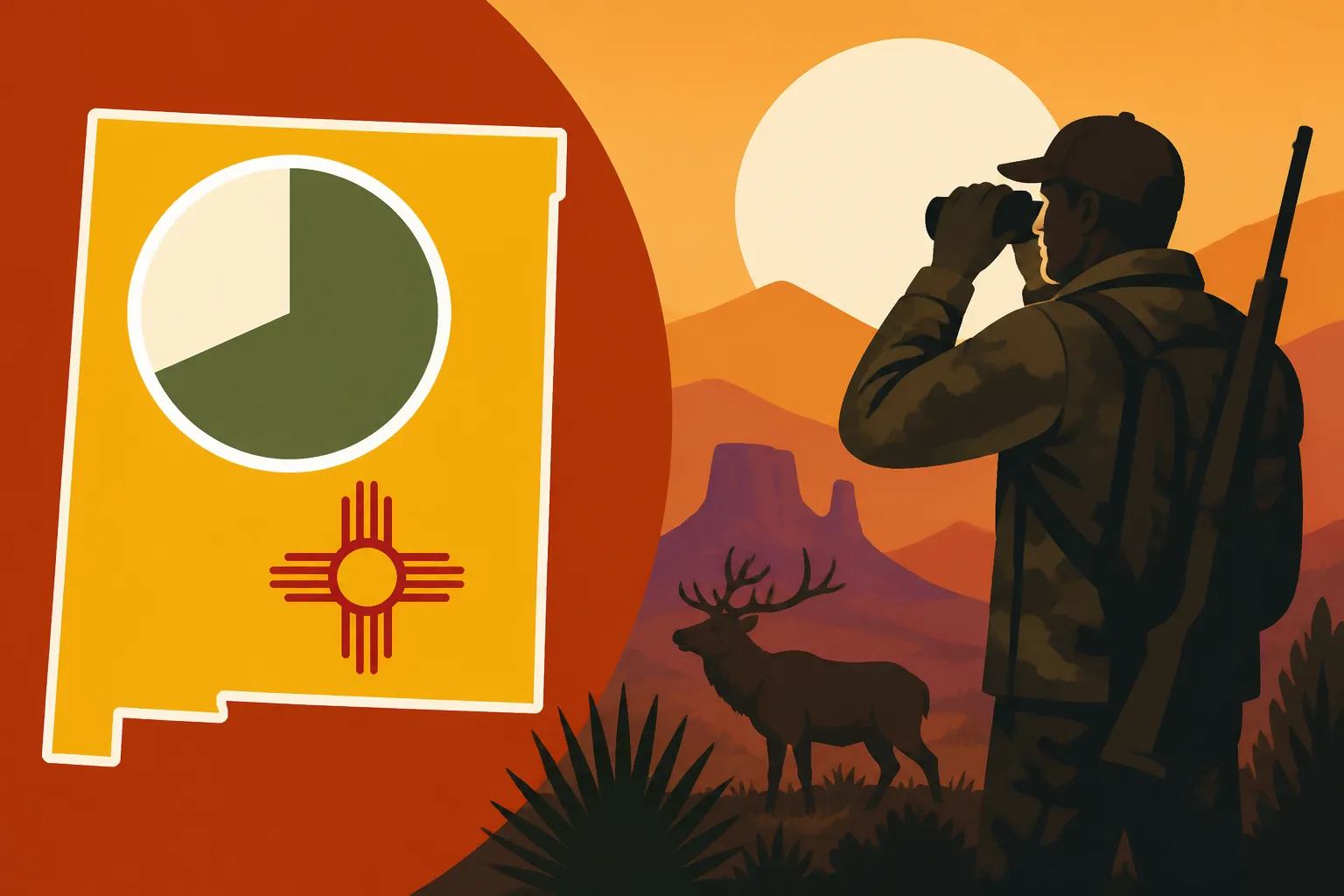
As mentioned, New Mexico doesn't just throw all applications into one big pot. Instead, it carefully segments its tags into three distinct allocation pools: the Resident Pool, the Outfitter Pool, and the Nonresident Pool. Each of these pools is allocated a specific percentage of the total available tags for nearly every draw hunt. The existence of these separate pools means that even for the same hunt code in the same unit, your odds of drawing a tag will vary dramatically depending on which pool you apply in. It’s a system that, once understood, can really help you set realistic expectations and develop a more informed application strategy, especially if you're a resident. This allocation system is what defines how New Mexico Splits Every Hunt 84, 10 and 6 Percent.
Diving Deep into the 84% Resident Allocation
For New Mexico residents, this 84% allocation is the golden ticket, the primary avenue through which they can secure big game tags. It represents the state's commitment to its own hunting population, providing a substantial advantage over other applicant types. It's not just a large chunk of tags; it's a reflection of the state's conservation and wildlife management philosophy.
Who Qualifies for the Resident Pool
To be considered a New Mexico resident for hunting license purposes, you generally need to meet specific criteria established by the New Mexico Department of Game and Fish (NMDGF). This typically includes having physically resided in the state for at least six consecutive months immediately prior to applying for a license or tag, maintaining a domicile in New Mexico, and demonstrating an intent to continue to reside in the state. This means things like having a New Mexico driver's license, registering your vehicles here, filing taxes as a New Mexico resident, and not claiming residency in any other state. It's not enough to simply own property or visit frequently; you truly need to have established your home base here. The NMDGF takes residency requirements seriously to prevent abuse of the system, so if you're unsure, it's always best to check the most current regulations in the official New Mexico Rules and Info Booklet.
How the Resident Pool Impacts Draw Odds
The sheer size of the 84% resident allocation pool dramatically improves a resident's chances of drawing a desirable tag compared to nonresidents or those applying through the outfitter pool. While it’s still a lottery and drawing a premier tag in a top unit like those in the Gila National Forest can still be challenging, the odds are inherently better when you're competing for 84% of the tags versus just 6% or 10%. For example, if a hunt has 100 tags, residents are competing for 84 of them. This means that even for highly sought-after species like elk or quality mule deer, a resident has a statistically superior chance of success. This is particularly true for hunts with larger tag quotas, where the numbers really start to work in the resident's favor. It's why many residents can consistently draw tags for popular species over a few years, even for hunts that nonresidents might wait a decade or more to acquire. This significant percentage is the primary mechanism behind How New Mexico Draw Odds Work Without Points. Resources like GoHunt can provide detailed draw odds analysis, allowing residents to leverage this advantage by making informed choices about their application strategy, identifying units where their 84% allocation really makes a difference.
Comparing Resident vs. Non-Resident and Outfitter Pools
Understanding the 84% resident allocation becomes even clearer when you see it in contrast to the other two pools. These other pools, while smaller, serve their own purposes within the state's wildlife management and economic framework.
The 10% Outfitter Allocation Explained
New Mexico sets aside 10% of its available draw tags for applicants who have contracted with a registered New Mexico outfitter. This is known as The 10 Percent New Mexico Outfitter Pool. The idea behind this allocation is multifaceted: it supports the state's guiding industry, helps ensure that hunters who contribute to the local economy through guide services have a slightly better chance of drawing, and in some cases, can facilitate hunts in more remote or challenging terrain that might require professional assistance. To apply in this pool, you must have a signed contract with a licensed New Mexico outfitter before the application deadline. The outfitter will provide you with a unique Outfitter Number that you must enter on your application. Without this contract and number, your application will not be considered part of this pool. While it offers better odds than the general nonresident pool, applicants in the outfitter pool are still competing against a smaller, but often highly motivated, group of hunters. Furthermore, once you draw a tag through this pool, there's a requirement for the outfitter to accompany you in the field for at least two days of your hunt, known as New Mexico's Two-Day Accompaniment Rule Explained.
The 6% Nonresident Allocation: A Tough Road
This is often the most frustrating pool for out-of-state hunters. A mere 6% of the available tags are reserved for nonresident applicants who apply independently, without an outfitter. This is The 6 Percent New Mexico Nonresident Allocation. To put it plainly, these are the toughest odds in the state draw. For highly coveted hunts, such as a prime elk tag in the Gila or a trophy mule deer tag in a top unit, the draw odds for nonresidents can be extremely low, often in the single digits or even fractions of a percent. This stark reality means that nonresidents must often apply for many years, or consider less popular units or hunt dates, to have a realistic chance of drawing a quality tag through this general nonresident pool. It’s a testament to the resident-first philosophy, and a clear signal that if you're coming from out of state, managing your expectations and exploring alternative options like EPLUS tags or the outfitter pool might be a more practical approach for drawing a New Mexico Elk tag.
Strategic Considerations for Different Applicant Types
The three-tiered system necessitates different strategies for each applicant type.
For Residents (84% Pool):
Residents have the most flexibility and the best odds. The strategy here often revolves around applying for desired premium tags (like those for New Mexico Elk Are Why the Gila Draws Everyone) and building a diverse portfolio of hunt choices. Since there are no preference points, every year is a fresh start, and applying consistently for top units is a viable approach. Residents can afford to be ambitious with their first choices while still putting in solid second and third choices for hunts that offer excellent success rates. Utilizing online tools and draw odds statistics from resources like GoHunt is especially beneficial for residents to pinpoint the best opportunities within their 84% allocation.
For Outfitter Clients (10% Pool):
Nonresidents who commit to an outfitter receive a significant boost in their draw odds compared to the general nonresident pool. The strategy here is about finding the right outfitter who has a strong reputation in your desired unit and who can secure you an Outfitter Number well before the application deadline. While the cost of a guided hunt is a factor, the improved odds often justify the investment for those seeking a high-quality New Mexico hunting experience.
For Independent Nonresidents (6% Pool):
This is the toughest path. The strategy for independent nonresidents must be one of patience, persistence, and perhaps a willingness to apply for less popular units or hunt dates where the odds, while still slim, are slightly better. It’s also wise to research hunts with higher tag quotas, as more tags mean slightly better chances within that small 6% pool. Many nonresidents use this pool for species they can easily hunt on an over-the-counter license elsewhere, or as a long-shot application while focusing their primary efforts on other states or an EPLUS tag in New Mexico.
Here's a quick comparison of the three pools:
| Allocation Pool | Percentage of Tags | General Draw Difficulty | Requirements | Typical Applicant |
|---|---|---|---|---|
| Resident Pool | 84% | Moderate to Difficult | Proof of New Mexico Residency | New Mexico Residents |
| Outfitter Pool | 10% | Difficult | Contract with Licensed NM Outfitter, Outfitter # | Nonresidents (Guided Hunt) |
| Nonresident Pool | 6% | Very Difficult | None (aside from general license requirements) | Independent Nonresidents |
Navigating the Application Process as a Resident
The good news for residents is that the application process, while requiring attention to detail, offers the best chance for success due to the generous 84% allocation. However, simply being a resident isn't enough; strategic application is key.
Key Dates and Deadlines for Residents
New Mexico’s draw application period is a critical window that residents must pay close attention to. For most big game species, like elk, deer, and antelope, the application period typically opens in mid-January and famously closes on March 18th at 5 p.m. Mountain Time. This is a hard deadline, and there are no exceptions for late submissions. It’s important to remember that this applies to nearly all species, though there are specific exceptions, such as New Mexico Bear Applications Close in February. Marking your calendar for The March Deadline for New Mexico Applications and potentially setting reminders on your phone is highly recommended. Submitting your application well before the final hours can save you a lot of stress from potential website crashes or last-minute technical glitches. The NMDGF website is the official portal for applications, and familiarizing yourself with its interface beforehand can make the process smoother.
Maximizing Your Chances Within the 84% Pool
Even with 84% of the tags, drawing for highly coveted hunts can still be a challenge. To maximize your chances, strategic planning is essential. First, thoroughly research units and hunt codes using tools like the NMDGF website's harvest reports and draw odds, or third-party platforms such as GoHunt, which aggregates this data and provides powerful filtering capabilities. Look for units that offer a good balance of trophy potential and reasonable draw odds for residents. Don't just apply for the "best" units, as everyone else will be doing the same. Consider units with slightly lower success rates but fewer applicants, or units known for consistent harvest. Also, pay attention to different weapon types; often, muzzleloader or archery hunts for deer might have slightly better odds than "Any Legal Weapon" hunts, offering a path to New Mexico Muzzleloader Deer Season Windows or New Mexico's First and Second Archery Deer Seasons. Secondly, use all your hunt choices wisely. New Mexico allows you to list up to five choices. Don't waste second or third choices on hunts you have no intention of going on. Prioritize your dream hunts first, but follow them with realistic backup options that you would genuinely be excited to draw.
Group Applications and the Resident Advantage
New Mexico does allow for group applications, which can be a double-edged sword but often beneficial for residents. When applying as a group, all applicants must list the same hunt codes in the same order. If the group draws, all members receive a tag. The NMDGF considers the application as a single entity, and if any member of the group would not have qualified for a tag (e.g., if a nonresident was accidentally included in a resident-only choice), the entire group application may be rejected for that choice. For residents, this can be an excellent way to plan a hunt with friends or family. However, the group is only as strong as its weakest link; if one member has poor application history or if the draw odds are extremely low for a large group, it might reduce overall success. The key is that the group drawing success is based on the single lowest probability of any member drawing. If one member has a 10% chance, and another a 50%, the group's chance for that choice is effectively 10%. Residents can leverage this by forming groups with other residents for hunts with decent odds, knowing they’re still competing within that large 84% pool. This approach works well for planning family hunts, perhaps utilizing the New Mexico Mentored Youth Can Hunt Two Years Before Certifying program, ensuring everyone has a shot at experiencing the field together.
Impact on Hunt Planning and Success for Residents
The generous 84% resident allocation doesn't just improve draw odds; it profoundly influences how residents plan their hunts, from unit selection to long-term strategy. It creates opportunities that simply don't exist for nonresidents, fostering a strong local hunting culture.
Exploring Popular Resident-Heavy Units
Because residents have such a significant advantage, many units that are incredibly difficult for nonresidents to draw become viable options for New Mexico hunters. This includes well-known trophy units across the state, such as prime elk country in the Gila National Forest (Units 15, 16A, 16D) or quality mule deer units in northern New Mexico. While these units are still competitive, the 84% pool means that drawing a tag for these areas within a few years of consistent application is a realistic possibility for residents. This allows New Mexicans to focus their scouting efforts and build deep knowledge of specific units, rather than constantly chasing tags across different regions with unpredictable draw success. Moreover, residents can explore units that might have moderate draw odds but offer fantastic hunting experiences, knowing they'll likely secure a tag sooner rather than later. For example, looking into units known for good numbers of New Mexico Mule Deer Across New Mexico's High Country and Desert can be a rewarding strategy.
Long-Term Strategy for Desired Tags
For residents, the absence of a preference point system means that every year is an equal opportunity, removing the pressure of accumulating points. This allows for a more fluid, year-to-year strategy. Residents can afford to apply for their absolute dream tag (e.g., a top-tier Gila bull elk hunt) as their first choice every year, knowing that they have a fresh chance each time. In addition to ambitious first choices, residents can use their subsequent choices for hunts with higher odds or different species, ensuring they likely draw something to hunt each season. For instance, if the elk tag doesn't pan out, a resident might still draw a New Mexico Pronghorn tag for the Eastern Plains, offering a completely different but equally exciting experience. This long-term approach allows residents to experience a wider variety of hunting across the state over time, deepening their connection to New Mexico's diverse landscapes and wildlife. It’s about being persistent for those truly special tags, while also enjoying consistent opportunities for other species.
Common Misconceptions and Clarifications
Even with a clear understanding of the 84% resident allocation, some common misunderstandings persist. Addressing these can help residents refine their expectations and application strategies further.
Does the Resident Pool Guarantee a Tag?
Absolutely not. While 84% is a substantial majority, it's crucial to remember that it's still a lottery. Many New Mexico hunt units, especially those with limited tags for trophy animals or during prime rut periods, receive far more resident applications than there are tags available, even within the 84% pool. For example, a unit with only 50 rifle elk tags might see hundreds or even thousands of resident applicants. In such scenarios, the odds, while better than for nonresidents, can still be quite low. The 84% allocation provides a significant advantage and much better odds, but it does not equate to a guarantee. Consistent application, strategic unit choices, and a bit of luck are still essential components of drawing those coveted New Mexico tags. This is why thorough research on draw odds, even for residents, is still a vital step in the application process.
The Role of Non-Transferable Tags
Another important point to understand is that all draw tags issued by the New Mexico Department of Game and Fish are non-transferable. This means that if you are successful in the draw and receive a tag, you cannot sell, give, or otherwise transfer that tag to another hunter. The tag is issued specifically to you, the successful applicant. This rule applies equally to residents, outfitter clients, and nonresidents across all species. It's designed to maintain fairness in the draw system and prevent a secondary market for state-issued tags. If you draw a tag but are unable to use it for any reason, you simply forfeit that opportunity. While the NMDGF does offer a limited refund policy under specific circumstances (e.g., military deployment, severe medical emergency), the general rule is that the tag is yours and yours alone. This reinforces the importance of careful planning when submitting your application, ensuring that if you draw a tag, you are truly prepared and able to pursue that hunt.
Disclaimer
Please note: Hunting regulations and fees in New Mexico are subject to change. Always consult the official New Mexico Department of Game and Fish website and the most current hunting proclamation for the definitive and up-to-date rules and information before planning your hunt or submitting applications. This guide is for informational purposes only and does not constitute legal advice or an official interpretation of regulations.