Units Near Taos Within a Day Trip
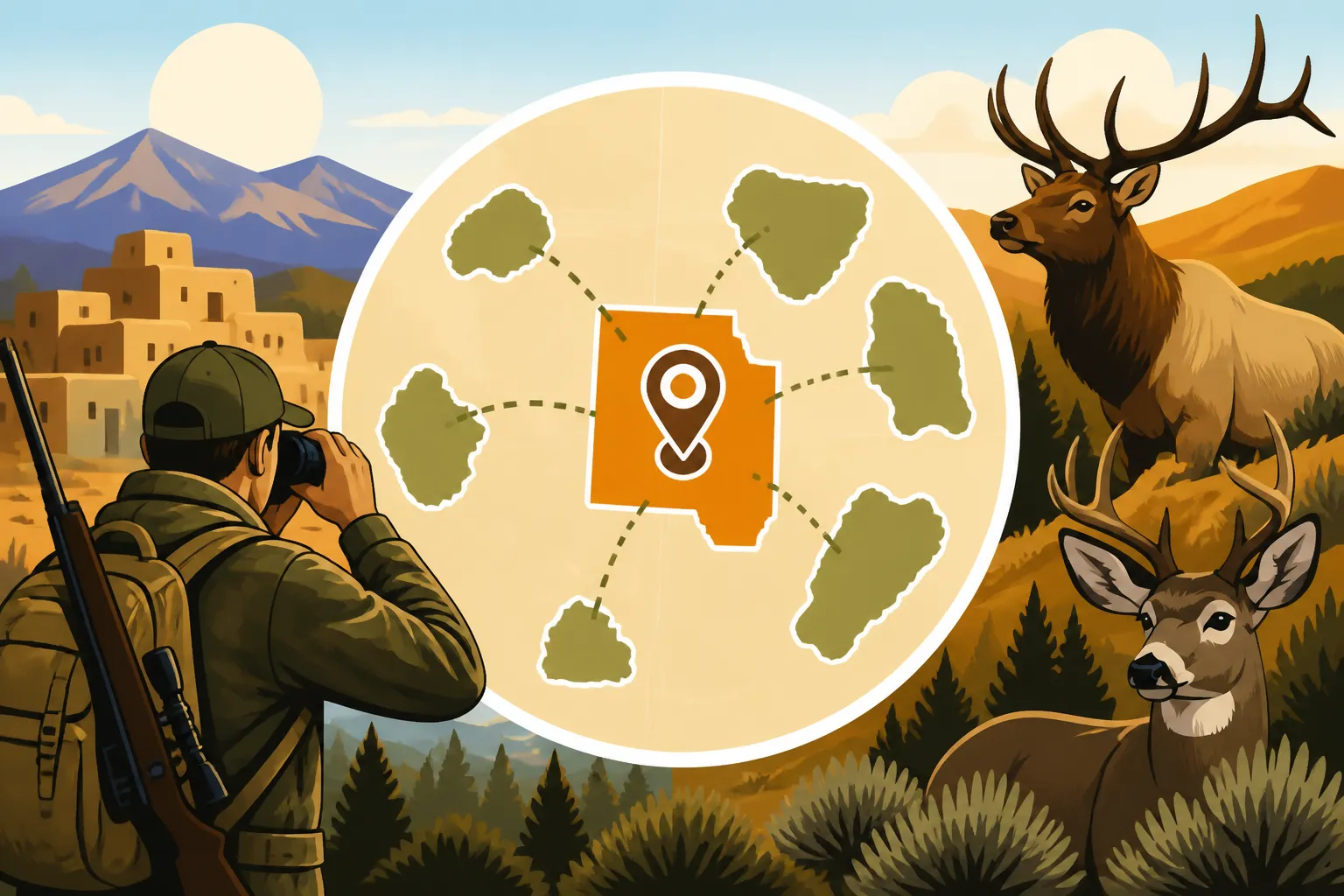
Hunting in New Mexico often conjures images of remote, multi-day pack trips deep into wilderness areas, but what about those of us who live near a hub like Taos and just want to get out for a day? It's a common frustration to feel like you need an expedition just to hunt, but the good news is, there are plenty of fantastic units within easy striking distance for a rewarding day trip, allowing you to be back home for dinner. This guide will help you navigate the terrain, identify accessible units, and plan efficient hunts directly from your doorstep in Taos.
Understanding "Day Trip" Hunting from Taos
Let's be real, not everyone has the luxury of taking a week off to chase elk deep in the Gila. For many, hunting is a passion that needs to fit into a busy schedule, often meaning quick jaunts out into the nearby mountains. When you live in a beautiful place like Taos, surrounded by incredible public land, leveraging those day-trip opportunities becomes key. It's a different beast than a full-on backcountry adventure, requiring its own set of considerations and strategies.
Defining Practical Driving Distances
When we talk about a "day trip" from Taos, what does that actually mean? For most folks, it translates to a maximum of a two-hour drive, maybe two and a half if the hunting is truly exceptional and you're willing to push it a bit on the return. This isn't just about the miles; it's about the kind of roads you'll encounter. Are they paved highways, well-maintained forest roads, or gnarly two-tracks that require a high-clearance 4×4 and add significant time to your journey? A unit that looks close on a map might involve an extra hour of slow, rough driving once you get off the main drag. The goal is to maximize your boots-on-the-ground hunting time, not your windshield time. You also need to factor in legal shooting hours; if you're an hour or two away, you can't push legal shooting light too far without risking a late, rushed, and potentially unsafe drive back home.
Essential Logistics for Day Hunts
Day hunts simplify some aspects but intensify others. You're not hauling in a tent, sleeping bag, or multi-day food supply, which is a huge plus. However, you still need to be self-sufficient and prepared for the unexpected. Water is always paramount in New Mexico, even in the high country. Plan for more than you think you'll need, especially if you're hiking hard. Snacks, a solid lunch, and emergency supplies (first aid kit, headlamp, fire starter, knife, shelter) are non-negotiable. Because you're returning home, meat care becomes a critical consideration. If you tag an animal, you need a plan to quarter and cool it rapidly, especially if you're hunting during an early season when temperatures can still be warm. Think coolers, ice, and game bags that are easily accessible in your vehicle. Getting Meat Cooled on an Early Season Hunt is a read worth checking out before you head out.
Balancing Accessibility with Quality Hunting
It's a common dilemma: the easier a spot is to reach, the more likely it is to see significant hunting pressure. Units close to population centers like Taos, Santa Fe, or Albuquerque often bear the brunt of weekend warrior traffic. This doesn't mean you can't find quality hunting, but it does mean you'll need to adjust your strategy. You might need to hike farther than others, start earlier, stay later, or focus on terrain that discourages casual hunters. Sometimes, it's about finding those overlooked pockets, small canyons, or dense thickets that others bypass for easier walking. A great tool for this is using mapping apps like onX Hunt to identify public land fingers or difficult-to-access areas that might hold less-pressured game, even in popular units. Don't be afraid to put in the effort to find the "hidden" spots within easy-to-reach units.
Prime Units East and South of Taos for Day Hunting
Taos sits nestled in the Sangre de Cristo Mountains, providing immediate access to a vast expanse of national forest land. This means that within an hour or two, you can be in prime elk, deer, bear, or turkey country, depending on the season and your tag. The terrain varies dramatically, from timbered peaks to rugged canyons and high mountain meadows.
Units Around the Carson National Forest (East/Southeast)
The Carson National Forest wraps around Taos like a blanket, offering incredible opportunities. Units like 45, 48, and even parts of 46 and 47 are all within a reasonable day trip. Unit 45, immediately east of Taos, is a fantastic example. It's high-elevation country, heavily timbered with aspen, pine, and spruce, cut by steep drainages. You'll find mule deer and elk here, often sharing the same habitat. Access is generally good via forest roads, though some become challenging quickly. You'll want to study your maps to find trailheads and less-traveled spurs. During early archery seasons, elk can be vocal, but they quickly learn to be quiet under pressure. For deer, focusing on transitions between dark timber and open parks, especially at dawn and dusk, can be productive. Remember that Carson National Forest Access in New Mexico outlines many of the entry points and challenges you might face.
Unit 48, stretching southeast from Taos, offers a mix of high peaks and lower, more arid country. This diversity means you can find different species and hunting experiences depending on the specific area you choose. Mule deer are prevalent, and elk frequent the higher elevations. Turkey populations can also be robust in certain areas, particularly near riparian zones. Access often involves a mix of paved roads giving way to dirt forest service roads. Always check for seasonal road closures, especially during spring thaw or after heavy rains, as these can quickly turn a planned day trip into an unexpected adventure. Using a reliable mapping application to identify land ownership and road statuses is crucial here.
Units South Towards Mora/Las Vegas (Southeast)
Venturing a bit further south and southeast from Taos, towards areas like Mora and Las Vegas, opens up units such as 46, 47, and even parts of 43 and 44. While some of these might push the upper limit of a "day trip," closer sections are certainly doable. Unit 46, for example, shares some characteristics with Unit 45 but also has its own unique areas. It's primarily national forest land, holding good numbers of mule deer and elk. The terrain here can be very steep and physically demanding, which can be a good thing for avoiding crowds – fewer hunters are willing to tackle the truly rough stuff.
Units 43 and 44, further south, introduce more varied terrain, moving from high mountain forest down into juniper and piñon country. While known for mule deer, these units can also hold elk, particularly in the higher, more remote pockets. The key to day hunting these units from Taos is precise planning. You'll need to decide on a specific canyon or ridge system, understand the access points, and commit to a manageable hunting zone. Don't try to cover too much ground in a single day. Focus on a specific drainage or a series of benches. Hunting New Mexico From 4,000 Feet to 10,000 describes the elevation bands you might encounter and the hunting strategies that accompany them.
Exploring Units West and North of Taos
The land west and north of Taos also provides excellent day-trip options, primarily within the larger Carson and Santa Fe National Forests, eventually leading towards the Jemez Mountains. These areas can offer different ecological zones and, sometimes, different hunting pressures than those directly east of town.
Units in the Northern Carson and Santa Fe National Forest (West/Northwest)
Directly west and northwest of Taos, you'll find more sections of the Carson National Forest, particularly units like 52 and parts of 51. Unit 52 is a diverse unit, encompassing everything from high desert mesas to timbered mountains. Mule deer are commonly found throughout, and elk inhabit the higher, more forested areas, especially during cooler months. Access points often involve roads that spiderweb off Highway 64. Some of these roads can be rough, and weather conditions can quickly make them impassable, especially after snow or heavy rain. This area can be popular, so early starts and aggressive hiking are often required to get away from the immediate road hunters.
Further west, as you transition towards the Santa Fe National Forest, units like 49 and 50 become relevant. While some parts are closer to Santa Fe or Española, sections of these units, particularly their eastern edges, are accessible for a day trip from Taos. The Santa Fe National Forest offers similar species opportunities to the Carson – primarily elk and mule deer. Santa Fe National Forest Hunting Access provides a good overview of general entry points. These areas can be characterized by mature timber, deep canyons, and occasional open meadows. Understanding the local topography is crucial for finding game and navigating effectively. Hunting these units often means targeting areas where terrain provides natural barriers to human movement, creating pockets of less-disturbed habitat.
The Jemez Mountains and Associated Units (Southwest)
The Jemez Mountains, while a bit more of a drive than the immediate Carson, are still within a reasonable day-trip range for many dedicated hunters from Taos, particularly for units like 6A, 6B, and even parts of 5B. These units are renowned for elk and mule deer, and the scenery is simply breathtaking. The drive can be around 1.5 to 2 hours, making for a long but rewarding day. The Jemez typically sees heavier hunting pressure due to its proximity to Albuquerque and Santa Fe, so deep dives into timber or steep hikes away from main roads are often necessary.
Unit 6A and 6B are classic New Mexico elk country, with a mix of ponderosa, spruce, and aspen forests, intersected by numerous canyons and volcanic features. Mule deer are also present in good numbers. Scouting with tools like onX Hunt to identify potential game corridors, water sources, and bedding areas is especially important here to maximize a single day's effort. Access Into New Mexico's Jemez Mountains details some of the entry points and general characteristics of this iconic hunting destination. Be prepared for elevation changes and sometimes challenging terrain that can test your physical limits, but the rewards can be significant.
Planning Your Taos-Area Day Hunt
Effective planning is the backbone of any successful hunt, but it's even more critical when you're limited to a day trip. You don't have the luxury of multi-day exploration or adjusting your camp location. Every hour counts, from the moment you leave your driveway to the moment you return.
Utilizing Digital Scouting Tools
In today's hunting world, digital mapping applications are indispensable, and for day trips, they are your best friend. Services like onX Hunt and GoHunt provide detailed satellite imagery, public/private land boundaries, and topographic maps that allow you to scout from your couch. Before you even set foot in the field, you can identify potential access points, parking areas, likely game corridors, water sources, and escape routes. You can mark waypoints for areas of interest, potential glassing knobs, or steep terrain you want to avoid. Using the layer functions to see roads, trails, and even historical burn areas can give you a massive advantage. E-Scouting a New Mexico Unit Before the Season goes into detail about this process, and Using onX Layers for New Mexico Public Land highlights the specific utility of these tools. They can save you precious daylight hours once you're on the ground by giving you a clear plan of attack.
Checking Regulations and Season Dates
This might sound obvious, but it’s amazing how many hunters overlook the fine print. New Mexico's hunting regulations are comprehensive and can change year to year. Make sure you have the most current "Rules and Information Booklet" and understand the specific regulations for your chosen unit and species. Pay close attention to legal shooting hours, blaze orange requirements (even for archery in some instances, like during overlapping rifle seasons), and any special unit restrictions. For example, some units might have specific rules about motorized travel or camping. Reading a New Mexico Hunt Code Before You Apply will help you decipher those often-cryptic hunt codes, and New Mexico Elk Season Structure by Unit breaks down how elk seasons vary by location. A quick double-check of the regulations before each trip can save you a lot of headaches, or worse, a citation.
Understanding Local Pressure and Strategy
Hunting near population centers inevitably means dealing with more pressure. The units around Taos, while expansive, will see more hunters than truly remote backcountry areas. Your strategy needs to account for this. One common tactic is to avoid easily accessible areas. While everyone else parks at the most obvious trailhead, consider hiking in a bit further, or even approaching from a less-used access point that might require a longer walk or more challenging terrain. Hunting during weekdays, if your schedule allows, can significantly reduce the number of other hunters you encounter.
Another strategy is to adapt to game behavior. Pressured animals quickly become nocturnal or seek out the thickest cover. Focus your efforts on dawn and dusk, when animals are most active, and be prepared to still-hunt or stalk through dense timber during midday. Understanding wind direction and thermals, especially in mountainous terrain, is critical. Animals will use these to their advantage, and so should you. Patience and persistence are key; even in pressured units, there are often pockets of undisturbed game for those willing to work for it.
Here's a quick overview of potential day trip units from Taos:
| Unit Number | General Direction from Taos | Primary Game Species | Key Terrain Features | Average Drive Time (one way) |
|---|---|---|---|---|
| 45 | East | Elk, Mule Deer, Bear | High elevation timber, steep canyons | 30-60 minutes |
| 48 | Southeast | Elk, Mule Deer, Bear | Mixed high timber/arid foothills | 45-90 minutes |
| 46 | Southeast | Elk, Mule Deer, Bear | Steep, heavily timbered mountains | 60-120 minutes |
| 52 | West/Northwest | Elk, Mule Deer | High desert mesas, timbered mountains | 45-90 minutes |
| 6A/6B | Southwest | Elk, Mule Deer | Volcanic terrain, mixed conifer forests | 90-150 minutes |
Remember that drive times are estimates and depend heavily on road conditions and your starting point within Taos. Always allow for extra time, especially in unfamiliar territory.
Disclaimer
This article is for general informational purposes only and does not constitute professional advice. Laws, prices and regulations vary by location and change over time. Consult a qualified professional for guidance on your specific situation.